
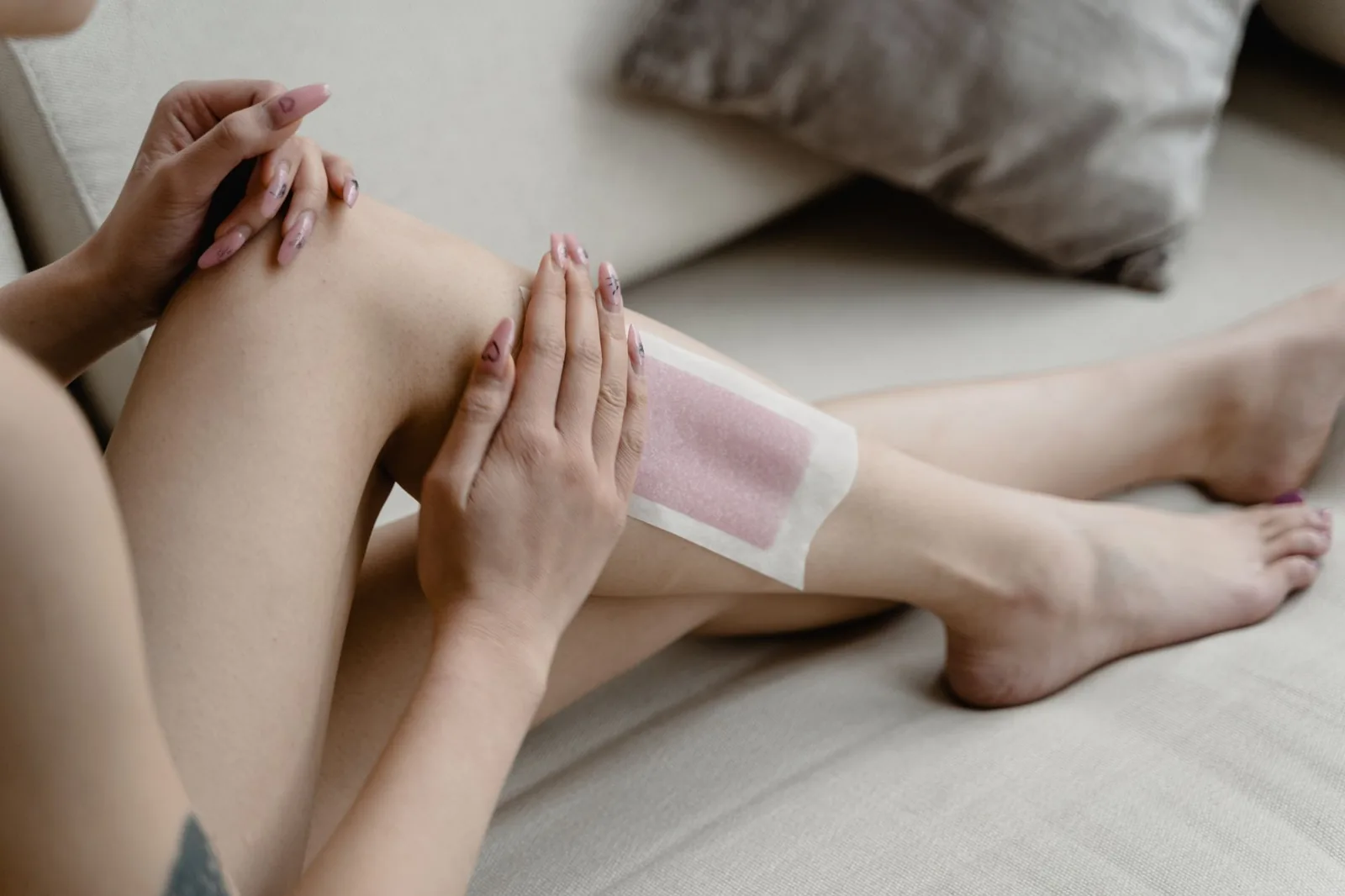
Waxing vs shaving comes down to one trade. Shaving cuts hair at the skin's surface: it's painless unless you nick yourself, takes minutes at home, and lasts a day to a few days. Waxing pulls hair out from the root: it stings, needs about a quarter inch of growth, and lasts a few weeks. And no evidence we found shows either one makes hair grow back thicker. Nervous about the sting? Here's how much waxing hurts, area by area.
The tiebreaker is your hair and your skin. If coarse or curly hair leaves you with razor bumps, the American Academy of Dermatology names shaving as the cause, which makes a razor-free trial worth considering. If you use tretinoin, take an antibiotic, or took isotretinoin in the last six months, the same group says waxing isn't recommended.
Below you'll find a side-by-side comparison, the regrowth myth checked in both directions, three questions to ask before you switch, a plan for the awkward grow-out weeks, and the signs that call for a dermatologist first.
Waxing vs Shaving: What's the Difference?
Shaving cuts each hair at the skin's surface with a blade and leaves the root in place. Waxing pulls hairs out from the root: wax goes on, grips the hair, and comes off quickly, taking the hair with it.
Here's how the two compare, drawn from the American Academy of Dermatology's guide to removing unwanted hair, the NHS page on ingrown hairs, Cleveland Clinic, and our own waxing menu:
| Shaving | Waxing | |
|---|---|---|
| How it removes hair | Cuts it at the skin's surface | Pulls it out from the root |
| How long it lasts | One to three days (Cleveland Clinic) | A few weeks or longer (AAD); we suggest rebooking every 3 to 4 weeks |
| Pain | Painless unless you cut yourself (AAD) | Removing the wax can be painful (AAD) |
| Hair length needed | Any length | About a quarter inch, roughly two to three weeks of growth |
| Common skin trouble | Irritation, cuts, nicks, razor burn, ingrown hairs (AAD) | Red, irritated skin for a short while; burns if the wax is too hot (AAD); ingrown hairs (NHS) |
| Medication limits | None on the AAD's list | Not recommended with tretinoin, an antibiotic, or isotretinoin in the past 6 months (AAD) |
| Where it happens | At home, in minutes | A salon or spa, or at home with practice |
| Cost | A razor and shaving cream | From $10 (lip) to $80 (full legs) at Haven Noire |
Cleveland Clinic adds a practical split. Shaving is more commonly used for larger areas like legs and armpits, while waxing can pinpoint smaller spots like the upper lip and bikini line. Weighing a third option? See our guide to sugaring vs waxing.
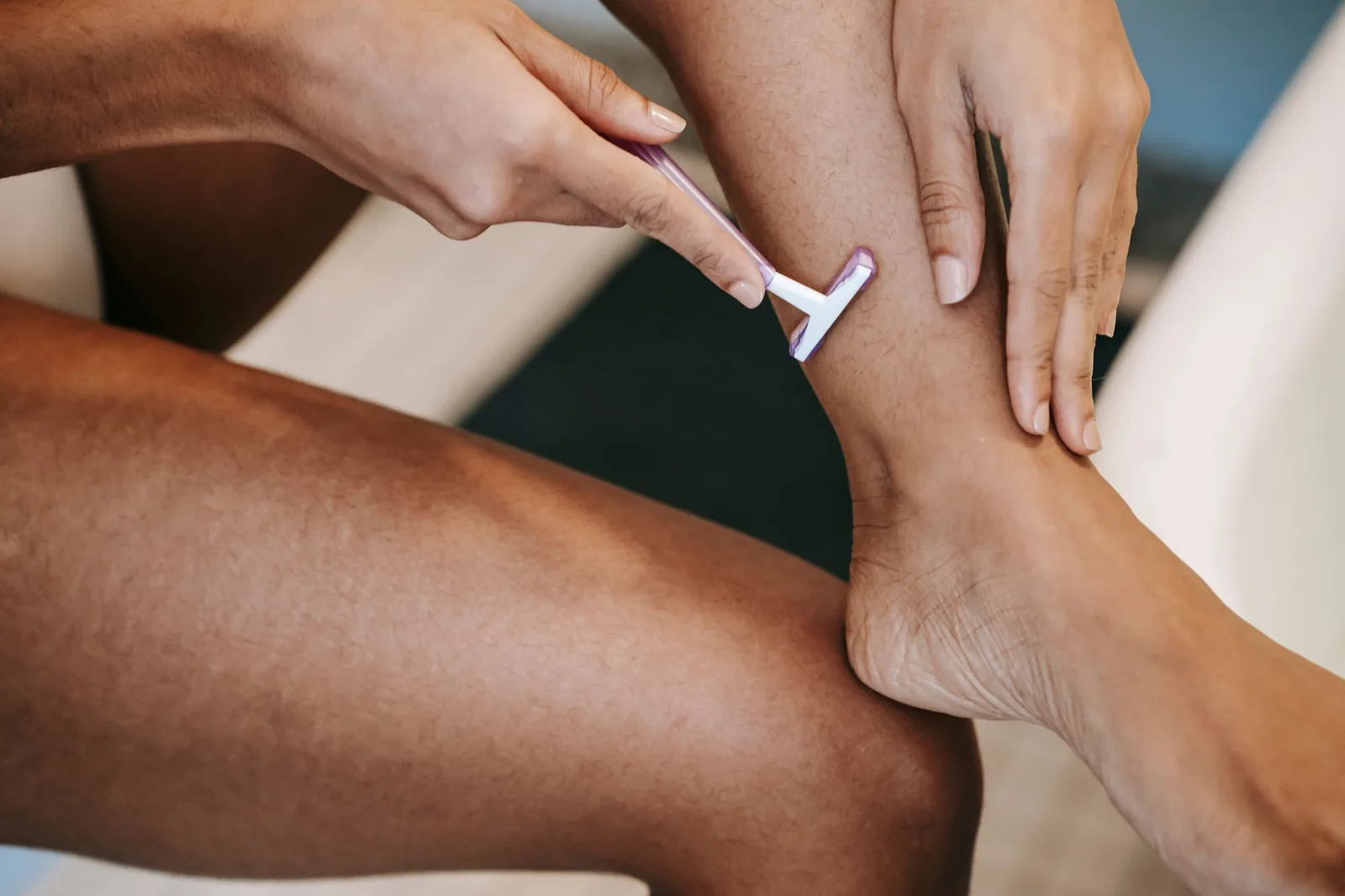
Does Waxing Make Hair Grow Back Thicker? Does Shaving?
No to both, as far as the evidence goes. The shaving myth has been tested and cleared. The idea that waxing makes hair finer is more hope than proof.
Shaving: the myth a study answered in 1928
Cleveland Clinic's article on shaving and hair thickness puts it plainly: shaving won't make your hair regrow any thicker or faster. A 2007 BMJ article on medical myths traces the answer back to 1928, when a clinical trial showed that shaving had no effect on hair growth. It adds that more recent studies confirm shaving doesn't affect the thickness or rate of regrowth.
So why does stubble feel thicker? The same BMJ article explains that shaved hair lacks the finer taper at the end of uncut hair, which gives an impression of coarseness. New hair also hasn't been lightened by the sun yet, so it can look darker than the hair it replaced. Wondering about peach fuzz on your face? See whether it grows back thicker after a facial razor.
Waxing: no thicker hair, and no proven finer hair
Cleveland Clinic's shaving article says that whatever method you choose, nothing you do will make hair grow back thicker, darker, or faster. The marketing claim runs the other way: many salons promise finer, sparser regrowth after regular waxing. Cleveland Clinic's shaving vs waxing guide says waxing can lead to hair growing back thinner over time, but it cites no study, and a PubMed search we ran in November 2026 found none showing that hair grows back finer or sparser after repeated waxing. So we don't promise finer hair. Plan on the same hair you have now, removed from the root.
Why regrowth after a wax can feel different
Our reading of the BMJ explanation: a waxed hair comes out whole, so what returns is a new hair growing in with its own tip, not a blunt cut end. That's one reason regrowth after a wax may feel less prickly than stubble, though we found no study comparing the two. Hairs also grow in cycles, so a few surface sooner than others; our guide to how long a Brazilian wax lasts explains why.
Razor Bumps and Curly Hair: Where Waxing vs Shaving Matters Most
If your hair is coarse or curly, this is where the choice stops being about convenience.
Why a razor causes bumps on curly hair
The AAD's razor bump remedies explain the mechanism. Razor bumps develop when the razor cuts hairs short, and if you have coarse, curly hairs, those shortened hairs can curve into your skin. Your skin reacts, and you see bumps. The AAD says they're especially common in men with darker skin tones, and the medical name is pseudofolliculitis barbae. Shaving your beard? Our men's skincare routine builds the AAD's shave steps into a daily habit.
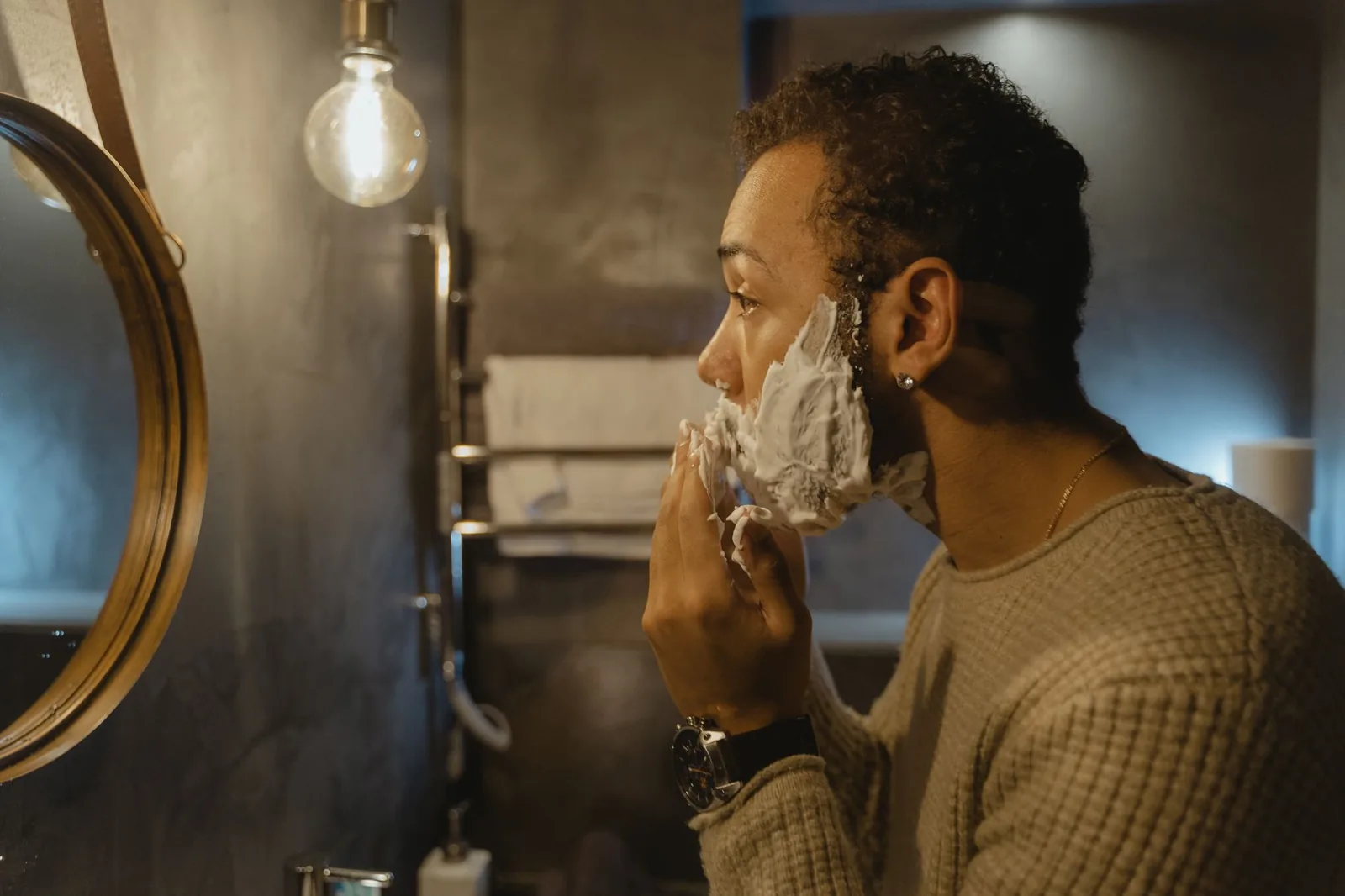
Women get them too. A 2004 review in Dermatologic Therapy notes the condition is seen most often in Black men who shave their beards, but may also be seen in women of all races who wax or shave the underarms and pubic area.
Does switching to wax fix it?
Sometimes, but not automatically. The AAD's razor bump prevention tips say that stopping shaving and growing out your hair will eliminate the cause. Waxing takes the razor away. It doesn't take ingrown hairs off the table: the NHS says you may be more likely to get them if you have coarse or curly hair, and that waxing can lead to them too. The review above names waxing as well.
That's why we treat waxing as a trial, not a cure. Gentle exfoliation and moisturizing after the first few days help, and our guide to preventing ingrown hairs after waxing covers the full routine.
Why deeper skin raises the stakes
On brown and Black skin, a razor nick or irritation can leave a second problem behind. The AAD's guide to dark spots in darker skin tones says dark patches often appear when a wound such as a cut heals, or when a product irritates your skin. A razor nick is a cut. The AAD adds that once the cause stops, a spot a few shades darker than your skin usually fades within 6 to 12 months. If marks have already formed, start with how to fade hyperpigmentation on melanin-rich skin.
If you keep shaving
Shaving can still work for bump-prone skin. The AAD's advice, from its razor bump pages and its guide to shaving:
- Wet your skin and hair first to soften them.
- Shave in the direction your hair grows.
- Try a single-blade or electric razor, which the AAD says is often recommended for razor bumps.
- Shave daily, or at least every 2 to 3 days, which gives hair less time to grow and curve.
- Change the blade, or toss a disposable razor, after 5 to 7 shaves.
For a beard, the AAD's simplest fix is growing it out: if that's an option, it says you can get rid of razor bumps for good. Our page on facials for men explains how we care for razor bumps and ingrown hairs along the beard and neck.
Should You Trade Your Razor for Wax?
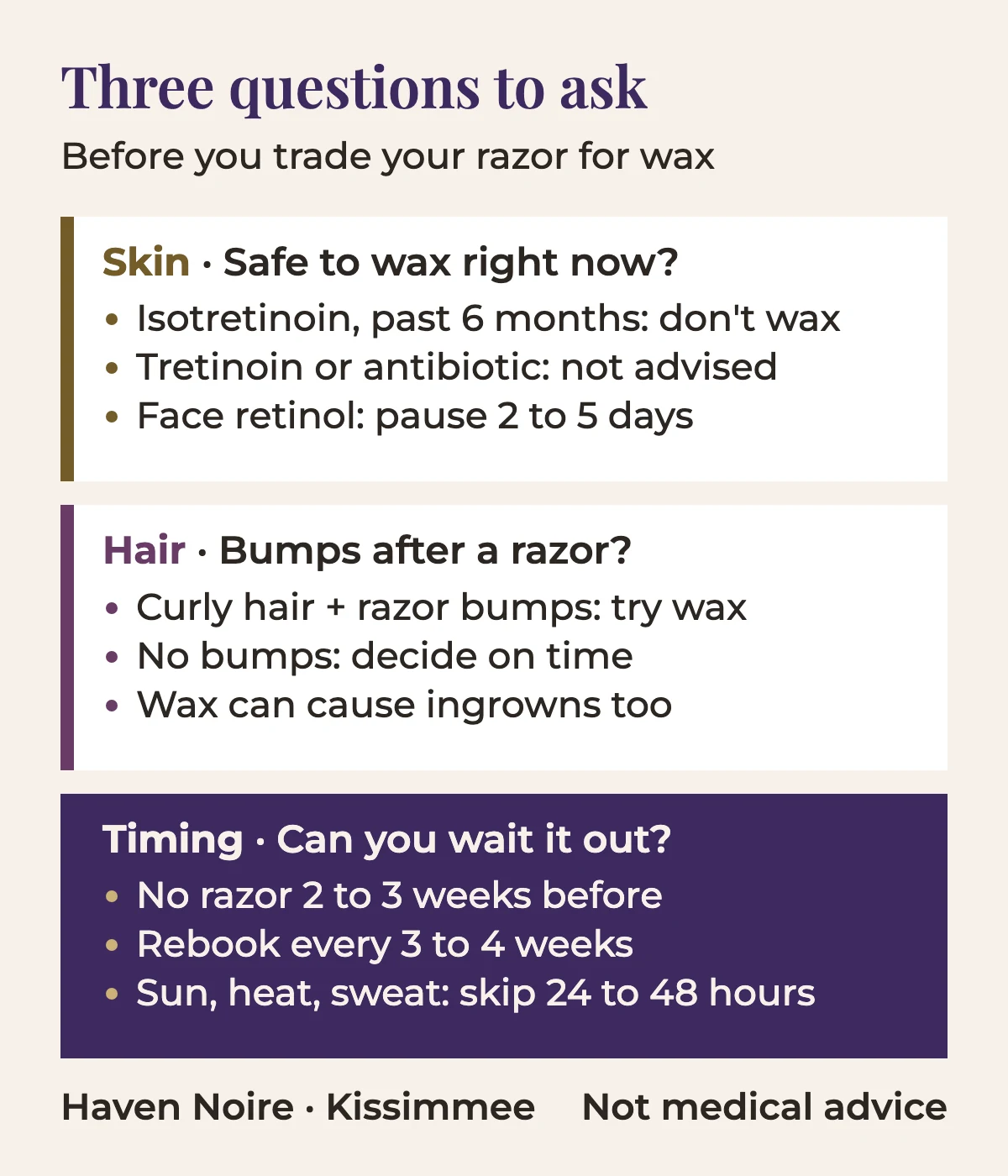
Most waxing vs shaving searches come down to one question: should I switch? These three questions, built from AAD, NHS, and Cleveland Clinic guidance plus our own waxing guidance, help you answer it. They're a checklist, not a medical screening. Ask them in order. The first one can settle the question on its own.
Is waxing safe for your skin right now?
Check medications first. The AAD's hair removal guide says waxing is not recommended if you're taking isotretinoin or took it in the past six months, using an antibiotic, or applying tretinoin, because these medications thin your skin and it could tear when the wax comes off. Its step-by-step waxing guide adds two more: pause retinol and prescription retinoids two to five days before waxing your face, and never wax sunburned or very sensitive skin.
Any yes means waxing waits. Ask your prescriber or dermatologist which hair removal suits you in the meantime. Pregnant, or managing eczema, rosacea, an infection, or keloid scars? Check with your doctor or dermatologist before a first wax, and tell us when you book. Waxing your brows, lip, or chin? See the three questions to ask before a face wax too.
Does a razor leave you with bumps?
If your hair is coarse or curly and shaving leaves bumps, you have the most to gain from a razor-free trial, because the AAD names shaving as the cause. If a razor never bothers your skin, waxing's main draw is time: weeks between sessions instead of days.
Either way, waxing brings its own ingrown risk, so go in planning to manage it.
Can your calendar handle it?
Waxing asks for three kinds of patience:
- Two to three weeks without a razor before your first wax, so hair reaches about a quarter inch.
- A rebook every 3 to 4 weeks, with no shaving in between.
- 24 to 48 hours after each wax without heat, friction, sweat, or direct sun. In Central Florida, that rules out pool days and hot workouts.
If a grow-out gap or a two-day pause won't fit your life right now, shaving well is a fine answer.
| Your answers | Our take |
|---|---|
| A flagged medication, or a sunburn | Don't wax yet. Ask your prescriber or dermatologist first. |
| Skin clear, razor bumps, schedule fits | The strongest case for a wax trial. Give it three appointments. |
| Skin clear, no bumps, schedule fits | Wax for longer gaps between sessions, or keep shaving. Both are reasonable. |
| Skin clear, schedule doesn't fit | Shave with the AAD's technique for now, and revisit later. |
Switching From Shaving to Waxing: Getting Through the Grow-Out
Most shaving vs waxing guides stop at the verdict. The next problem is the two or three weeks of stubble between your last shave and your first wax. Here's how to get through it.

- Pick your first wax date, then count back two to three weeks. That's your last shave. The AAD's waxing guide puts the right length at one-fourth to three-fourths of an inch.
- Plan the grow-out around your calendar. Our advice: start it in a stretch without pool days, photos, or a beach trip.
- Don't shave just the edges. Any shave restarts the count, and wax can't grip hair that's too short. If hair gets very long, we can trim it first.
- Tell us about medications and skin products when you book, especially retinoids, tretinoin, antibiotics, or isotretinoin.
- Book at least two days before any pool, beach, or gym plans, so the 24 to 48 hour window has passed.
- Judge waxing after three appointments, not one. That's our advice, since hair grows in cycles: the first wax can leave a few short hairs behind, and your rhythm takes a couple of visits to show.
- Rebook every 3 to 4 weeks and keep the razor away. Shaving between waxes disrupts the growth cycle and can cause ingrown hairs.
Booking your first Brazilian? Our first Brazilian wax prep guide covers prep and day-of comfort. For the first two days after any wax, follow our waxing aftercare guide.
Waxing vs Shaving by Body Area
The right answer can change from one area to the next. Here's each area on our menu, with the note that matters most there.
| Area | Waxing at Haven Noire | What to weigh |
|---|---|---|
| Brows, upper lip, chin | Brows $15, Lip $10, Chin $10 (10 to 15 minutes) | Retinoids matter most on the face; see our face waxing guide |
| Underarms | $15, about 15 minutes | Shaving is common here; waxing trades daily stubble for weeks |
| Bikini line | $30, about 15 minutes | If your hair here is coarse or curly, ingrowns are more likely (NHS) |
| Brazilian | $60, about 30 minutes | The AAD suggests leaving Brazilian waxes to professionals |
| Legs | Lower or upper $40 (30 minutes); full $80 (45 minutes) | Quick to shave, but stubble returns in days |
| Back | $40, about 15 minutes | Hard to reach with a razor on your own |
Every wax is performed by a licensed esthetician in a private, hygienic setting, for women, men, and teens. Each visit follows five steps: consultation, cleanse and prep, the wax, tweeze and tidy, then soothing post-wax care with ingrown-prevention guidance.

Still choosing your bikini coverage? Compare Brazilian vs bikini wax. Shaving your underarms and fighting dark marks? See how to get rid of dark underarms. Ready to try wax there instead? Our guide to waxing your underarms checks four salon promises against the evidence.
If you'd book a Brazilian every few weeks
A razor costs little per pass, but the passes never stop. If you settle into a Brazilian every 3 to 4 weeks, the Smooth Membership is $59.99 a month for unlimited Brazilian waxes, against $60 a visit, with a three-month minimum. It covers Brazilians only; members get 10% off other waxing services.
When to See a Dermatologist or Doctor Instead
We're licensed estheticians. We can't diagnose a skin or hormone condition, and neither a razor nor wax treats one. Here's when a medical appointment comes first.
After shaving or waxing
- Razor bumps continue after you've changed your shaving habits. The AAD says to see a board-certified dermatologist, and warns that untreated razor bumps can leave deep grooves and raised scars.
- Redness or swelling after a wax lasts more than two days. That's the AAD's line for seeing a board-certified dermatologist.
- An ingrown hair, or the skin around it, is very painful, hot, or swollen, or comes with a high temperature or feeling very unwell. The NHS says to see a doctor.
When the hair itself is the question
Sometimes the reason you're weighing waxing vs shaving is new or heavier hair. The NHS page on hirsutism advises seeing a doctor if excess hair is a problem for you, particularly with other symptoms such as irregular periods. It names thick, dark hair on a woman's face, neck, chest, tummy, lower back, buttocks, or thighs as a reason to go. It advises an urgent appointment if new thick, dark hair suddenly starts growing on your face and body, your voice is getting lower, or your muscles are getting bigger.
The NHS lists shaving and waxing among the ways to manage the hair, so either can handle what you see while your doctor looks into why it's there. Not sure whether it's a wax question or a doctor question? Contact us before you book, and we'll talk it through.
Frequently Asked Questions About Waxing vs Shaving
Does waxing make hair grow back thicker?
No source we found says it does. Cleveland Clinic suggests the opposite, that waxing can lead to thinner regrowth over time, but it cites no study, and we found none, so we don't promise finer hair either. Expect the same hair you have now, removed from the root and back in a few weeks.
Does shaving make hair grow back thicker or darker?
No. Cleveland Clinic says shaving won't make hair regrow thicker or faster, and a 2007 BMJ article on medical myths notes that a 1928 clinical trial found shaving had no effect on hair growth. Shaved hair only seems coarser because the razor removes its fine, tapered tip, and new hair hasn't been lightened by sun yet.
Is waxing better than shaving for razor bumps?
It can be worth a trial. The American Academy of Dermatology says razor bumps happen when shaving irritates the skin, and that stopping shaving eliminates the cause. Waxing isn't bump-proof, though: the NHS says waxing can also lead to ingrown hairs. If bumps continue after you change your routine, see a board-certified dermatologist.
How long should I stop shaving before my first wax?
About two to three weeks, so hair reaches roughly a quarter inch and the wax can grip it. The American Academy of Dermatology puts the range at one-fourth to three-fourths of an inch. If it grows much longer, we can trim it first. Don't shave in between, or you restart the count.
Can I shave between waxing appointments?
It's best not to. Shaving resets your hair length, so it can push your next wax back, and it disrupts the growth cycle and can cause ingrown hairs. If you're running late, let the hair grow and book. We suggest rebooking every three to four weeks for the smoothest results.
Does waxing hurt more than shaving?
In the moment, it can. The American Academy of Dermatology calls shaving painless unless you cut yourself, and notes that removing wax can be painful. At Haven Noire, most clients find the discomfort brief and very manageable. The trade is time: a shave lasts one to three days, and a wax lasts a few weeks.
Is waxing or shaving better for Black skin?
Neither wins for everyone. The AAD says razor bumps are especially common in men with darker skin tones, and that coarse, curly hairs cut short can curve into the skin. But irritation and cuts can leave dark spots on deeper skin, and waxing has its own medication limits. Choose the method your skin tolerates, done gently.
Can I wax if I use retinol or tretinoin?
Not without a plan. The American Academy of Dermatology advises pausing retinol and prescription retinoids two to five days before waxing your face. A second AAD page says waxing isn't recommended while you're applying tretinoin or using an antibiotic, or within six months of isotretinoin. Ask your prescriber first, and tell us what you use.
More from the Journal

About the author
Tiffany · Licensed Esthetician · Licensed PMU Artist
Tiffany is a Florida-licensed esthetician and permanent makeup artist and the founder of Haven Noire. She specializes in customized facials, corrective skincare, and waxing for melanin-rich and all skin types, and is known for a calm, education-first approach that puts first-time clients instantly at ease.
Meet Tiffany →