
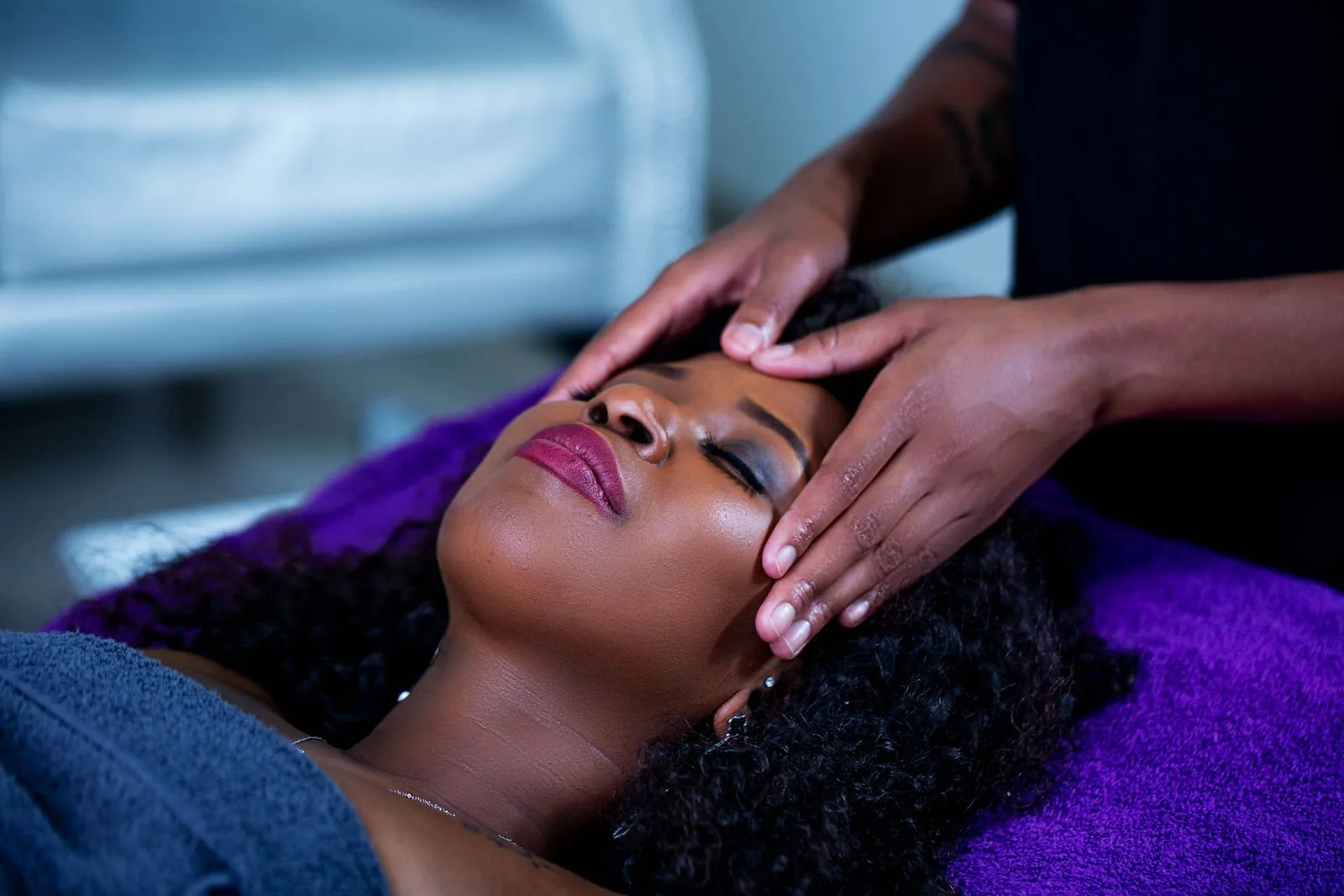
At Haven Noire, a first facial starts with a conversation about your skin and ends with serums, moisturizer and SPF. In between come a double cleanse, a skin analysis, exfoliation and extractions as needed, and a mask with facial massage. Tell your esthetician about your medications first, and speak up to pause or skip any step.
Below, you'll find each step of our Signature Facial as we publish it, a simple plan for before, during and after, what to do about a breakout or a dark mark, and the signs that call for a doctor instead of a spa. Booking for a teenager? Start with our parent's guide to teen facials.
What Happens at Your First Facial, Step by Step
First-time facial guests are among the people our Signature Facial is made for. These are its five steps, as written on our Signature Facial page:
- Consultation and double cleanse: we discuss your skin and gently remove makeup and impurities.
- Skin analysis: your esthetician examines your skin to customize every step.
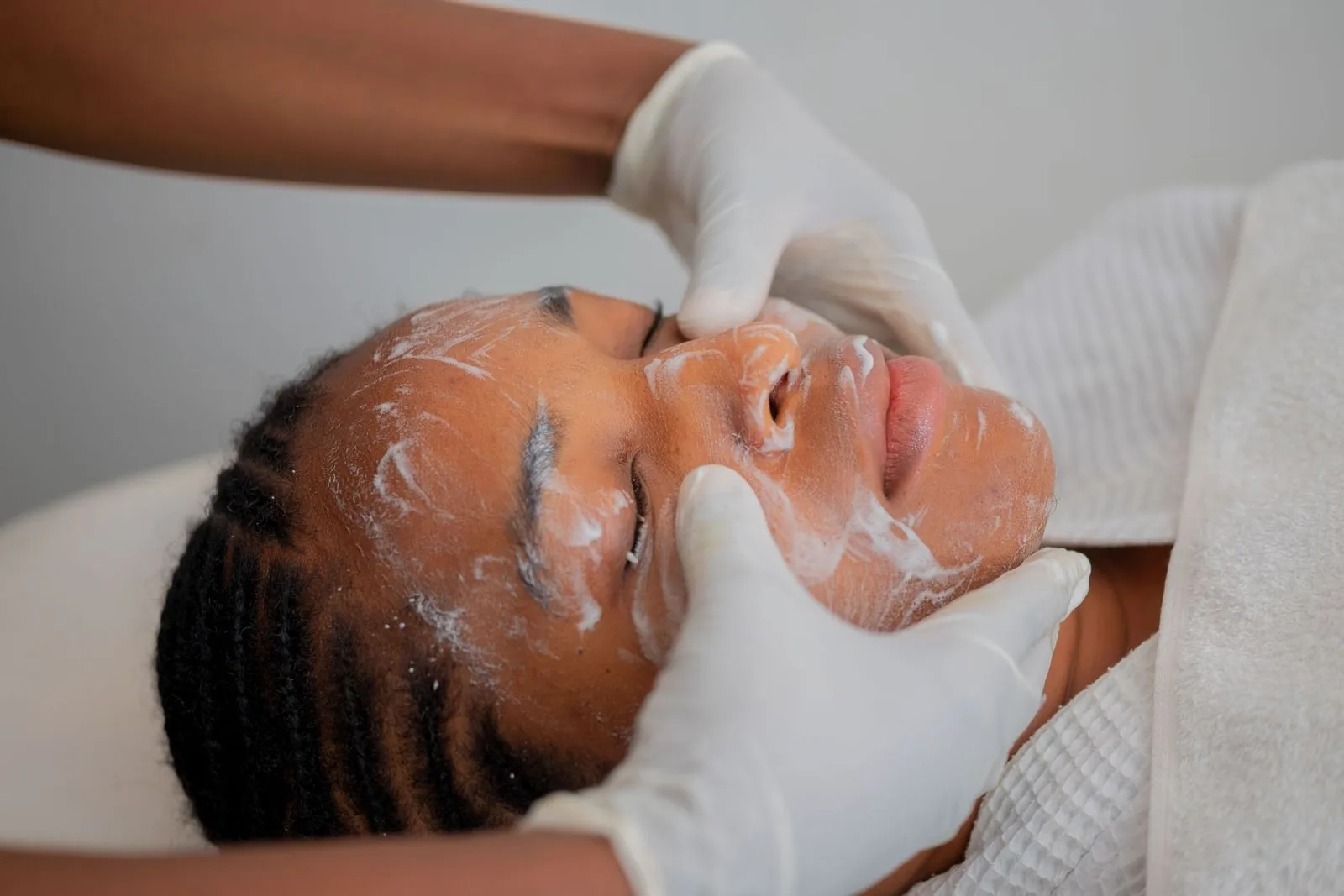
- Exfoliation and extractions as needed: to refine texture and clear congestion.
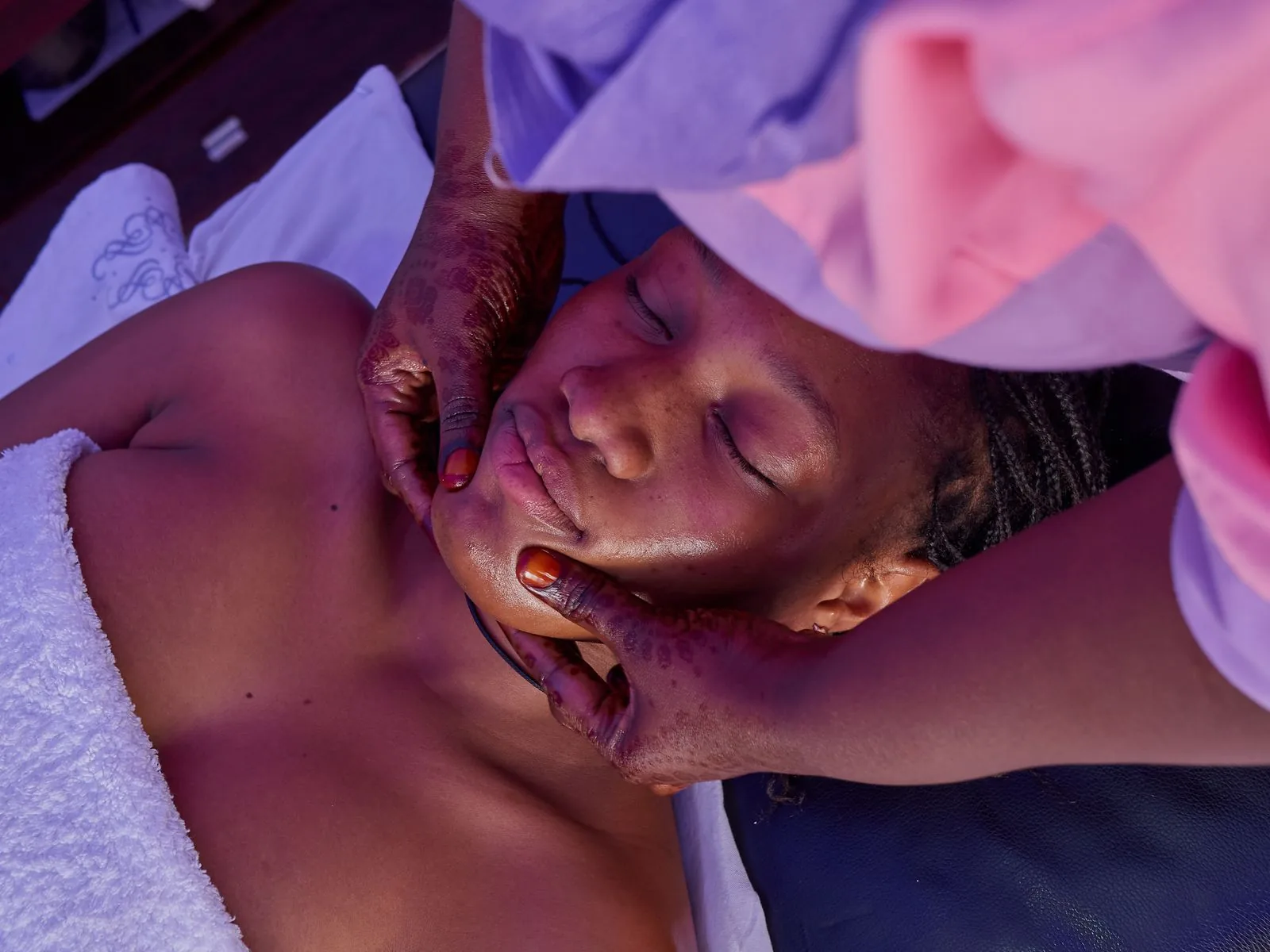
- Custom mask and facial massage: targeted treatment paired with relaxing massage (ask about lymphatic facial massage).
- Serums, moisturizer and SPF: sealing in hydration and protection.
Every facial begins with a personalized skin analysis at no extra charge, so what happens in steps three to five depends on your skin that day. In our relaxing facials, we use Dermalogica's skin-type-specific formulas to customize cleansing, exfoliation and treatment.
Three details worth knowing before you book
- You don't need to arrive bare-faced. Step one gently removes makeup and impurities. Want the same two-step routine at home? See how to double cleanse without irritating your skin.
- Extractions are listed "as needed." They're there to clear congestion when your skin calls for it. Wondering whether a bump belongs in that step? See which bumps belong in the extraction step.
- Peels come later. A skin consultation is required before any chemical peel, and peels aren't available on a first visit.
60 or 90 minutes?
The 60-minute Signature Facial covers the five steps above. The 90-minute version adds a hand and arm massage and an eye treatment for a longer, more restorative visit. Both suit a first appointment. If you already know you want to work on acne, dark spots or texture, compare signature and corrective facials before you book. Still deciding on a type? Start with what type of facial to get.
Your First Facial Plan: Before, During and After
Your first visit has three parts you control: tell your esthetician what's on and in your skin before you start, speak up while the treatment happens, and watch your skin for the next few days. This plan is built from dermatology and OB-GYN guidance plus our published steps; it's not a medical checklist.
What your esthetician needs to know first
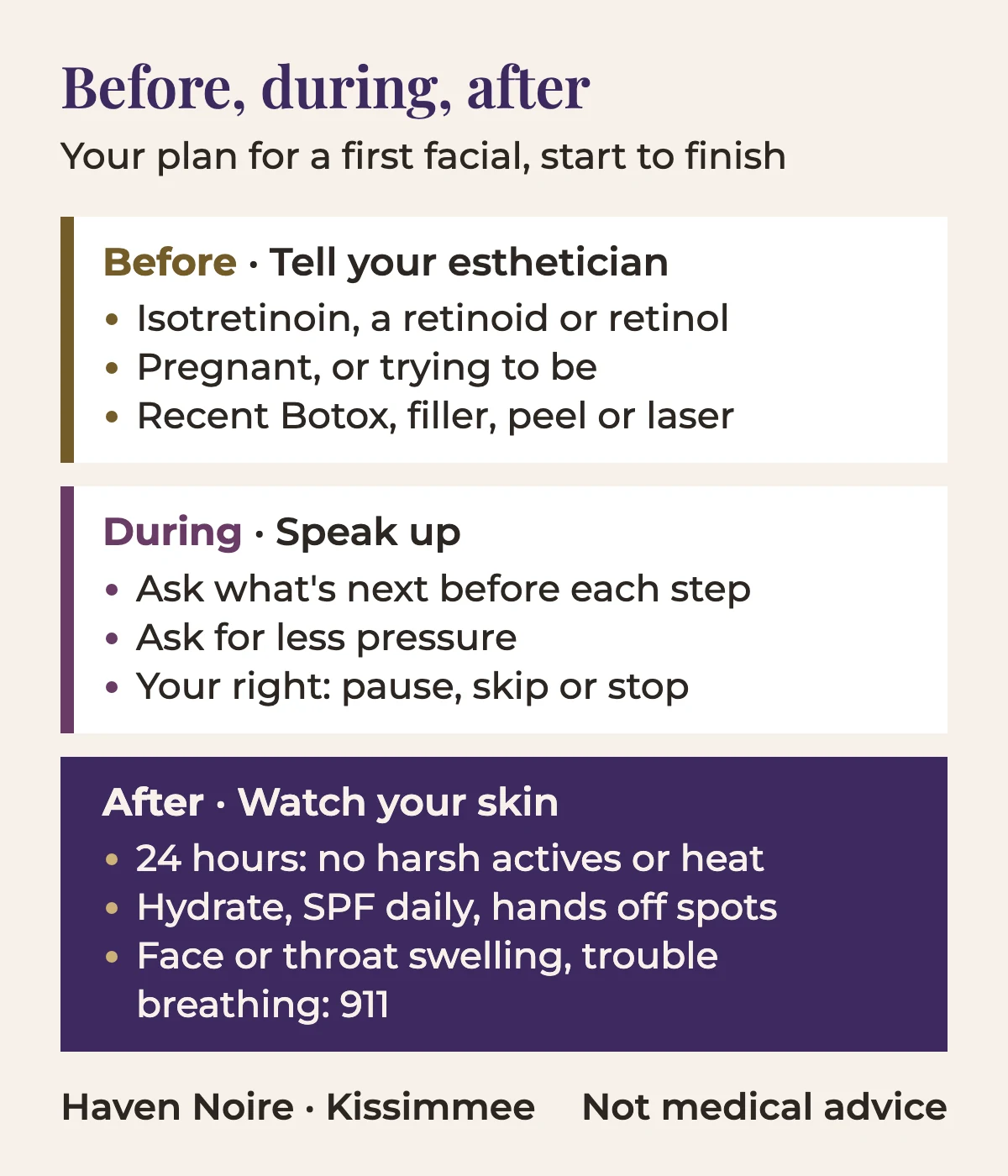
Step two exists to customize every step, and that only works with the full picture. Bring these up during the consultation, even if they seem unrelated to a facial:
- Isotretinoin (once sold as Accutane). The American Academy of Dermatology (AAD) says skin is more sensitive while you're taking it, and that exfoliants such as glycolic, lactic and salicylic acid, sugar or coffee scrubs and exfoliating beads can weaken and irritate it.
- A retinoid or retinol. The AAD notes that retinoids can make skin more sensitive to the sun, and a dermatologist it quotes warns that on skin of color, irritation can trigger dark marks. Breaking out since you started one? See how long purging lasts.
- Pregnancy, or trying to get pregnant. The American College of Obstetricians and Gynecologists (ACOG) says it's generally recommended that topical retinoids be avoided during pregnancy, and lists melasma, brown patches on the cheeks, nose and forehead, among common pregnancy skin changes.
- Botox or filler. After botulinum toxin injections, the AAD advises not to rub or massage the injected areas. A Signature Facial includes facial massage, so tell us what you had, where and when. After filler, follow your injector's instructions on touch and massage.
- A recent peel, laser or other procedure on your face. If you're unsure whether it's too soon, ask the clinician who treated you before you book.
- Any product that has ever given you a rash, itch or sting.
When to check with a doctor before you book
- You're taking isotretinoin: ask your dermatologist whether a facial fits your treatment, since the AAD lists exfoliants among the things to avoid while you're on it.
- You're pregnant and unsure which acne products are right for you: ACOG suggests deciding with your dermatologist and OB-GYN together.
- You have deep, painful acne cysts or nodules: that's a dermatologist's job. The AAD describes isotretinoin as a prescription treatment for exactly this kind of acne.
- You have a rash, hives or a skin infection on your face right now: have a doctor check it first.
During the facial, you can ask, pause or skip
You're in charge of your own appointment. You can ask what's coming before each step, ask for less pressure, skip any step, extractions included, or ask to stop. That's your right as a client wherever you book, and you don't need to give a reason. The tip is your call too; here's how much to tip for a facial.
If speaking up mid-facial feels awkward, borrow a line:
- "Can you tell me what's next before you start?"
- "Can we skip extractions today?"
- "That's a little too much pressure."
- "I need a minute."
Speaking up matters more on melanin-rich skin. The AAD explains that in medium to dark skin tones, an injury or an irritating product can trigger extra melanin, which shows up as a dark spot. Our guide to facials for Black skin goes deeper on extraction pressure and heat.
What to watch for in the first few days
Our aftercare for a Signature Facial is short: keep skin hydrated, skip harsh actives and heat for 24 hours, and wear SPF daily. Your esthetician will also recommend home-care products to keep your glow going between visits. To fit them into your day, use our morning skincare routine as a template.
Over the next few days, watch for three kinds of change:
- A new pimple: hands off. The next section covers what helps.
- A darker patch where skin was irritated: protect it from the sun and give it time.
- Swelling, a spreading rash, or skin that's hot and painful: don't wait it out. Use the doctor guide further down.
Breakouts and Dark Marks After a Facial
The appointment lasts an hour, but your skin keeps responding for days. If a new pimple or a dark mark shows up afterward, patience and protection beat scrubbing and squeezing.
If you break out after a facial
Squeezing a post-facial pimple can turn a small problem into a bigger one. The AAD's guide to acne in darker skin tones says picking, popping or squeezing acne raises your risk of a scar, and that in skin of color, acne often comes with dark spots.
- Keep your hands off it.
- Wash with a mild cleanser and your fingertips, then pat dry with a clean towel, as the AAD advises for skin with breakouts.
- Skip scrubs and strong soaps. The AAD says they actually worsen acne.
- Choose products labeled "non-comedogenic" or "won't clog pores."
- Tell your esthetician at your next visit, so the plan can change.
If a dark mark shows up
On melanin-rich skin, irritation can leave color behind. The AAD says a dark spot or patch can appear as a skin injury heals, and that it will fade in time if you don't re-injure the skin. A spot a few shades darker than your natural color usually fades within 6 to 12 months once the cause stops. Color that sits deeper, often slate blue to gray, can take years.
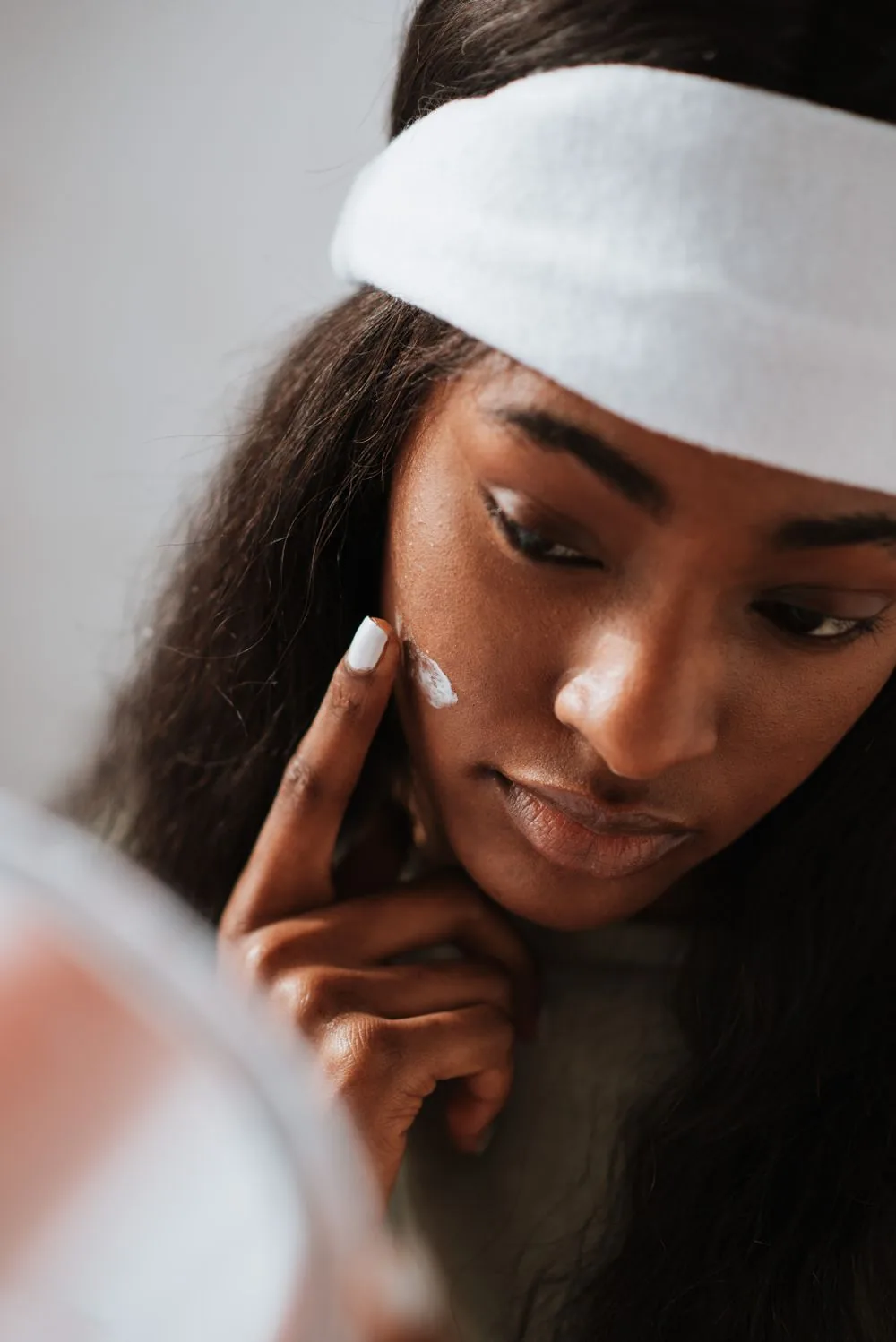
- Wear sunscreen every day. The AAD says effective treatment for dark spots begins with sunscreen, and recommends a tinted one with iron oxide. Here's how to find iron oxide on a sunscreen label.
- Reapply every two hours, and after swimming or sweating, as the AAD advises. In Kissimmee heat, the sweating part comes up often.
- Leave the spot alone: no picking, scrubbing or bleaching.
For a longer fading plan, read how to fade hyperpigmentation on melanin-rich skin.
Booking your second facial
Once you know how your skin responds, the next question is rhythm. Our guide to how often you should get a facial covers cadence. If acne, dark spots or uneven tone is the real goal, a corrective facial may be the better next step.
When to See a Doctor After a Facial
A spa can't diagnose or treat an allergic reaction or an infection. If you notice any of these, get the right kind of care, sorted here by urgency. If you're not sure which group you're in, choose the more urgent one.
Call 911 or go to the emergency room
- Trouble breathing, wheezing, chest tightness or trouble swallowing, or feeling dizzy or faint along with itching, hives or swelling. MedlinePlus, from the U.S. National Library of Medicine, calls anaphylaxis, a severe allergic reaction, an emergency and says to call 911 immediately.
- Swelling of your face, lips, tongue or throat. The AAD warns that swelling in these areas can cause breathing or swallowing problems that come on quickly.
- Skin that's painful, hot and swollen, along with a very high temperature, chills or shivering, a fast heartbeat or fast breathing, purple patches (harder to see on brown or Black skin), cold, clammy or pale skin, or feeling dizzy, faint or confused. The NHS lists these as signs of serious complications of cellulitis, a skin infection.
Don't drive yourself to the emergency room. Ask someone to drive you, or call 911 for an ambulance.
Call your doctor or an urgent care clinic today
- Skin that's painful, hot and swollen, without the warning signs above. The NHS lists these as signs of cellulitis and notes that redness may be less obvious on brown or black skin.
- Hives on their own, without the swelling or breathing signs above: raised, itchy bumps or patches that can appear suddenly. On brown or Black skin, the AAD says they're often the same color as your skin or slightly darker or lighter, so feel for raised, itchy areas instead of looking for redness.
Book a dermatologist appointment
- An itchy rash or blisters that show up hours or days after the facial. The AAD says contact dermatitis, a reaction to something that touched your skin, often starts with itch and then a rash, and that a board-certified dermatologist can help find the cause. Tell your esthetician too.
- Deep, painful acne cysts or nodules, or breakouts that keep coming back.
- A dark mark that's slate blue or gray, or one that isn't fading with daily sunscreen and gentle care.
This is general information, not medical advice. If you have a skin condition, are pregnant, or take a prescription medication, your own doctor has the final word.
Your First Facial at Haven Noire: Time, Price and Place
If you're booking in Kissimmee, here's what each option includes and costs at Haven Noire (prices as of November 2026):
- Signature Facial, 60 minutes: $95, or 3 for $210
- Signature Facial, 90 minutes: $110, or 3 for $285, with a hand and arm massage and an eye treatment
- Glow Membership: $74.99 a month for one 60-minute Signature Facial every month, with a three-month minimum
- Corrective Facial, 60 minutes: $135, for acne, tone, texture or aging (ask us whether it fits a first visit)
Chemical peels need a skin consultation first and aren't offered on a first visit. For what changes the price of a facial and how single visits, packages and memberships compare, read our facial cost guide.
Haven Noire was founded by Tiffany, a Florida-licensed esthetician who specializes in customized facials, corrective skin care and waxing for melanin-rich and all skin types.
We're at 231 Ruby Avenue, Unit E, steps from Lakefront Park, open Monday through Saturday from 10 AM to 7 PM. We welcome guests from St. Cloud, Celebration, Poinciana and the greater Orlando area. See every option on our facials in Kissimmee page.
Frequently Asked Questions About Your First Facial
What should I expect at my first facial?
Expect a conversation about your skin, then a series of steps chosen for it. At Haven Noire, the 60-minute Signature Facial covers a consultation and double cleanse, a skin analysis, exfoliation and extractions as needed, a custom mask with facial massage, then serums, moisturizer and SPF. You can ask questions or pause at any point.
Does a facial hurt the first time?
A Signature Facial is built to be relaxing, and facial massage is one of its five steps. If anything feels uncomfortable, such as extractions, say so right away. It's your right to ask for less pressure, skip that step, or stop the treatment, and you don't need to explain why.
What should I tell my esthetician before a facial?
Tell your esthetician about isotretinoin, retinoids or retinol, pregnancy, and any recent Botox, filler, peel or laser treatment. Mention products that have given you a rash or sting. The American Academy of Dermatology says skin is more sensitive while you're taking isotretinoin, and it advises against rubbing or massaging areas treated with botulinum toxin.
What should I do if I break out after a facial?
Leave the breakout alone. The American Academy of Dermatology says picking, popping or squeezing acne raises your risk of a scar. Wash gently with your fingertips, skip scrubs and strong soaps, and use non-comedogenic products. If a breakout is deep and painful or keeps coming back, see a dermatologist.
Why did I get a dark spot after my facial?
On medium to dark skin tones, irritation or a small injury can trigger extra melanin, which shows up as a dark spot. The American Academy of Dermatology says a spot a few shades darker than your skin usually fades within 6 to 12 months once the cause stops. Daily sunscreen helps it fade.
How long does a first facial take?
A Signature Facial at Haven Noire takes 60 or 90 minutes. The 60-minute version, $95, covers the five core steps. The 90-minute version, $110, adds a hand and arm massage and an eye treatment. Either one starts with a consultation and double cleanse, so your esthetician learns about your skin first.
Can I get a chemical peel on my first visit?
Not at Haven Noire. A skin consultation is required before any chemical peel, and peels aren't available on a first visit. Start with a Signature Facial instead, or ask us whether a Corrective Facial fits your first visit. After that consultation, you and your esthetician can decide whether a peel fits your skin and your goals.
More from the Journal

About the author
Tiffany · Licensed Esthetician · Licensed PMU Artist
Tiffany is a Florida-licensed esthetician and permanent makeup artist and the founder of Haven Noire. She specializes in customized facials, corrective skincare, and waxing for melanin-rich and all skin types, and is known for a calm, education-first approach that puts first-time clients instantly at ease.
Meet Tiffany →