
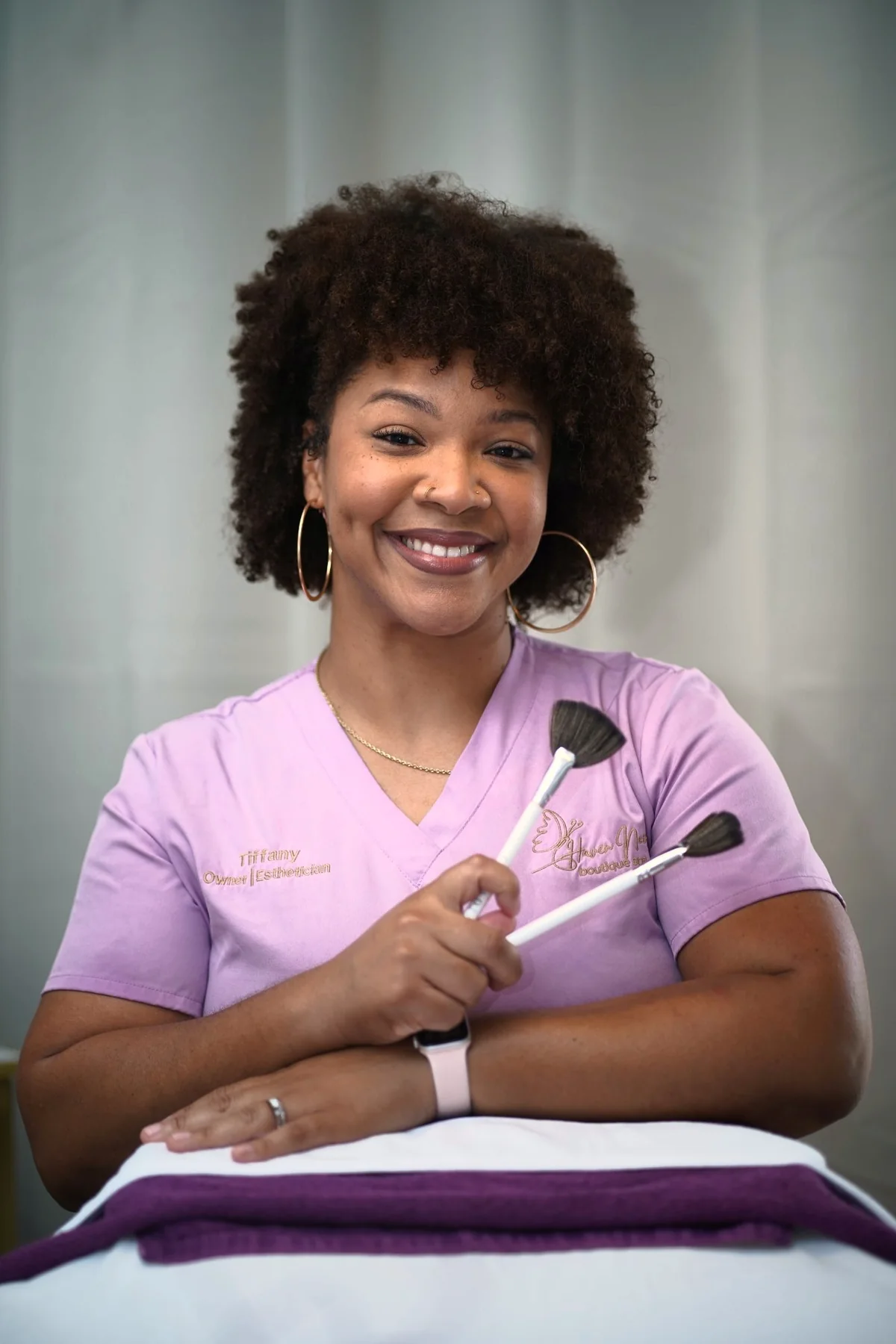
The best facials for Black skin do not depend on secret "melanin-safe" products. They depend on control. Melanin-rich skin answers inflammation with color, so every step of a facial (heat, pressure, exfoliation, acid) has to stay below the point where pigment cells start producing dark marks. Stay under that line and a facial clears and brightens. Cross it and the same facial leaves spots that outlast the glow by months.
This guide gives you a simple way to judge any facial on deeper skin tones, six questions to ask an esthetician before you book, and the part most guides skip: what to do in the days and weeks after you leave the treatment room.
What Is a Facial for Black Skin?
A facial for Black skin is a facial planned around how melanin-rich skin reacts to injury. It limits heat, friction, and acid depth so inflammation stays below the point where pigment cells produce new dark marks, called post-inflammatory hyperpigmentation (PIH).
The steps look familiar: cleanse, analyze, exfoliate, extract, treat, protect. The difference is dosing. How long the steam runs, how hard extractions press, which acid touches your skin and for how long: those choices decide whether you leave brighter or leave with new marks.
Why Melanin-Rich Skin Reacts Differently
Darker skin does not carry more pigment cells than lighter skin. Its pigment cells, called melanocytes, are more productive and quicker to respond. When skin is irritated, they push extra melanin into the area. That deposit is the dark mark you see after a breakout, a rough wax, or an aggressive facial. Brows, lip, or chin on your list? See how to prep melanin-rich skin for facial waxing.

- Lighter skin often shows irritation as redness that fades in days.
- Deeper skin often shows the same irritation as a brown or gray mark that can last for months.
- The trigger is identical. The response is not.
A 2010 review in the Journal of Clinical and Aesthetic Dermatology found that post-inflammatory hyperpigmentation affects darker-skinned patients more often and more severely, and cautioned that irritation from treatment can itself make PIH worse.
Where the Fitzpatrick Scale Fits (and Where It Falls Short)
Estheticians and dermatologists describe skin with the Fitzpatrick scale, a type I to VI system originally built to predict how skin burns and tans in the sun. Most Black skin sits at type V or VI. Many Latina, South Asian, and Middle Eastern clients sit at type IV.
Here is the catch: the scale measures sun reaction, not inflammation reaction. A label that says "safe for Fitzpatrick I to VI" tells you a product was formulated for that range. It does not tell you how it will be dosed on your face. Even on our own menu, the Lactic Peel is rated for types I to VI while the stronger MandeliClear Peel is rated for types I to V. That is the level of detail a good esthetician volunteers before you ask. For how phototype differs from oily, dry, or combination skin, see skin type vs. skin tone.
How to Choose Facials for Black Skin: Keep Inflammation Low
Your skin can absorb a limited amount of irritation in a given window before its pigment cells respond. Melanin-rich skin has less room to spare. Every step of a facial adds some irritation, and a dark mark is what too much looks like.
Most advice stops at "be gentle with dark skin." That is half the picture. A facial can go wrong in both directions:
- Too much heat, pressure, or acid in one visit triggers PIH directly.
- Skipping extractions and exfoliation out of caution leaves congestion and acne in place, and acne is one of the most common sources of dark marks on Black skin.
Gentle is not the goal. Controlled is. A survey of 1,412 dermatology visits at the Skin of Color Center in New York found acne and uneven pigmentation (dyschromia) among the five most common diagnoses for Black patients, while dyschromia did not make the top ten for white patients. Leave acne untreated and it causes the marks anyway.
Friction and Force
Mechanical steps add irritation fastest on deeper skin, because pressure and scraping can injure skin with no visible warning until the mark appears days later.
What adds irritation
- Extractions with heavy pressure, or repeated attempts on the same pore.
- Gritty scrubs and spinning brushes.
- Microdermabrasion passes stacked on skin that is already sensitized.
- Dermaplaning over active breakouts or razor bumps.
How to keep it low
- Soften congestion first so it releases with less force.
- Extract only what is ready. Leave the rest for the next visit. Our guide to facial extractions shows which bumps are ready and which aren't.
- Choose one mechanical exfoliation per session, not two. At home, count how often you exfoliate to keep your weekly total low.
Heat and Chemistry
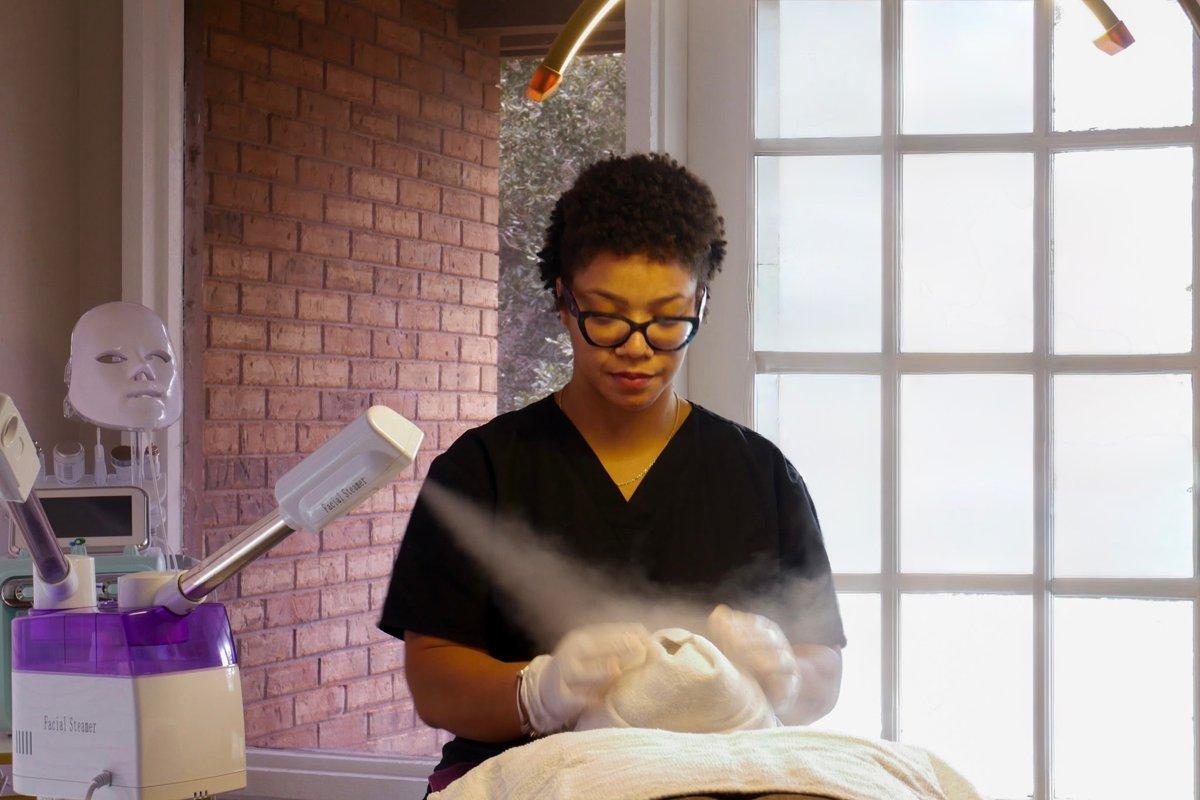
Steam and acids are useful tools. Both are dose-dependent, and the risk sits in strength, contact time, and what is already on your skin from home.
What adds irritation
- Long steam or hot towels on skin that already flushes easily.
- Peels chosen by strength instead of by skin type.
- Peeling skin that is already on a retinoid or exfoliating acid at home.
- A strong corrective peel in peak sun season.
How to keep it low
- Favor acids with gentle, even penetration. Lactic acid hydrates while it exfoliates. Mandelic acid has a larger molecule that moves into the skin more slowly. Our guide to mandelic acid on melanin-rich skin shows why strength and frequency matter as much as the molecule.
- Pause home retinoids and exfoliants before a peel, exactly as your consultation directs.
- Time stronger peels for the lower-UV months. At Haven Noire, the MandeliClear Peel is booked October through March.
- Never accept a peel on a first visit. Haven Noire requires a skin consultation before any peel.
For a full breakdown of lactic, mandelic, and non-acid options on deeper tones, read Chemical Peels for Melanin-Rich Skin.
The Recovery Window
The risk does not end when you walk out of the spa. Your skin keeps repairing for days, and anything that irritates it in that window adds to what the facial already put it through. This is where most post-facial dark marks on Black skin actually start.

What adds irritation
- Unprotected sun. In Central Florida that includes the drive home.
- Restarting retinoids or acids too soon.
- Picking at flakes or a post-extraction bump.
- Saunas, steam rooms, and hard workouts in the first 24 hours.
How to protect it
- Wear a broad-spectrum, water-resistant sunscreen with SPF 30 or higher every morning, as the American Academy of Dermatology recommends, and reapply outdoors.
- Use only the post-care your esthetician sends home until your skin feels normal. Every Haven Noire peel includes a post-care home kit.
- Let flaking shed on its own schedule.
For the step-by-step version after a peel, read What to Do After a Chemical Peel.
How Common Treatments Compare on Irritation
Use this as a starting point for any spa menu. Ratings are our rough guide to how much irritation each treatment typically adds on Fitzpatrick IV to VI skin, not a clinical measurement. A skilled esthetician can raise or lower that for any treatment through technique.
| Treatment | Typical irritation | Best for | Watch for |
|---|---|---|---|
| Hydrating signature facial | Low | Maintenance, dehydration, first visits | Heavy extractions add irritation fast |
| Hydrofacial (hydrodermabrasion) | Low to moderate | Congestion, dullness, dehydration | High suction over active breakouts |
| Lactic peel | Low to moderate | Dryness, dullness, early uneven tone | Home actives that stack on top |
| Dermaplaning | Moderate | Dullness, peach fuzz, product absorption | Active acne and razor bumps |
| Microdermabrasion | Moderate | Rough texture, uneven tone | Stacked passes on irritated skin |
| Mandelic-based corrective peel | Moderate | PIH, post-acne marks, uneven tone | Summer timing; check the Fitzpatrick rating |
| High-strength medical peels and some lasers | High | Physician-directed care only | Choose a dermatologist experienced with skin of color |
The Best Facial for Black Skin, Matched to Your Concern
The best facial for Black skin is the least irritating treatment that still solves your actual concern. Match the treatment to the goal, not to the trend on your feed.
For Maintenance, Dehydration, or Your First Facial
Start with a signature facial. At Haven Noire that means a double cleanse, a skin analysis, extractions only as needed, a custom mask with facial massage, then serums, moisturizer, and SPF. It is the gentlest way to learn how your skin responds before you try anything stronger. Nervous about the visit itself? Here's what to tell your esthetician and what to watch for after.
- Signature Facial, 60 minutes: $95 (3 for $210)
- Signature Facial, 90 minutes: $110 (3 for $285), adds a hand and arm massage and an eye treatment
Not sure which you need? Read Signature vs. Corrective Facials.
For Dark Spots, PIH, and Uneven Tone
Brightening works on melanin-rich skin when it is gradual. A Radiance Brightening corrective facial uses antioxidants and vitamin blends to target discoloration without heavy resurfacing. After a consultation, lactic or MandeliClear peels can speed the fade. For a longer runway, the SWiCH Dermal Rejuvenation Boot Camp is a series of 12 sessions over six months. More on this in our guides to hyperpigmentation and dark spots and fading dark spots on melanin-rich skin.
For Acne and Congestion
Clearing acne early is pigment prevention. Every breakout you avoid is a dark mark you never have to fade. The Acne Oxygen Rx corrective facial pairs oxygen therapy with a purifying charcoal mask to clear congestion and calm inflammation in the same visit. See acne facials and the best facial for acne in Kissimmee.
For Texture, Dullness, and Fine Lines
Choose one mechanical step and pair it with nano infusion rather than stacking exfoliants.
- Dermaplane + Nano Infusion: removes dull surface skin and peach fuzz, then follows with a nano infusion step.
- Microdermabrasion + Nano Infusion: polishes rough texture and uneven tone.
- Hydrofacial: water-based exfoliation with serum infusion, well suited to congested or dehydrated skin.
- Luxe Lift Anti-Aging: peptides and collagen-supporting actives for firmness and fine lines.
Comparing the first two? Read Dermaplaning vs. Microdermabrasion. Already booked dermaplaning? Here's what to do in the days after.
For Melasma
Melasma is not the same as PIH. It is driven by hormones, sun, and heat, so it needs a slower plan and a consultation before any active treatment. Treat it as a long-term management project, not a single appointment. Learn more about melasma care.
For Men With Razor Bumps
Beard-area bumps (pseudofolliculitis barbae) are a constant source of dark marks for men with coarse or curly hair. For the daily side, see the AAD's shave plan for curly beard hair. The same rules apply: no dermaplaning over active bumps, exfoliation chosen for the beard line, and strict aftercare. See facials for men.
How to Choose an Esthetician for Black Skin: 6 Questions to Ask Before You Book
An esthetician for Black skin should answer these six questions with specifics. Vague answers are the red flag.
- "Which peels do you use on Fitzpatrick V and VI skin, and which do you avoid?" A good answer names specific acids and a reason. "Everything is safe for everyone" is not an answer.
- "Do you require a consultation before a peel?" The answer should be yes.
- "How do you handle extractions on skin that marks easily?" Listen for softening first, extracting only what is ready, and stopping early.
- "What do you do if my skin turns hot or red mid-treatment?" They should adjust or stop, then calm the skin before continuing.
- "What aftercare will I go home with?" Expect specific products and a timeline, not "keep it moisturized."
- "Can I see results on skin like mine?" Ask for before-and-after photos on deeper skin tones, not only lighter ones.
Does Your Esthetician Need to Be Black?
What protects your skin is skill with deeper tones, built through training and repetition on skin like yours. Many clients still search for a Black esthetician near them because they have been undertreated, rushed, or misread before, and lived familiarity with melanin-rich skin closes that gap. Haven Noire is a Black-owned facial spa built around melanin-rich skin, and we welcome every complexion. See client results before you book.
Keeping Results and Fading Old Marks
Once you find a facial that does not darken your skin, the next problem is momentum. One good facial evens tone for a few weeks. Pigment that took months to form takes a series and a steady home routine to fade.
Build a Series, Not a One-Off
- Maintenance and glow: a signature facial about every four weeks.
- Active concerns (acne, pigmentation, texture): a corrective series, often every two to three weeks to start, then taper.
- Sensitive or reactive skin: every five to six weeks, with gentle treatments.
A membership makes the cadence automatic. The Corrective Membership covers any corrective facial, including the Hydrofacial, each month for $109.99, plus 10% off extra services and in-spa products (three-month minimum). For more on timing, read How Often Should You Get a Facial?
Fading Marks Left by a Past Facial
If an earlier facial already left marks, work the problem in this order.
Step 1: Stop the source
- No picking, no scrubs, no products that sting. Then calm a stressed skin barrier before trying anything new.
- Pause anything that started the irritation.
Step 2: Protect every day
- Daily broad-spectrum SPF 30 or higher. Marks darken with every unprotected day.
Step 3: Treat gradually
- Home brightening ingredients such as azelaic acid, niacinamide, vitamin C, kojic acid, and licorice extract. Here's what niacinamide can and can't fade.
- Prescription options such as hydroquinone come through a dermatologist.
- Professional brightening facials and peels once the skin is calm.
When to see a dermatologist instead
- A mark that is raised, thick, or growing, which can signal a keloid or hypertrophic scar.
- A new patch or spot that changes shape, size, or color.
- Melasma that has not improved after several months of daily SPF and treatment.
Frequently Asked Questions About Facials for Black Skin
Are facials safe for Black skin?
Yes. Facials are safe for Black skin when the esthetician controls heat, extraction pressure, and acid strength, and when you protect your skin with daily SPF afterward. Most problems come from aggressive technique or poor aftercare, not from facials themselves.
Why did my skin get darker after a facial?
Darkening after a facial is usually post-inflammatory hyperpigmentation. Something in the treatment or the days after (heavy extractions, a strong peel, sun exposure, picking) irritated the skin, and melanin-rich skin responded by depositing extra pigment. It often fades with SPF and gentle brightening care.
Is dermaplaning safe for dark skin?
Dermaplaning is generally well suited to dark skin because it exfoliates without heat or acid. Skip it over active acne, razor bumps, or irritated skin, and protect the fresh surface with daily SPF afterward.
Is a Hydrofacial good for Black skin?
A Hydrofacial is a strong fit for Black skin that is congested, dull, or dehydrated. If your skin looks ashy or grayish, read why dryness shows more on melanin-rich skin before you book. Water-based hydrodermabrasion exfoliates with low friction and infuses serums in the same step, which keeps inflammation low.
Can Black women get chemical peels?
Yes, with the right peel, the right timing, and a consultation first. Lactic and mandelic peels are common choices for deeper skin tones because they exfoliate evenly. Stronger peels are best scheduled in lower-UV months, with strict sun protection afterward.
How often should you get a facial if you have dark skin?
Most skin does well with a facial about every four weeks. For acne or hyperpigmentation, a corrective series every two to three weeks at the start, then tapering, usually moves faster. Reactive skin may do better every five to six weeks.
How much does a facial for Black skin cost in Kissimmee?
At Haven Noire in downtown Kissimmee, a 60-minute Signature Facial is $95, a 90-minute Signature Facial is $110, and a Corrective Facial is $135. Peels start at $110 after a skin consultation, and monthly facial memberships start at $74.99.
From the Right Facial to Lasting, Even Tone
Facials for Black skin are not a separate category of treatment. They are the same tools used with better judgment: fewer steps stacked in one visit, acids matched to your Fitzpatrick type, extractions that stop before they scar, and a recovery window you protect as carefully as the appointment itself. Choose every step on purpose and every visit moves your skin forward instead of setting it back.

Keep exploring
More from the Journal

About the author
Tiffany · Licensed Esthetician · Licensed PMU Artist
Tiffany is a Florida-licensed esthetician and permanent makeup artist and the founder of Haven Noire. She specializes in customized facials, corrective skincare, and waxing for melanin-rich and all skin types, and is known for a calm, education-first approach that puts first-time clients instantly at ease.
Meet Tiffany →