
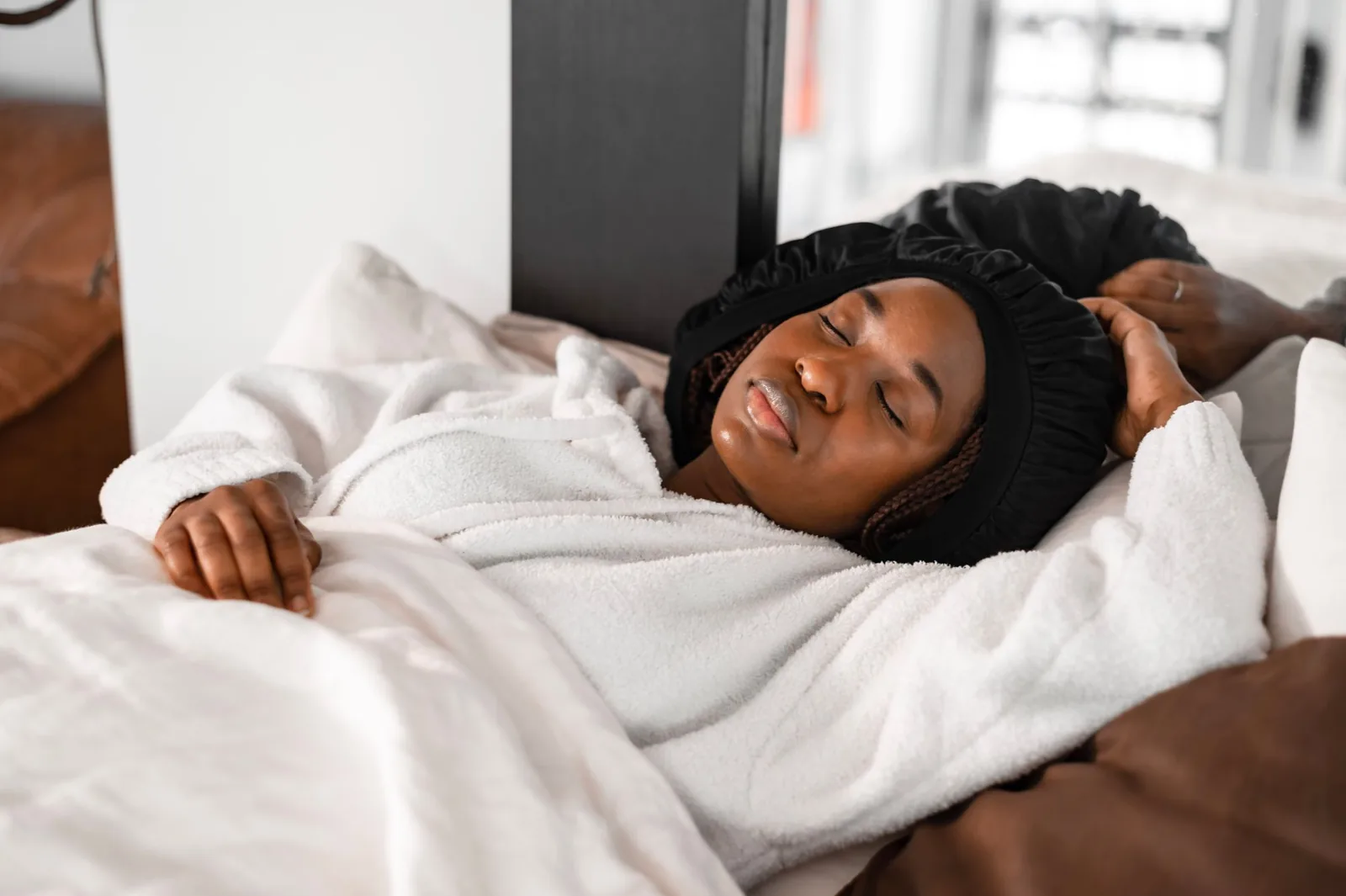
The morning shed is a social media beauty trend: you sleep in layers of skin and hair products, such as overnight masks, under-eye patches, mouth tape, a chin strap and heatless curlers, then peel it all off, often on camera, the next morning. Glamour and Vogue reported on it in 2024, and as of November 2026, Google Trends shows US searches for the term holding steady.
The short answer on what's worth copying:
- Keep: a clean face, a moisturizer, a lip balm, and a loose satin or silk hair covering.
- Swap: masks worn longer than their label says, heavy butters on breakout-prone skin, and tight rollers.
- Skip, or ask your doctor first: mouth tape and chin straps.
Here's what most guides skip. The step nobody films, the sleep itself, is a step with its own research on how you look in the morning. And on melanin-rich skin and textured hair, an overloaded night carries its own risks, from dark marks to a thinning hairline. Below: three questions to ask about everything you sleep in, what changes for brown and Black skin, and when to see a dermatologist or doctor instead.
What Is the Morning Shed?
The morning shed is the morning removal of everything you slept in: overnight masks, eye and wrinkle patches, lip masks, mouth tape, jaw straps, hair wraps and heatless curlers. You build the routine at night and post the removal in the morning.
For many people, the appeal isn't the products. People Glamour interviewed described it as a ritual and time for themselves, and one said it saves her time the next morning. We'd never knock a ritual that helps you wind down. Our question is narrower: which layers help your skin and hair, and which work against them?
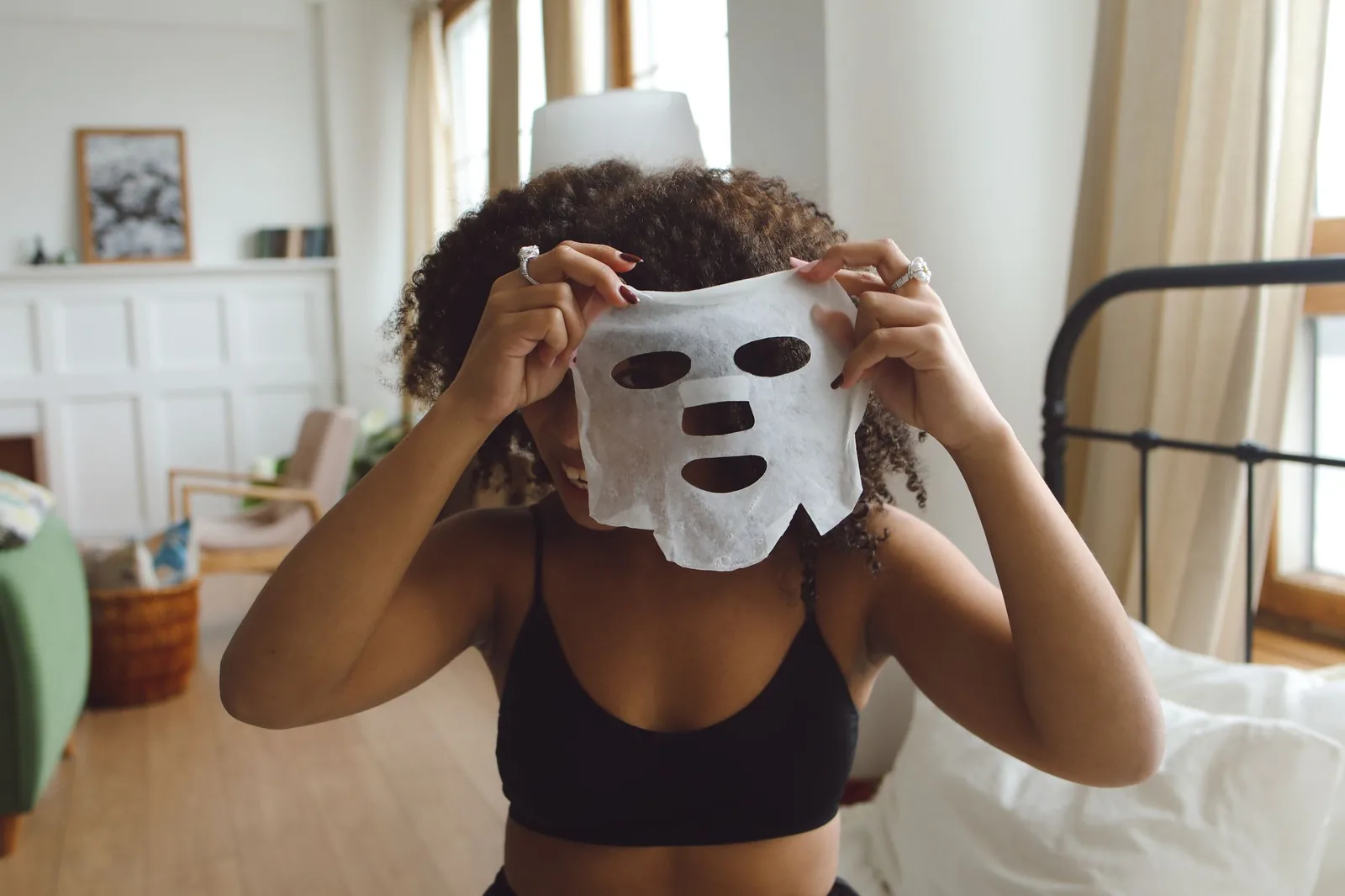
Two related trends sit close to this one: face taping, and slugging, which seals your face under petroleum jelly overnight. Our face taping guide asks whether the tape does anything lasting. Our glass skin guide also covers the AAD's caution about petroleum jelly on acne-prone faces. Another cousin, skin flooding, layers hydrating products on damp skin.
Does the Morning Shed Work? What the Evidence Says
We searched PubMed in November 2026 for the trend's name and found no study that uses it, so we found no test of the routine as a whole. The evidence covers its parts.
Dermatologists quoted in the coverage are cautious. One told Glamour there is limited data to support many of the products in these videos, and that too many products can disrupt the skin barrier. Another told Vogue that occluded products can make skin look dewy, but that the trend is almost always "a recipe for disaster" without expert guidance.
Here's what holds up:
- Moisture. The American Academy of Dermatology (AAD) says moisturizer traps water in your skin and can plump up fine lines in a few days. That's the honest version of waking up dewy: real, and temporary.
- Patches. The Glamour dermatologist said silicone wrinkle patches can temporarily plump skin by trapping moisture.
- Stacking. The same AAD page warns that using several anti-aging products at once can irritate your skin.
- Wear time. The AAD says applying some products more than directed can cause clogged pores, blotchy skin, or excessively dry skin. Its advice: read the instructions and use as directed.
That last point is where routines slip. A licensed aesthetician quoted by Vogue agreed that many of these products shouldn't stay on longer than directed.
In an October 2024 AAD news release on social media trends, a board-certified dermatologist said trends like these often don't have real science behind them and could end up causing skin damage. If your skin already stings or flakes, start with our skin barrier guide.
3 Questions for Everything You Sleep In
These questions are built from AAD guidance and the cautions above. They're a tool for your nightstand, not a medical test, and the keep, swap, and skip calls are our suggestions, not medical rules. Ask all three about each item.
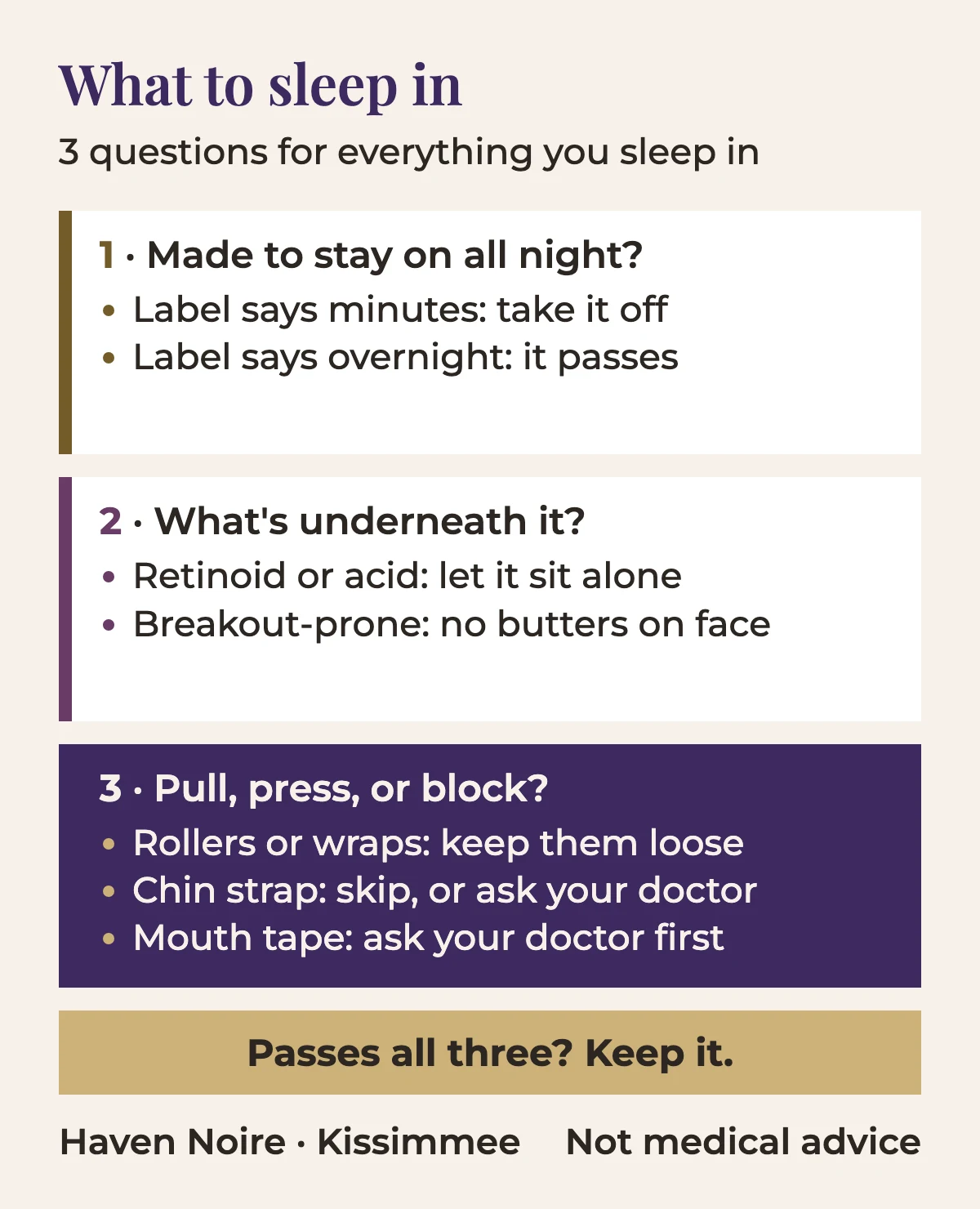
Question 1: Is it made to stay on all night?
Read the label before you lie down. Some products say overnight or leave-on; others give a wear time in minutes. The AAD's rule is to use products as directed. Our advice: if the label gives minutes, set a timer and take it off before bed.
Question 2: What's underneath it?
A patch or balm changes what's under it. Vogue, reporting a dermatologist's warning, notes that active ingredients can become more concentrated under a too-occlusive patch or balm and lead to a breakout. Check what you'd be sealing in:
- A retinoid, an exfoliating acid, or benzoyl peroxide. We'd let it sit on its own, not under a patch or mask. Using acids often? See how often you should exfoliate.
- A prescription. MedlinePlus says to use tretinoin exactly as directed, at bedtime, with only non-medicated cosmetics. Ask your dermatologist before you layer anything over it.
- Rich butters on breakout-prone skin. The AAD's acne tips for skin of color say cocoa butter or shea butter on your face can clog your pores.
Question 3: Does it pull, press, or block?
Some layers act on your hair, your jaw, or your breathing instead of your skin:
- Rollers and tight wraps. The AAD's guide to hairstyles that pull says styles that require rollers worn to bed most of the time can cause traction alopecia, a type of hair loss, when they're too tight.
- Mouth tape. That's a sleep and breathing question, not a skin one. A 2025 systematic review in PLOS One of 10 studies called the evidence for benefit uncertain and found a potentially serious risk of harm for people taping indiscriminately, including possible asphyxiation when the nose is blocked. Snoring, a stuffy nose, or possible sleep apnea? Talk to your doctor first.
- Chin and jaw straps. We searched PubMed in November 2026 for chin or jaw straps with wrinkles, sagging, the jawline, or skin aging, and found no study testing one for firming. A strap that holds your mouth shut raises the same breathing question, and the review found the evidence on chin strapping uncertain too.
Reading your answers: an item labeled for overnight wear, sealing in nothing it shouldn't, and not pulling, pressing, or blocking is a keep. A problem with question 1 or 2 usually has a gentler swap. A problem with question 3 means loosen it, skip it, or ask your doctor.
| Item | What the sources say | Our call |
|---|---|---|
| Moisturizer | AAD: traps water and can plump fine lines in a few days | Keep; non-comedogenic if you break out |
| Lip balm | AAD: a non-irritating lip balm before bed | Keep |
| Satin or silk hair covering | AAD: gentler on hair than other materials | Keep; hair loose underneath |
| Sheet or rinse-off mask | AAD: use products as directed | Swap: wear it for the labeled time |
| Eye or wrinkle patches | A dermatologist in Glamour: silicone patches plump skin temporarily | Keep if labeled for overnight; never over actives |
| Shea or cocoa butter on your face | AAD: can clog pores | Swap if you break out |
| Rollers or heatless curlers | AAD: rollers worn to bed most of the time can cause traction alopecia when too tight | Swap: looser, and not every night |
| Chin or jaw strap | No firming study in our PubMed search; 2025 review: evidence on chin strapping uncertain | Skip, or ask your doctor |
| Mouth tape | 2025 review: potentially serious risk of harm | Skip, or ask your doctor |
The Part Nobody Films: Sleep Is the Real Morning Shed Routine
Strip away the products, and one step remains in every version of the trend: a night of sleep. It's also a step with its own research on how you look in the morning, though the studies are small.
In a small 2010 experiment published in the BMJ, researchers photographed 23 healthy adults after a normal night's sleep and again after sleep deprivation: 31 hours awake after a night of reduced sleep. Sixty-five untrained observers rated the sleep-deprived photos as more tired, less healthy, and slightly less attractive. The study measured how faces looked to strangers, not skin health.
A 2015 study in Clinical and Experimental Dermatology compared good and poor sleepers among 60 women. The good sleepers had lower scores for intrinsic skin aging, and 72 hours after researchers stripped the skin's outer layer with tape, their barrier had recovered 30% more than the poor sleepers'. All the women were white, and a comparison of two groups like this shows a link, not proof that sleep caused the difference.
Our take: anything that pinches, slides, or wakes you up costs you the one step every version of the trend shares. If a strap, a stiff curler, or a wandering patch keeps you up, drop it before you drop the sleep. Once you're up, our morning skincare routine guide covers the morning and night order, sunscreen included.
Melanin-Rich Skin and Textured Hair: What Changes Overnight
If you already sleep in a satin bonnet or scarf, you were doing part of the morning shed before it had a name. Brown and Black skin and textured hair do change a few rules, though.
Irritation can leave a mark
On the AAD's retinoid guide, a board-certified dermatologist cautions that with skin of color, irritation can trigger dark marks, known as hyperpigmentation. An overloaded night that stings can leave a spot that outlasts the trend. Already have marks? Start with how to fade hyperpigmentation on melanin-rich skin.
Butters and hair oils near your face
Rich butters are a beloved part of many of our routines. The AAD's skin of color acne page says cocoa or shea butter can clog pores on your back and chest as well as your face, so if you break out there, choose products labeled non-comedogenic.
Breakouts only on your forehead and temples? The same page says hair oil may be the cause, a pattern called pomade acne. Its fixes: a hair product made with water or glycerin instead of oil, or oil only in the middle of your scalp and on the ends of your hair.

Protect your hairline
The AAD says traction alopecia is especially common in girls and women of African descent, and that the shape of African-descent hair follicles makes hair more likely to be damaged by rough or tight styles. Even a scarf or other covering can contribute, especially over hair pulled back tightly. Its tips: pull your hair back loosely under a covering, and choose silk or satin. If a style feels painful, it's too tight.
For skin care built around deeper tones, read our guide to facials for Black skin.
A Gentler Overnight Routine: Same Glow, Fewer Layers
If you love the ritual, keep it. Just give it fewer jobs. Start from a plain night routine, cleanse, treat, moisturize, in the order our morning skincare routine guide lays out, then add only the extras that pass all three questions above:
- Never sleep in makeup. The AAD's list of habits that worsen acne says even non-comedogenic makeup can cause acne if you sleep in it.
- Using a retinoid or an exfoliating acid? Skip the patch or mask on top that night. Let it sit on its own.
- Moisturize, choosing non-comedogenic if you break out. Tight in the air conditioning? See dry vs. dehydrated skin.
- Treat your lips. The AAD's chapped lip tips suggest a non-irritating lip balm before bed, or white petroleum jelly for very dry, cracked lips, plus a bedroom humidifier if you breathe through your mouth at night. Tempted to seal your whole face too? Our guide to slugging skincare sorts who it suits.
- Cover your hair loosely in satin or silk, and give rollers some nights off.
- Mask night? Wear it for the labeled time, take it off, then moisturize.
- Add one new product at a time. The AAD says most products take at least six weeks to work.
Pregnant, or using isotretinoin, tretinoin, or another prescription skin medicine? Have eczema, rosacea, or very sensitive skin? Check with your doctor or dermatologist before you add any overnight layer. The AAD says retinoids should not be used during pregnancy.
Have a tween copying the videos? Our guide to skincare for tweens covers what younger skin actually needs.
Where a Facial Fits (and What's Not on Our Menu)
A facial won't do your sleeping for you. What it can do is give you a mask with someone else watching the clock, plus a trained second look at what you layer at night. Haven Noire is an esthetics spa, not a medical office, so we don't diagnose or treat skin conditions.
Every Signature Facial begins with a double cleanse and a skin analysis and includes a custom mask and facial massage. The 60-minute version is $95 (3 for $210). The 90-minute version adds a hand and arm massage and an eye treatment for $110 (3 for $285). Puffy when you wake up? See why eyes swell overnight and what helps.
Our Glow Membership is $74.99 a month for one 60-minute Signature Facial, and members get 10% off extra services and in-spa products. There's a three-month minimum; compare tiers on our memberships page.
After a Signature Facial, keep skin hydrated, skip harsh actives and heat for 24 hours, and wear SPF daily. So we'd make the night after a facial a night for the simplest version of your routine. For home care, ask about the professional skincare lines we use.
Not on our menu
Some routines add a red light or LED mask. LED isn't a stand-alone service on our menu. Our guide to the types of facials explains what LED and other off-menu treatments are.
When to See a Dermatologist or Doctor Instead
We're estheticians, not doctors. See a board-certified dermatologist, or your doctor where noted, if:
- Breakouts keep coming after you simplify your nights. The AAD says a dermatologist can help if acne continues after you give its tips a chance to work, and that treating acne early in skin of color helps prevent dark spots.
- A product stings, burns, or tingles. The AAD says to stop using it, but if it's a prescription, ask your dermatologist before you stop.
- You notice pain from tightly pulled hair, stinging or crusts on your scalp, broken hairs around your forehead, or a receding hairline. The AAD says traction alopecia can become permanent the longer it goes untreated.
- Chapped lips haven't healed after 2 to 3 weeks of gentle care, the AAD's cue to see a dermatologist.
- You snore, have a blocked nose, or think you might have sleep apnea, and you want to try mouth tape or a chin strap. Ask your doctor first.
Not sure whether your question belongs with us or a doctor? Read esthetician vs. dermatologist. For reactive skin alongside a physician's care, see how we approach sensitive and redness-prone skin.
Frequently Asked Questions About the Morning Shed
What is the morning shed trend?
It's a social media routine where people sleep in layers of skin and hair products, such as overnight masks, eye patches, lip masks, mouth tape, chin straps, and heatless curlers, then remove them in the morning, often on camera. Glamour and Vogue covered it in 2024. We searched PubMed in November 2026 and found no study of it.
Is it bad to sleep in a sheet mask?
It depends on the label. The American Academy of Dermatology says to use products as directed, and warns that some can clog pores or dry out skin if you apply more than directed. If your mask lists a wear time in minutes, take it off, then moisturize. Save overnight wear for products labeled for it.
Is mouth taping safe while you sleep?
Ask your doctor first. A 2025 systematic review in PLOS One called the evidence for benefit uncertain and found a potentially serious risk of harm for people taping indiscriminately, including possible asphyxiation when the nose is blocked. Snoring, mouth breathing, a blocked nose, or possible sleep apnea are questions for a doctor, not a skincare routine.
Do chin straps tighten your jawline?
We can't point to evidence that they do. We searched PubMed in November 2026 for chin or jaw straps alongside wrinkles, sagging, the jawline, and skin aging, and found no study testing one for firming. A strap that holds your mouth shut is also a breathing question, so if you snore or have a blocked nose, ask your doctor first.
Can you put under-eye patches over retinol?
We'd keep them apart. Vogue reports a dermatologist's warning that actives can become more concentrated under a too-occlusive patch and lead to a breakout. Our advice: put patches on skin without actives, and let a retinoid sit on its own. If your retinoid is a prescription, ask your dermatologist before you layer anything over it.
Are heatless curlers bad for natural hair?
Tension is the issue. The American Academy of Dermatology lists styles that require rollers worn to bed most of the time among those that can cause traction alopecia when too tight, and says it's especially common in women of African descent. Keep curlers loose, skip some nights, and stop if it hurts.
Is sleeping in skin care layers bad for acne-prone skin?
It can be, so keep it pared down. The AAD says sleeping in makeup can cause acne, and that cocoa butter or shea butter on your face can clog pores. Cleanse gently, use a non-comedogenic moisturizer, keep heavy butters and hair oil off your face, and add one product at a time. If breakouts continue, see a dermatologist.
How much is a facial with a custom mask in Kissimmee?
At Haven Noire in downtown Kissimmee, our 60-minute Signature Facial, with a custom mask and facial massage, is $95, or 3 for $210. The 90-minute version is $110, or 3 for $285. The Glow Membership is $74.99 a month for one 60-minute Signature Facial, with a three-month minimum.
Keep exploring
More from the Journal

About the author
Tiffany · Licensed Esthetician · Licensed PMU Artist
Tiffany is a Florida-licensed esthetician and permanent makeup artist and the founder of Haven Noire. She specializes in customized facials, corrective skincare, and waxing for melanin-rich and all skin types, and is known for a calm, education-first approach that puts first-time clients instantly at ease.
Meet Tiffany →