
Here's how to get rid of back acne, according to the American Academy of Dermatology (AAD): wash with benzoyl peroxide and leave it on for two to five minutes, add an over-the-counter adapalene gel, treat your skin gently, and cut down on whatever rubs your back. Mild to moderate breakouts may clear this way at home. Deep, painful ones need a dermatologist.
Then give it time. The AAD's back acne guide says results may start in six to eight weeks, and complete clearing can take three or four months.
The hard part is that your back isn't your face. You can't easily reach it, something presses on it all day, and you can't see whether anything is working. On brown and Black skin, there's a second problem: the dark marks that stay after the pimples go. This guide covers both.
What Is Back Acne (Bacne)?
Back acne, often called bacne, is acne on your back and shoulders. It forms the same way facial acne does: hair follicles under your skin clog and become pimples. It ranges from a few blemishes to deep, painful lumps.
MedlinePlus, from the U.S. National Library of Medicine, says most pimples form on the face, neck, back, chest, and shoulders, and that blackheads and pimples are not caused by dirt. Bacne isn't a hygiene problem, so scrubbing harder won't fix it.
It may also look different from the photos online. The NHS says acne's raised bumps look pink or red on white skin and may look brown or purple on brown and Black skin.
Is it acne, or something that looks like it?
Not every bump on your back is acne. The AAD says folliculitis, an infection in the hair follicles, usually looks like a sudden acne breakout, and that a board-certified dermatologist can tell you whether that's what you have. If your bumps appeared suddenly or itch, show a dermatologist first. Our guides to bumps on the buttocks and fungal acne and other heat bumps cover the lookalikes.
How to Get Rid of Back Acne: The Dermatologist-Backed Routine
The AAD says studies support two over-the-counter products for mild or moderate back acne, used with acne-friendly skin care. Mild means a few blemishes. Moderate means a mix of whiteheads, blackheads, and pimples, but nothing painful or deep.
Benzoyl peroxide wash: let it sit
Benzoyl peroxide helps kill the bacteria that cause acne. The AAD's back acne page lists a benzoyl peroxide foam wash, used daily, and says studies show it works best left on your back for two to five minutes. Skin is thicker on the back than on the face, and the wait helps the medicine penetrate. A 5.3% wash is less likely to irritate or dry your skin. If you feel you need stronger medicine, 10% is the strongest you can buy without a prescription.
Rinsing also protects your laundry, because benzoyl peroxide bleaches clothes, sheets, and towels. Heard it causes light spots on darker skin? The AAD's guide to acne in skin of color calls that a myth: it won't. Your navy towels aren't so lucky.
Adapalene gel: add it after your shower
The AAD says adapalene 0.1% gel, a retinoid sold without a prescription, can improve results alongside benzoyl peroxide because it helps unclog pores. Apply it daily, after you shower or before bed. New to retinoids? See our guide to how to use retinol, and our guide to skin purging for new breakouts after you start one.
Salicylic acid: for breakouts where things rub
Where gear or clothing rubs, the AAD's page on sports equipment and acne says a salicylic acid treatment often works well. If you can't shower after a workout, the AAD's workout guide suggests changing clothes and wiping breakout-prone skin with salicylic acid pads.
One shower, in order
Here's the AAD's advice as one routine. The order is our suggestion, not a medical rule.
- Shower and change as soon as you can after you sweat, as the AAD advises.
- Wash gently by hand. Skip the loofah and the back brush.
- Spread the benzoyl peroxide wash over your back and leave it on for two to five minutes.
- Rinse well, then pat dry with a white or old towel.
- Once you're dry, apply adapalene to your back.
- If your skin feels dry, use a moisturizer labeled oil-free or non-comedogenic.
| Ingredient | What it does, per the AAD | How to use it on your back | Watch for |
|---|---|---|---|
| Benzoyl peroxide wash | Helps kill the bacteria that cause acne | Daily; leave on 2 to 5 minutes, then rinse | Bleaches fabric; 5.3% is gentler than 10%; pregnant? Ask your obstetrician or dermatologist first |
| Adapalene 0.1% gel | Helps unclog pores so benzoyl peroxide works better | Daily, after you shower or before bed | Most experts advise stopping it during pregnancy, the AAD says |
| Salicylic acid | Helps unclog pores; often works well where gear rubs | An acne treatment, or pads when you can't shower | Pregnant? Ask your obstetrician or dermatologist first |
A Back Acne Treatment Plan Built for Your Back
Most bacne guides hand you a product list and stop. But the products are the easy part. Your back has three problems your face doesn't, and the AAD's guidance covers each one:
- You can't easily get medicine onto your back, or leave it there long enough.
- Something presses against your back most of the day.
- You can't see your back, so you can't tell whether treatment is working.
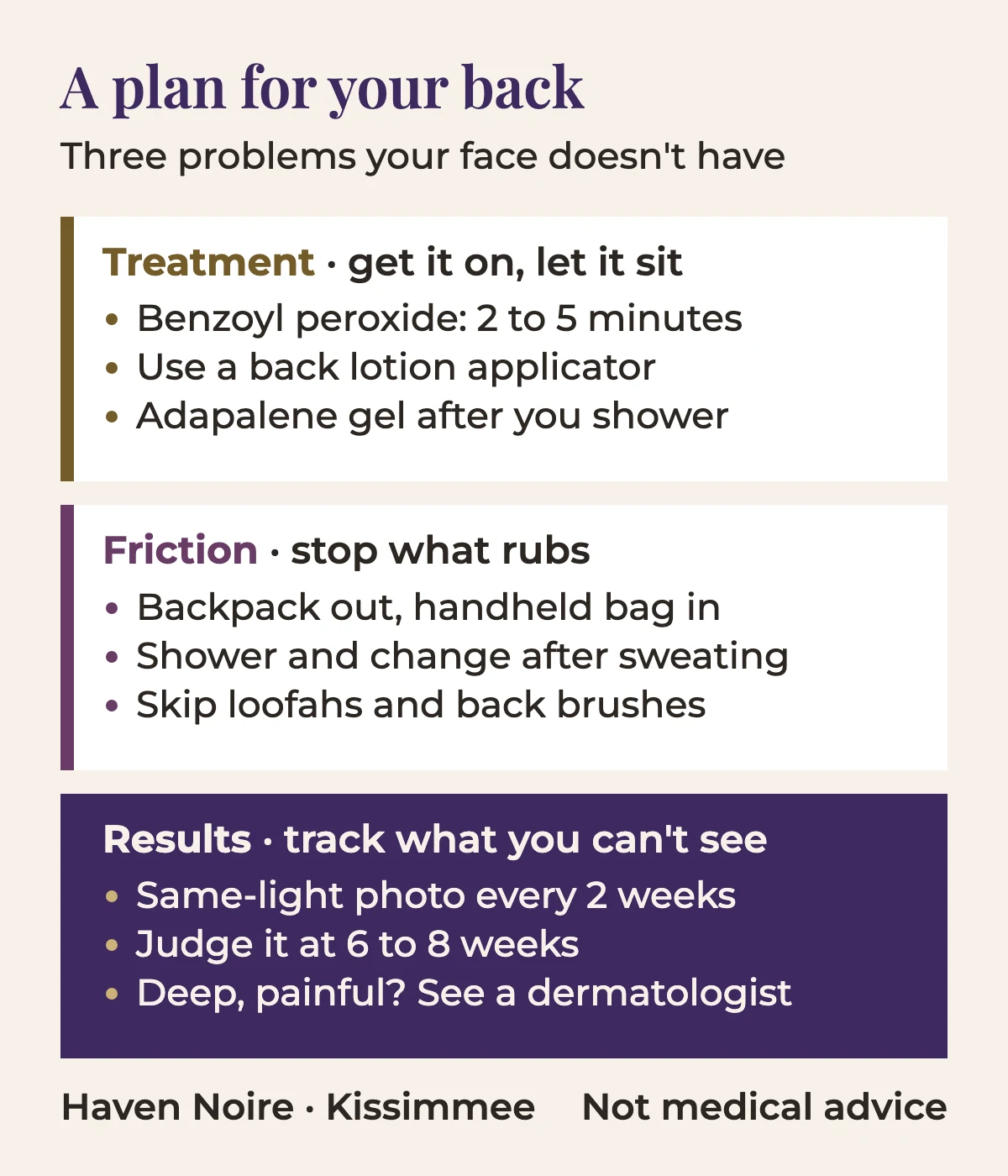
Get the treatment where it needs to go
The AAD is blunt: for treatment to work, you must get it on your back. It suggests a lotion applicator made for the back. DermNet, a dermatology reference from New Zealand, adds another option: ask a partner, friend, or family member to help with spots you can't reach.
Getting it there is also about time. Our tip: put the wash on first, then wash your hair while it sits, so two to five minutes pass without a timer.
Find what's pressing on your back
The AAD has a name for breakouts caused by friction: acne mechanica. Equipment or clothing traps heat and sweat and rubs against your skin, and in acne-prone skin that irritation can cause new breakouts. The first sign is small, rough bumps you can feel more easily than see. Its list of triggers includes backpack straps, golf bag straps, the plastic on weight benches, and the back of a driver's seat (listed under auto racing).
| What touches your back | What the AAD says | Try this |
|---|---|---|
| A backpack | Anything that rubs your back can make back acne flare | Swap it for a handheld bag |
| A purse or bag on your shoulder | Place the strap on your arm | Carry it on your arm or in your hand |
| Tight tops | Trade tight-fitting workout clothes for loose-fitting ones | Loose cotton or sweat-wicking fabric |
| Sweaty clothes | Shower and change as soon as you can; wash workout clothes after each use | Pack a spare shirt |
| Benches and gear | Put clean, soft padding between equipment and skin | Lay a clean towel down first |
| Loofahs, back brushes, buff puffs | They can worsen acne, along with abrasive scrubs | Wash gently by hand |
The seat example is about race car drivers, but our advice for long, hot drives: if breakouts line up with where your back meets the seat, try a loose, breathable top. Thinking of adding a body scrub or exfoliating acid on top of your acne products? See how often to exfoliate.

Track what you can't see
The AAD says that if treatment works, you may see results in six to eight weeks, and if you see no difference by then, you may need a dermatologist's help. That deadline only helps if you can tell what changed. A glance over your shoulder in a foggy mirror won't. Here's how we suggest keeping a record:
- Photograph your back on day one, in the same spot and light.
- Repeat every two weeks. Ask someone to help, or use your phone's timer.
- Note anything new that week: a medicine, a gym, a bag, a heat wave.
- At six to eight weeks, compare your first photo with your latest.
- No difference? The AAD says you may need a dermatologist's help. Bring the photos.
Notes catch patterns, too. One question on the AAD's dermatologist self-check asks whether you started a medication in the last six months and now have breakouts.
Bacne Marks on Brown and Black Skin: Dark Spots, Scars, and Keloids
For many of us, the pimples aren't the worst part. The marks are. The AAD's skin-of-color guide says acne often comes with dark spots that can last much longer than the acne, and advises treating both at once, and early. When acne becomes moderate to severe before treatment begins, it says, people with skin of color have a higher risk of dark patches and keloids, a type of raised scar.
Clear the breakouts first
The AAD's guide to fading dark spots says that when acne causes hyperpigmentation, you must treat the acne first. Once the cause stops, a spot a few shades darker than your skin usually fades within 6 to 12 months; color deep in the skin can take years.
Not every mark is a scar. The AAD's acne scar page says a flat spot of color left after acne clears usually isn't a scar; it's likely post-inflammatory hyperpigmentation. Our guide to fading hyperpigmentation on melanin-rich skin covers what helps.
Don't let the sun set your marks
Many people believe sun helps acne. The AAD says it can worsen acne, and its rays tend to darken acne and make it last longer. Think pool days, beach days, and any top that leaves your shoulders bare.
For your back, the AAD says to wear oil-free sunscreen outdoors on all skin clothes won't cover: non-comedogenic, SPF 30, broad-spectrum, and water resistant. For dark spots, its fading guide recommends a tinted sunscreen with iron oxide. Our guide to sunscreen for dark skin helps you pick one.
Go easy on the butters
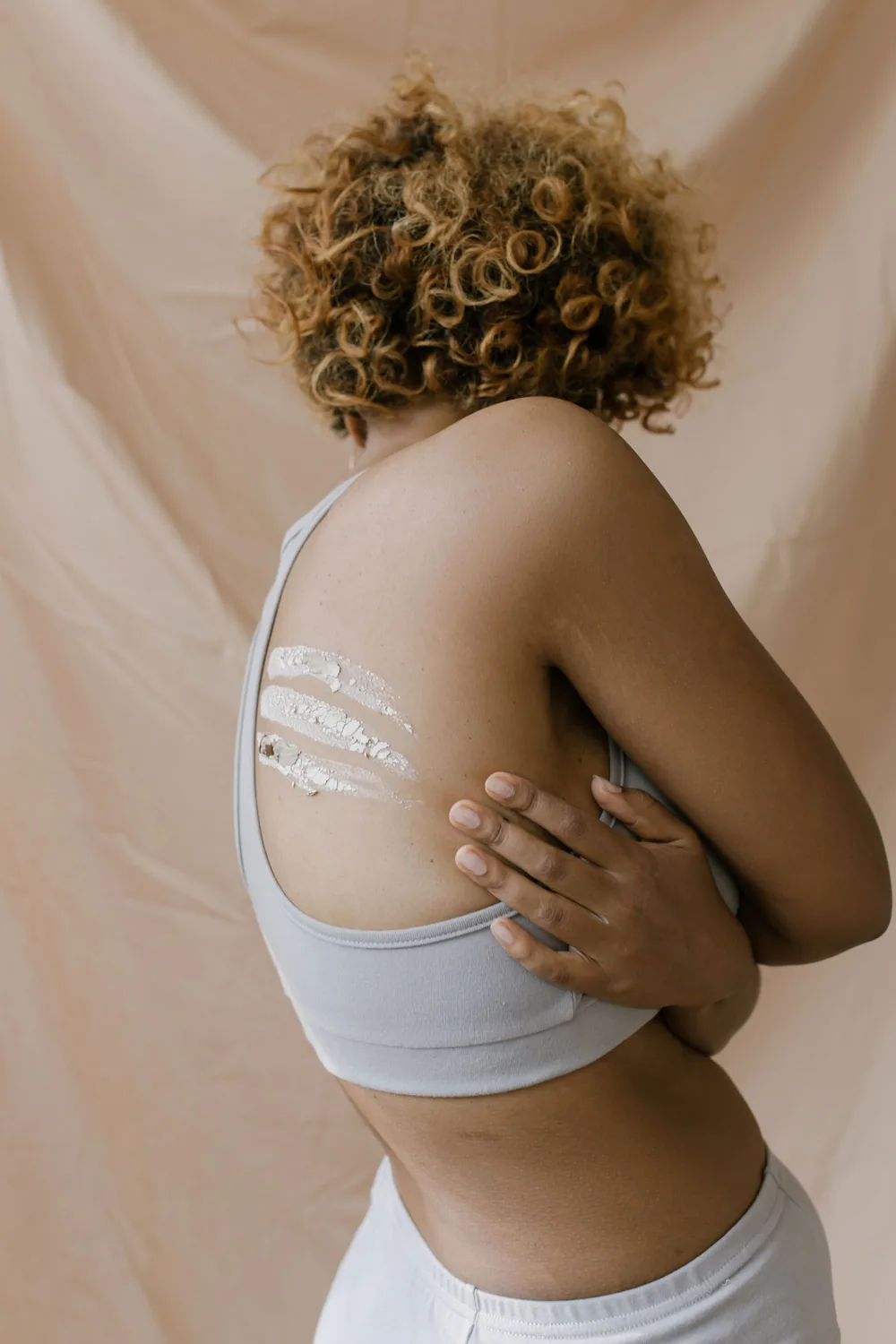
Many of us grew up with a jar of cocoa butter on the dresser. The AAD says products with oil, such as cocoa butter or shea butter, can clog pores when applied to your face, back, or chest, and clogged pores can lead to acne. It adds there's no scientific evidence cocoa butter evens skin tone. On breakout zones, choose products labeled non-comedogenic. For where a jar of shea can still go, see where to use shea butter, and where to skip it.
Hands off, and know your keloid risk
The AAD says picking, popping, or squeezing acne raises your risk of a scar, and popping only worsens acne, even on your back. Its page on keloid causes lists a bout with acne, usually on the face, chest, or back, among the ways a keloid can start, and lists a family history of keloids among the things that raise your risk. If you or a blood relative gets keloids, our advice is to see a dermatologist early rather than wait out a breakout.
Where Haven Noire Fits in Your Back Acne Treatment
Haven Noire is an esthetics spa, not a medical office. Tiffany, our founder, is a Florida-licensed esthetician. We don't diagnose acne or prescribe medicine. Here's what we can honestly offer.
For breakouts on your face
If bacne comes with breakouts on your face, our acne facials page shows how we approach acne and congestion. A Corrective Facial is $135 for 60 minutes, or $360 for three. Our guide to the best facial for acne lists who should wait and how to prep.
For your back: our body treatment
The back-focused option on our body treatments menu is the Firming Back + Booty: $135 for 60 minutes, with an enzyme polish and a peptide-rich firming mask for the back, the back of the legs, and the booty. Wondering whether it's right for your breakouts? Ask us at your consultation, and tell us about any acne medicine you use. Whatever you book, keep up your home routine and any plan your dermatologist gave you.
Back hair and waxing
Our Full Back Wax is $40 and takes about 15 minutes. It's hair removal. The AAD's hair removal guide says waxing isn't recommended if you're applying tretinoin, using an antibiotic, or taking isotretinoin or took it in the past six months, because these medicines thin your skin. Its waxing guide says never to wax sunburned or very sensitive skin, and its two-to-five-day retinoid pause is written for the face. Neither page names adapalene or covers waxing over a breakout. So if your back is breaking out right now, or you use adapalene or any prescription acne medicine, ask your dermatologist, or the doctor who prescribed it, before a back wax, and tell us when you book. A 10% deposit is required at booking.
When to See a Dermatologist for Back Acne
Back acne treatment at home has limits. See a board-certified dermatologist or your doctor if:
- Breakouts are deep or painful. The AAD says anyone with deep, painful acne on the back needs a dermatologist's help.
- You see no difference after six to eight weeks of steady treatment. The AAD says you may need a dermatologist's help then.
- You have lots of spots, or spots that leave scars. The NHS lists both as reasons to see a doctor.
- You see signs of infection, such as hot, swollen, red skin; the NHS notes redness can be harder to see on brown and Black skin. A Cleveland Clinic article on back acne also names fever.
- Acne is affecting your mental health, another reason on the NHS list.
- You or a blood relative gets keloids, and you're breaking out. The AAD says acne that becomes moderate to severe before treatment begins raises the risk of keloids in skin of color.
The AAD's dermatologist self-check works differently: it's a list of 11 questions, and it says to see a dermatologist if you answer yes to six or more. One fits bacne exactly: you've cleared the acne on your face, but nothing seems to clear the acne on your back or chest. Others ask whether you see scars or dark spots as acne clears, and whether acne has left you feeling depressed or anxious. For severe acne, the AAD says dermatologists often start with an antibiotic plus a medicine you apply, and it warns against draining a cyst or nodule at home.
Check with your doctor first if this is you
Pregnant or breastfeeding, or using isotretinoin, tretinoin, or another prescription skin medicine? Talk to your doctor or dermatologist before starting any acne routine, even an over-the-counter one. The AAD's page on acne treatment during pregnancy says most experts recommend stopping adapalene during pregnancy, and to ask your obstetrician or dermatologist before using benzoyl peroxide or salicylic acid. With eczema, rosacea, or keloid-prone skin, start with a dermatologist too. Unsure whether a service fits while you're on treatment? Contact us before you book.
Frequently Asked Questions About Back Acne
How long does it take to get rid of back acne?
The American Academy of Dermatology says if treatment works, you may see results in six to eight weeks, and complete clearing can take three or four months. No difference by then? You may need a dermatologist. Dark spots a few shades darker than your skin usually fade within 6 to 12 months once breakouts stop; deeper color can take years.
Will benzoyl peroxide bleach my sheets and towels?
Yes, it can. The AAD says benzoyl peroxide bleaches clothes, sheets, and towels, which is one reason to rinse the wash off after two to five minutes. It also calls the idea that benzoyl peroxide causes light spots on darker skin a myth. Our tip: keep white or old towels for your back routine.
Can shea butter or cocoa butter cause bacne?
They can contribute. The AAD says products that contain oil, such as cocoa butter or shea butter, can clog pores when you apply them to your face, back, or chest, and clogged pores can lead to acne. If you break out on your back, choose body products labeled non-comedogenic or won't clog pores.
Should I scrub back acne with a loofah or back brush?
No. The AAD says scrubbing skin with acne actually worsens it, and lists loofahs, back brushes, buff puffs, abrasive scrubs, antibacterial soaps, and astringents among the things that can make acne worse. Wash gently by hand with gentle, fragrance-free products, and let your benzoyl peroxide wash sit for two to five minutes.
Can a backpack cause bacne?
Yes. The AAD calls friction breakouts acne mechanica: equipment or clothing traps heat and sweat, then rubs against your skin, and that irritation can trigger breakouts in acne-prone skin. Backpack straps are on its list of triggers. It suggests swapping your backpack for a handheld bag, and moving a shoulder strap onto your arm.
Does the sun help clear back acne?
No. The AAD says people often believe the sun helps clear acne, but it can actually worsen acne, and its rays tend to darken breakouts and make them last longer. Wear an oil-free, water-resistant, broad-spectrum sunscreen with SPF 30 on any part of your back your clothes don't cover.
Is back acne caused by poor hygiene?
No. MedlinePlus says blackheads and pimples are not caused by dirt; pimples form when hair follicles under your skin clog. Showering after you sweat still helps, and the AAD recommends it. But scrubbing harder won't, and the AAD says antibacterial soaps and abrasive scrubs can make acne worse, so wash gently.
More from the Journal

About the author
Tiffany · Licensed Esthetician · Licensed PMU Artist
Tiffany is a Florida-licensed esthetician and permanent makeup artist and the founder of Haven Noire. She specializes in customized facials, corrective skincare, and waxing for melanin-rich and all skin types, and is known for a calm, education-first approach that puts first-time clients instantly at ease.
Meet Tiffany →