

Dry skin and dehydrated skin are two different labels in skin care. Dry skin is a type: it makes less oil, stays dry most of the time, and often shows up on your body too. Dehydrated skin is a passing state: the outer layer runs short on water, it comes and goes with triggers, and it can happen even when your face is oily.
Here's what most guides skip. Medical sources don't split the two so neatly, and the popular pinch test checks something else entirely. So instead of chasing the right label, ask a better question: does your dryness come and go, stay most days, or need a doctor? This guide shows you how to tell, what Central Florida's air conditioning does to your skin, and when to see a dermatologist instead.
Dry vs. Dehydrated Skin: The Short Answer
Dry skin is a skin type that makes too little oil and stays dry. Dehydrated skin is a temporary shortage of water in the skin's outer layer, and any skin type can have it, oily skin included.
That's how the skin care industry uses the two words. Here they are side by side.
| Question | Dry skin (a type) | Dehydrated skin (a state) |
|---|---|---|
| What runs low? | Oil, and water with it | Water |
| How long? | Most of the time | Days or weeks, then it lifts |
| Where? | Face and body, often arms and legs | Mostly the face |
| How it feels | Rough, flaky, itchy | Tight and dull, can still shine |
| Common triggers | Age, climate, some conditions and medicines | Hot showers, harsh cleansers, over-exfoliating, dry indoor air |
| What helps | Rich cream or ointment daily | Remove the trigger, add water, seal it in |
In Kissimmee you may feel both columns in one day. If you're still choosing a treatment, our guide to the types of facials shows where a hydrating facial fits.
Dry vs. Dehydrated Skin: What Medical Sources Actually Say
Medical sources blur the tidy split. MedlinePlus, from the U.S. National Library of Medicine, says dry skin occurs when your skin loses too much water and oil. Its medical name is xerosis, and it's usually worse on the arms and legs.
The American Academy of Dermatology (AAD) says excessively dry skin has "lost a lot of moisture, so it's noticeably dehydrated." In other words, the dermatology group lists "dehydrated" as a sign of very dry skin, not as a separate condition.

Skin types are softer science than they sound. A 2005 study in the journal Skin Research and Technology noted that facial skin types had been judged subjectively, with no objective, accepted way to measure them. A 2021 study in the Journal of the European Academy of Dermatology and Venereology, proposing an objective skin-type system, scored hydration and oiliness as separate categories, each with its own device.
Our takeaway: oil and water are two different dials. "Dehydrated skin" is handy shorthand for the water dial running low, but it isn't a diagnosis, and no esthetician can diagnose a skin condition. Our spa FAQ lists dry and dehydrated skin among the concerns we work with.
Why the Pinch Test Can't Tell Dry from Dehydrated Skin
Many skin care blogs suggest pinching your cheek: if the skin snaps back slowly, you're dehydrated. That test comes from medicine, but it was built to check something else.
MedlinePlus calls it skin turgor and says reduced turgor is a sign of fluid loss, meaning dehydration of the body. A provider commonly checks the lower arm or abdomen. MedlinePlus adds that some connective tissue disorders change skin's elasticity with no link to the fluid in your body.
So a slow bounce-back is a clue about your whole body, not a reading of the water in your face's outer layer. In November 2026 we searched PubMed for studies pairing a pinch or skin turgor test with measured facial skin hydration, and we found none. That doesn't prove no such study exists, only that we couldn't find one.
If your pinch test is slow and you feel unwell
Treat that as possible body dehydration, not a skin care question. MedlinePlus lists heat exhaustion among the common causes and advises drinking more fluids for mild dehydration. Contact your provider if poor turgor comes with vomiting, diarrhea, or fever, or if the skin is very slow to return to normal.
Does drinking water hydrate your skin?
Less than you'd hope. A 2018 systematic review included only six studies and called the evidence weak. Extra water may slightly raise hydration in the skin's outer layer, especially in people who drank little before. Whether it reduces signs of dry skin still needs research.

Drink water for your body. For your skin, the dermatology advice we found focuses on washing and moisturizing. A real assessment looks and asks instead of pinching: every facial at Haven Noire begins with a skin analysis, and our first facial guide walks through each step.
A Week-Long Check for Dry or Dehydrated Skin
Instead of one quick test, sort dry vs. dehydrated skin by watching yours for a week or two and placing what you see in one of three groups. The groups are built on AAD and MedlinePlus guidance. Use them at home as a guide, not a diagnosis or a clinical measurement.
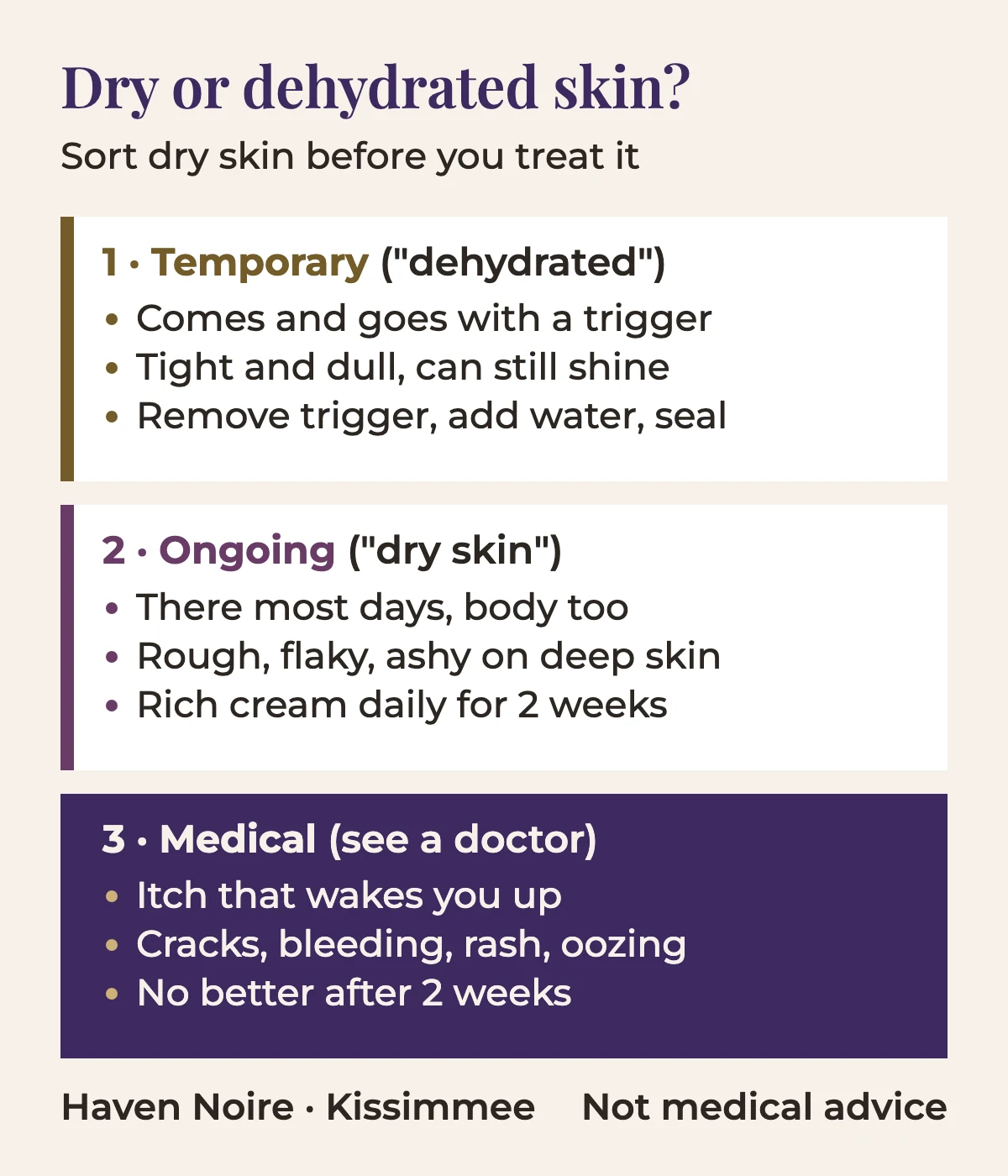
Temporary dryness: what skin care calls dehydrated
It comes and goes. Skin feels tight after cleansing or an afternoon in air conditioning, looks dull, and shows fine lines that soften once you moisturize. Your nose may still shine. It usually follows a change: a new cleanser or active, hotter showers, extra exfoliating, or travel. Remove the trigger and it should ease.
Ongoing dryness: what skin care calls a dry skin type
It's there most days. Skin feels rough or flaky, moisturizer seems to vanish, and your arms and legs are dry too. On deeper skin tones it can look ashy. If the ash is back by lunchtime, see why ashy skin keeps coming back. Ongoing dryness needs a daily routine, and the AAD says that with its dry skin tips you should see some improvement within two weeks.
When it needs a dermatologist
See a dermatologist if your skin itches enough to keep you up, cracks and bleeds, breaks out in a rash, or leaks fluid. See one too if two weeks of a good routine changed nothing. On brown and Black skin, also watch for dark brown, purple, or grayish areas of skin, which the AAD lists among eczema signs in darker skin tones.
Tight in the AC, Oily by Noon: Dehydrated Skin in Central Florida
If you live in Central Florida, this day may sound familiar: shiny on the walk in, tight at your desk by 3 PM. Both feelings can be real at once.
Air conditioning dries the air around your skin
MedlinePlus lists dry indoor air from heating or cooling systems among the causes of dry skin. A 2015 review in the Journal of the European Academy of Dermatology and Venereology concluded that low humidity and low temperatures lead to a general decrease in skin barrier function. Our read: a long day in cool, dry indoor air is Florida's version of winter skin. If your skin also stings or flakes, check the signs of a damaged skin barrier.
Heat and humidity bring the shine
The 2005 study that tracked facial oil through a year found summer was the highest sebum-secreting season, and that the forehead, nose, and chin made more sebum than the cheeks. So a shiny T-zone with tight cheeks can be two parts of your face doing different things.
Some brand blogs say dehydrated skin pumps out extra oil to make up for missing water. The brand pages we read cite no study for that claim, so we don't repeat it as fact.
A routine for humid days and cold offices
- Limit face washing to twice a day and after sweating, with lukewarm water and a gentle cleanser without alcohol, as the AAD's face washing tips advise. On water-resistant sunscreen days, a gentle two-step cleanse can be your night wash.
- Lean on light humectants by day. A Cleveland Clinic article on choosing a moisturizer for dry skin notes they also use the water in humid air to moisturize your skin's top layer.
- Keep a moisturizer at your desk for the air-conditioned hours.
- Wear sunscreen every morning; our guide to sunscreen for dark skin helps you choose.
If the shine bothers you more than the tightness, see our guide on how to shrink pores for oily skin in Florida humidity.
What to Do for Dehydrated Skin vs. Dry Skin
Whichever side of dry vs. dehydrated skin you land on, both routines use the same three kinds of moisturizer ingredients. Here's what each one does.
| Type | What it does | Examples | Best for |
|---|---|---|---|
| Humectant | Attracts and binds water to your skin | Glycerin, hyaluronic acid, urea | Temporary dryness: tight, dull skin |
| Occlusive | Coats skin so it holds the moisture it has | Petroleum jelly, lanolin, dimethicone | Dry skin most days, and very dry skin at night |
| Emollient | Fills in the cracks dryness causes | Shea butter, mineral oil | Dry skin most days: rough, flaky skin |
If it comes and goes: a routine for dehydrated skin
- Name the trigger and pause it.
- Cleanse with lukewarm water and your fingertips, then pat dry.
- On damp skin, apply a serum or light moisturizer with glycerin or hyaluronic acid. Tempted to stack several? See why one hydrating layer is usually enough.
- Seal it in. If you break out easily, choose a noncomedogenic moisturizer: a Cleveland Clinic article on emollients says oils and petroleum jelly may aggravate or cause acne breakouts.
- Pause exfoliating. The AAD's exfoliation guide says exfoliating can be drying, and that doing it while using retinoids or benzoyl peroxide may worsen dry skin. When you restart, count every exfoliant in your week first.
- Wear sunscreen in the morning.
If you're oily and dehydrated at once
Our suggestion: keep textures light all over, and add a richer layer only where you feel tight, often the cheeks.
If it's there most days: a routine for dry skin
These come from the AAD's top tips for relieving dry skin:
- Keep showers and baths to 5 to 10 minutes in warm water.
- Apply a fragrance-free moisturizer while your skin is still damp.
- Choose a cream or ointment over a lotion, with ingredients such as glycerin, hyaluronic acid, petrolatum, or shea butter.
- Skip alcohol and fragrance. The AAD also lists retinoids; if yours is a prescription, ask your prescriber first.
- Run a humidifier in your bedroom at night, and clean it regularly. Sleeping in more than a moisturizer? See which bedtime layers are worth keeping.

Want help choosing products? You can see the professional skincare lines we use before your visit. If your skin feels bumpy rather than flaky, our guide to textured skin covers those causes.
Dry Skin on Melanin-Rich Skin: When Ashy Is a Clue
On brown and Black skin, dryness rarely hides. The AAD's guide to dry skin in darker skin tones says flaking, discoloration, and rough texture are more noticeable there. Dermatologist Chesahna Kindred, quoted on that page, says a moisturizer with ceramides can reduce the whitish or grayish-white appearance of dry skin.
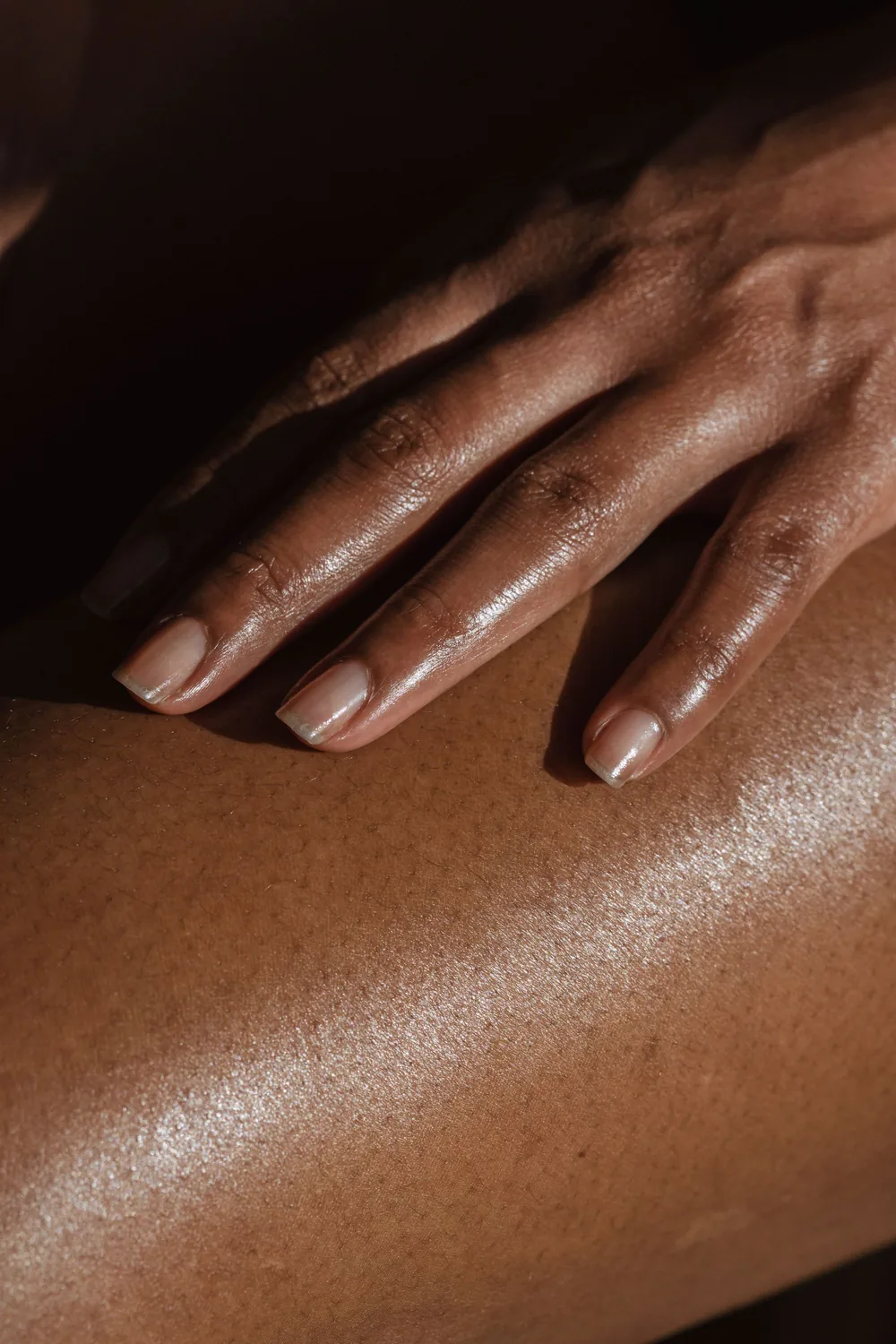
The same page carries a warning. It says some people with darker skin tones live for years with an undiagnosed skin condition, believing their skin is just too dry for moisturizer to work, and it names eczema, ichthyosis, and psoriasis.
Eczema can look different on deeper skin, too. The AAD's atopic dermatitis symptoms page lists dark brown, purple, or grayish areas of skin as a sign in darker skin tones, and notes that small, rough bumps are more common there. The AAD's exfoliation guide also warns that aggressive exfoliation may lead to dark spots, especially in darker skin tones. For more, read our guide to facials for Black skin.
Hydrating Facials for Dry Skin: What They Can and Can't Do
A facial can't diagnose or treat a skin condition, and it won't replace your daily routine. It can give you a professional cleanse, exfoliation as needed, hydrating serums and moisturizer, and a trained second look. Every one of our facials in Kissimmee starts with a skin analysis.
The Signature Facial, which our menu lists as hydrating
We don't sell a separate service called a hydrating facial. Our menu lists the Signature Facial's benefits as balancing, hydrating, rejuvenating, and relaxing, for all skin types. Here are its steps:
- Consultation and double cleanse.
- Skin analysis, to customize every step.
- Exfoliation and extractions as needed.
- Custom mask and facial massage.
- Serums, moisturizer, and SPF, sealing in hydration and protection.
The 90-minute version adds a hand and arm massage and an eye treatment. Afterward, keep skin hydrated, skip harsh actives and heat for 24 hours, and wear SPF daily.
The Hydrofacial: for dehydrated skin that's also dull or congested
Our Hydrofacial is a gentle, water-based hydrodermabrasion treatment that exfoliates while infusing nourishing serums. Our menu lists it for dull, dehydrated, congested, and uneven skin. It's one of our corrective facials. For how it differs from the branded version, read hydrodermabrasion vs. HydraFacial.
Which facial for dry skin to book
| If your skin is | Consider | Time | Price |
|---|---|---|---|
| In a dry spell | Signature Facial | 60 minutes | $95, or 3 for $210 |
| Dry most days | Signature Facial | 90 minutes | $110, or 3 for $285 |
| Dehydrated and dull or congested | Hydrofacial (Corrective Facial) | 60 minutes | $135, or 3-pack $360 |
Prefer monthly? The Ritual Membership ($94.99) covers a 90-minute Signature Facial and lists dry or dehydrated skin among what it's best for. Glow ($74.99) covers the 60-minute version, and Corrective ($109.99) lets you choose the Hydrofacial or another corrective facial each month. Compare them on our memberships page.
Our advice: if your skin is cracked, bleeding, oozing, or in an eczema flare, see a dermatologist before booking any facial, and tell us when you book.
When Dry or Dehydrated Skin Needs a Dermatologist, Not a Facial
We're licensed estheticians, not a medical clinic. We don't diagnose skin conditions, and dry skin is sometimes a sign of one. See a board-certified dermatologist if:
- You still have dry skin after trying the AAD's tips. The AAD says it may be due to a condition such as atopic dermatitis, psoriasis, or kidney disease.
- Your skin itches most of the time, or the itch keeps you awake or wakes you up.
- Cracks are deep or bleeding, or your skin feels raw or burns when water touches it.
- You see yellow crusts, swelling and discoloration, or skin that leaks pus or other fluid, which the AAD lists as signs of infection.
- You have itchy skin with a rash, or dark brown, purple, or grayish areas of skin, which the AAD lists among eczema signs in darker skin tones.
- You suspect a medicine or health condition. MedlinePlus lists certain medicines, diabetes, and underactive thyroid among causes of dry skin; your doctor or prescriber can help sort that out.
The AAD's darker-skin guide suggests its Find a Dermatologist directory, filtered for a Skin of Color practice focus. Already seeing a doctor? Our page on sensitive and redness-prone skin explains how we approach reactive skin alongside a physician's care.
Frequently Asked Questions About Dry vs. Dehydrated Skin
Can oily skin be dehydrated?
Yes, in the way skin care uses the word. Oil and water are separate dials: a 2021 study building an objective skin-type system scored oiliness and hydration as different categories. Your forehead and nose can shine in Florida humidity while your cheeks feel tight in air conditioning. Use light humectants and a noncomedogenic moisturizer.
How do I know if my skin is dry or dehydrated?
Watch it for a week instead of pinching it. Dryness that comes and goes with triggers like air conditioning, hot showers, or a new product is what skin care calls dehydrated. Dryness that's there most days, including on your arms and legs, points to a dry skin type. Itch that wakes you, bleeding cracks, or a rash point to a dermatologist.
Does drinking water help dehydrated skin?
Not as much as you'd hope. A 2018 systematic review included only six studies and called the evidence weak. Extra water may slightly raise hydration in the skin's outer layer, especially if you drank little before. Drink water for your body, and focus your skin routine on gentle washing and moisturizing.
Is hyaluronic acid good for dehydrated skin?
It's a reasonable choice. Cleveland Clinic lists hyaluronic acid as a humectant, an ingredient that attracts and binds water to your skin, and the AAD names it among ingredients to look for in a dry skin cream. Apply it to damp skin, then follow with a moisturizer to help your skin hold that water.
What is a hydrating facial?
Spas use the term for facials focused on moisture. We don't sell a service by that name, but our menu lists hydrating among the Signature Facial's benefits: a double cleanse, a skin analysis, exfoliation and extractions as needed, a custom mask with facial massage, then serums, moisturizer, and SPF. It's $95 for 60 minutes or $110 for 90.
What is the best facial for dry skin?
It depends on the kind of dryness. For a dry spell, a 60-minute Signature Facial ($95) is a gentle reset. For skin that's dry most days, the 90-minute version ($110) adds time and an eye treatment. For dehydrated skin that's also dull or congested, consider our Hydrofacial, a Corrective Facial at $135.
Does air conditioning dry out your skin?
It can. MedlinePlus lists dry indoor air from heating or cooling systems among the causes of dry skin, and a dermatology review found that low humidity and low temperatures lower skin barrier function. Keep a moisturizer at your desk, and consider the bedroom humidifier the AAD suggests for dry skin.
How long does it take to fix dry skin?
The American Academy of Dermatology says that with its dry skin tips, you should see some improvement within two weeks. If you don't, or if your skin itches, cracks, or bleeds, see a board-certified dermatologist, since persistent dryness can come from conditions such as eczema, ichthyosis, or psoriasis.
More from the Journal

About the author
Tiffany · Licensed Esthetician · Licensed PMU Artist
Tiffany is a Florida-licensed esthetician and permanent makeup artist and the founder of Haven Noire. She specializes in customized facials, corrective skincare, and waxing for melanin-rich and all skin types, and is known for a calm, education-first approach that puts first-time clients instantly at ease.
Meet Tiffany →