
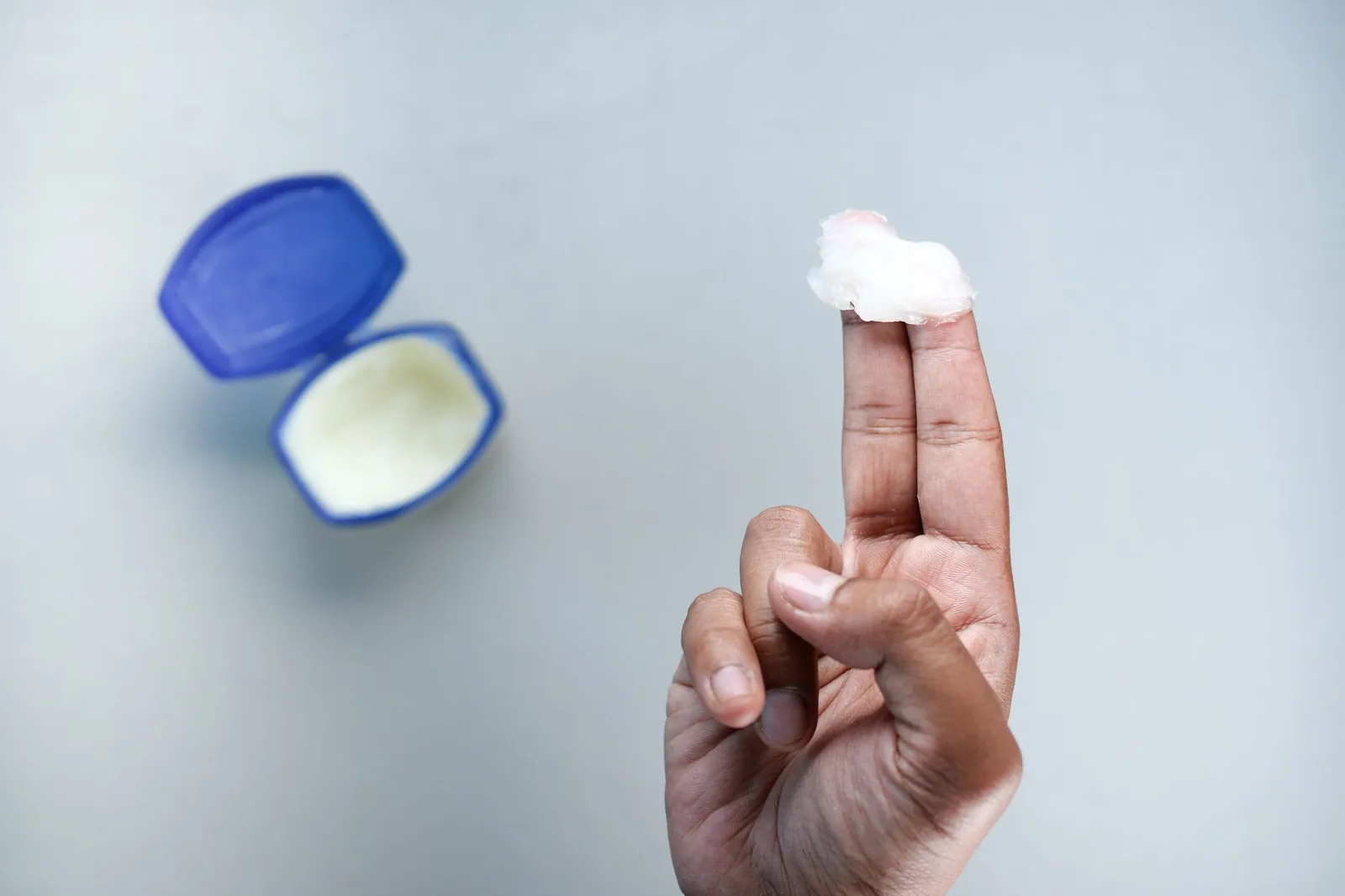
Slugging is a skin care trend where you seal your face under a layer of petroleum jelly overnight, as the last step of your evening routine. A 2022 study in Clinics in Dermatology called it a viral beauty trend on TikTok. As of November 2026, it still turns up in medical explainers, including an April 2024 Cleveland Clinic article that calls it one skin care trend dermatologists can get on board with.
Here's the short answer:
- Very dry, flaky, or tight skin that isn't acne-prone is the best fit. An American Academy of Dermatology (AAD) guide quotes a dermatologist who always recommends petroleum jelly when skin is very dry.
- Acne-prone? Keep it off your face. The AAD says it may cause breakouts in some people.
- Don't seal a retinoid or an exfoliating acid under it.
- Most skin doesn't need it every night.
Here's what most guides skip. Slugging isn't a yes-or-no question. It's about where (your whole face, a few dry spots, or nowhere) and what's underneath, because a seal changes how the products below it behave. On melanin-rich skin, a breakout from the wrong choice can leave a dark mark that outlasts the trend. Below: how to decide, a safe routine, and when to see a dermatologist instead.
What Is Slugging Skincare?
Slugging skincare means sealing clean skin under petroleum jelly, or another petrolatum ointment, at bedtime, then washing it off in the morning. It works as a lid: its job is to trap moisture that's already on your skin.
In the AAD's guide to dry skin in darker skin tones, dermatologist Caroline Robinson says petroleum jelly works by trapping existing moisture on your skin, and advises a layer over skin that's damp from bathing or over a lotion or cream. That's slugging, minus the name.
The habit is older than the hashtag. The AAD's petroleum jelly tips say ointments are more effective and less irritating than lotions, and suggest petroleum jelly for dry skin, including your lips and eyelids. If you grew up with a jar of it on the dresser for ashy knees and elbows, none of this will feel new. Knees that stay dark after moisturizer are a different question; see our guide to dark knees.
What the research does and doesn't show
We searched PubMed in November 2026 for "slugging" and for overnight petroleum jelly on the face, and found no clinical trial that tested the trend itself. The two dermatology papers that search turned up are the TikTok study above and a 2023 review of petroleum jelly.
The TikTok study screened the top 50 slugging videos and found that videos from health care providers were more educational and higher in quality than videos from influencers. Its authors note that, because the practice is occlusive, it has a potential risk for harm. So the case for it rests on long-standing advice about petroleum jelly for dry skin, not on trials of the trend.
Tight in the AC but shiny by noon? Our guide to dry vs. dehydrated skin sorts out which one you have before you seal anything.
Petroleum Jelly on Your Face: The Acne Question
This is where sources disagree, and it decides whether the trend is for you.
On one side, the AAD's petroleum jelly tips are plain: "Avoid putting petroleum jelly on your face if you are acne-prone, as this may cause breakouts in some people." Our glass skin guide gives the same advice to anyone who breaks out.
On the other side, a 2023 review in the Journal of the American Academy of Dermatology walks through the data on petroleum jelly and clogged pores, and its authors say those data dispel misconceptions about it as a cause of acne.
Both can be true: the review weighs the evidence on petroleum jelly in general, while the AAD's caution is about "some people," and you can't know in advance if you're one. Our advice: if you're acne-prone, follow the AAD and keep petroleum jelly off your face.
Use a moisturizer made for breakout-prone skin instead. The AAD's guide to moisturizer for acne-prone skin says to look for oil-free, non-comedogenic, or won't clog pores on the label, and to leave some water on your skin after washing before you apply it. That's the damp-skin half of slugging, without the seal.
Cleveland Clinic goes further. Its article, quoting dermatologist Amy Kassouf, MD, says oily skin already has an adequate or even too-robust lipid layer, that slugging could make acne worse, and that you should skip it with any infection or open wound.
Should You Try Slugging?
Most guides sort people by skin type. We sort your face by zone and your night by what's on it, using AAD and Cleveland Clinic guidance. You have three choices: slug your whole face, slug only the dry spots, or skip it on your face. This is a home guide, not a diagnosis and not medical rules.
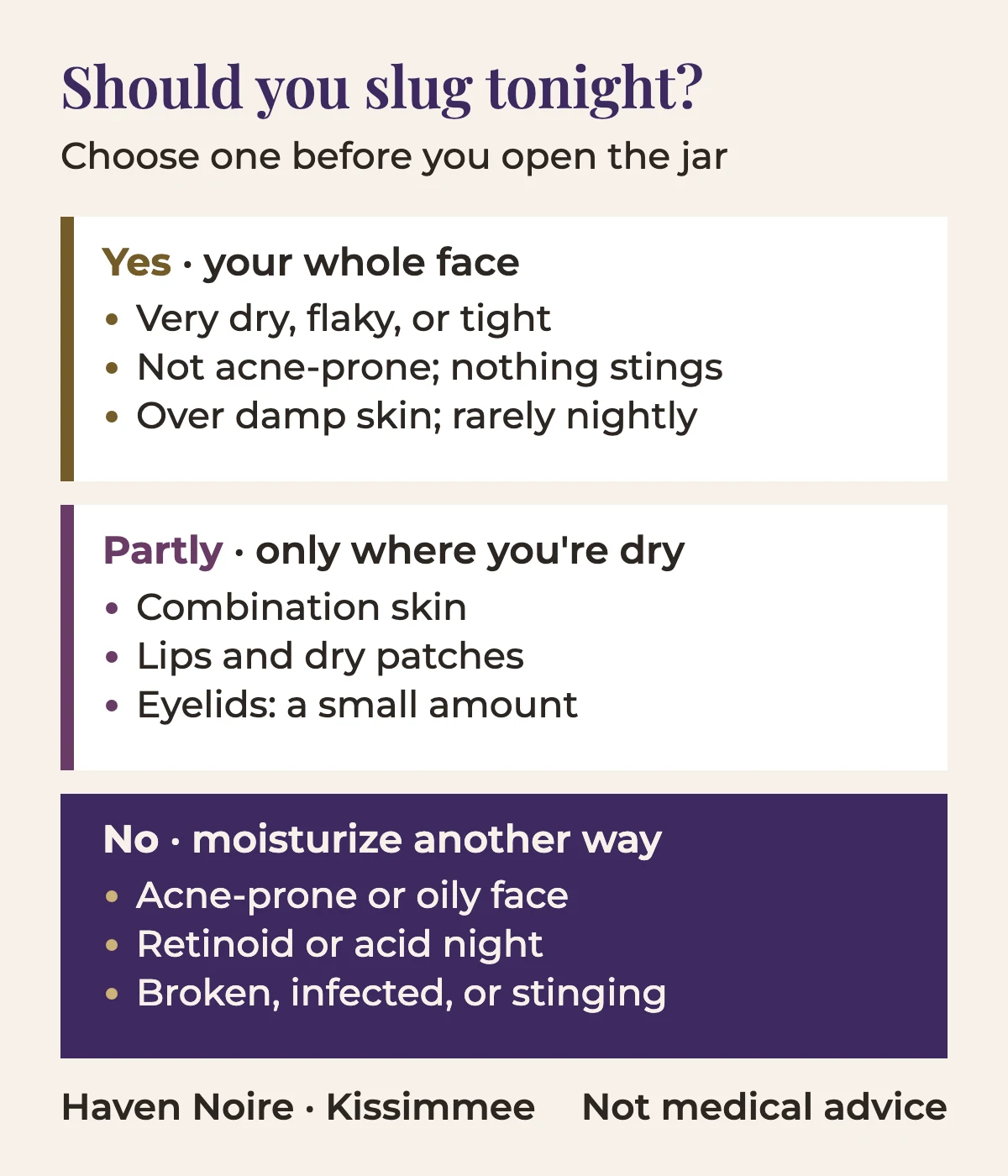
Slug your whole face, a few nights at a time
For skin that's very dry, flaky, or tight, isn't acne-prone, and doesn't sting. In the AAD's darker skin guide, dermatologist Shani Francis says that if you have very dry skin, you should use an ointment like petroleum jelly or a thick cream. Cleveland Clinic says you may need a couple of nights in a row to catch up, but rarely every night.
Slug only where you're dry
For combination skin, or a face that's dry in just a few places: around your nose and mouth, a flaky patch, your lips. Cleveland Clinic notes you can apply it only to the thinnest, driest parts of the face, like your eyelids and lips. The AAD suggests a small amount for dry, flaky eyelids, and notes that eyelid skin is the thinnest on your body.
Skip it and moisturize your face another way
Skip the seal on your face if you're acne-prone or oily, on any night you use a retinoid, an exfoliating acid, or a prescription cream, and on broken, infected, or stinging skin. If products sting, start with our skin barrier guide.
Your lips are a different story. The AAD's skin care plan for isotretinoin, a prescription medicine for severe acne, pairs petroleum jelly or lip balm for dry lips with an oil-free, non-comedogenic moisturizer for the face.
The rule every time: seal water, not actives
Cleveland Clinic advises avoiding alpha hydroxy acids, beta hydroxy acids, and retinoids before slugging, because they can irritate your skin once trapped beneath the petroleum jelly. That fits a 2001 review in the journal Contact Dermatitis: occlusion, used on purpose to boost how much of a drug the skin absorbs, also increases penetration of other chemicals and may worsen irritant and allergic reactions.
Some articles about the trend describe the seal as a way to trap active ingredients from earlier steps. Our advice: keep acid nights and slugging nights separate, counting them with our guide to how often you should exfoliate. On a prescription retinoid, don't skip doses to slug; ask your dermatologist.
| Slug tonight? | Fits if your skin is | Where it goes | What the sources say |
|---|---|---|---|
| Yes | Very dry, flaky, or tight; not acne-prone | Whole face, over damp skin or a plain cream | AAD: ointment or thick cream for very dry skin. Cleveland Clinic: rarely nightly |
| Partly | Combination, or dry in a few places | Lips, dry patches, a little on dry eyelids | AAD: lips and eyelids. Cleveland Clinic: thinnest, driest parts |
| No | Acne-prone, oily, broken, or stinging; or a retinoid or acid night | Not your face: an oil-free, non-comedogenic moisturizer | AAD: may cause breakouts in some people. Cleveland Clinic: actives irritate under the seal |
How to Do Slugging Safely: A Night Routine, Step by Step
If slugging your whole face fits your skin, here's a slugging skincare routine built from AAD and Cleveland Clinic advice:
- Pick a night with no retinoid or exfoliating acid on your skin, as Cleveland Clinic advises. Our suggestion: two or three nights a week to start.
- Wash gently, pat dry, and leave your skin a little damp. The AAD says to always apply petroleum jelly to damp skin for the best results.
- Add a plain, fragrance-free moisturizer if you like. The AAD's darker skin guide favors fragrance-free products.
- Warm a tiny amount between your fingertips (our tip) and press a thin layer over dry areas. Cleveland Clinic says you only need a tiny bit.
- Protect your pillow and your hairline. Cleveland Clinic suggests a towel over your pillowcase. Our tip: tie your hair back or wear a satin bonnet, since the AAD says hair oil may be the cause of acne on the forehead and temples.
- Wash your face when you wake up, as Cleveland Clinic advises, then apply sunscreen. Our guide to sunscreen for dark skin helps you choose.
- Check in at two weeks. The AAD's darker skin guide says its dry skin tips should bring some improvement within two weeks; if they don't, see a board-certified dermatologist.
Stop if anything stings, burns, or itches. Cleveland Clinic says that if your skin gets red or irritated after slugging, it's wise to see your dermatologist.
Slugging on Melanin-Rich Skin and in Florida Heat
Ashy skin: where the seal earns its place
On brown and Black skin, dryness rarely hides. The AAD's darker skin guide says flaking, discoloration, and rough texture are more noticeable in darker skin tones. Dr. Francis adds that butters and oils tend to liquefy on the skin, so they're less effective as moisturizers.
Check the trending oils before you swap them in. We cover shea butter for skin, coconut oil on your face, and castor oil for skin on their own. If the gray cast covers your arms and legs too, start with our guide to ashy skin.
Acne-prone? A breakout costs more than one night
The trade changes if you break out. The AAD's tips for clearing acne in darker skin tones say acne in skin of color is often accompanied by dark spots or patches, which can last much longer than the acne. The same page says a product with oil, such as cocoa butter or shea butter, can clog your pores on your face, back, or chest.
Irritation counts too. On the AAD's retinoid page, dermatologist Sonia Badreshia-Bansal says that with skin of color, irritation can trigger dark marks. Our advice: for melanin-rich, acne-prone skin, skipping it on your face is the safer trade. For a full home routine, see skin care for Black skin.
Florida nights: humid outside, dry in your bedroom
Cleveland Clinic says slugging is less necessary in the warmer, more humid months. Central Florida adds a twist: MedlinePlus lists dry indoor air from heating or cooling systems among the causes of dry skin. Our take: a face that's fine outdoors can still wake up tight after a night in air conditioning, so judge by how your skin feels when you wake up, not by the forecast.
The AAD's dry skin tips also suggest running a humidifier in your bedroom while you sleep, cleaned regularly to prevent mold.
Where a Facial Fits Alongside Slugging
Slugging skincare is a home habit; a facial adds a trained second look at your skin. Neither treats a skin condition: Haven Noire is an esthetics spa, not a medical office, and we don't diagnose.
Our menu lists the Signature Facial's benefits as balancing, hydrating, rejuvenating, and relaxing, for all skin types. Its last step is serums, moisturizer, and SPF, sealing in hydration and protection.
If your skin stings or reacts, see how we approach sensitive and redness-prone skin: we soothe redness, rebuild a stressed barrier, and find what your skin actually tolerates.
| Option | Price |
|---|---|
| Signature Facial, 60 minutes | $95, or 3 for $210 |
| Signature Facial, 90 minutes, with an added eye treatment | $110, or 3 for $285 |
| Glow Membership: one 60-minute Signature Facial a month | $74.99 a month |
| Ritual Membership: one 90-minute Signature Facial a month | $94.99 a month |
The Ritual Membership lists dry or dehydrated skin among what it's best for. Memberships have a three-month minimum; compare them on our memberships page.
Slugging after a facial or peel
After a Signature Facial, keep skin hydrated, skip harsh actives and heat for 24 hours, and wear SPF daily. After a corrective facial, avoid sun and active exfoliants for a few days. Our menu doesn't cover slugging after a treatment, so ask us at your appointment before you seal skin that was just exfoliated, dermaplaned, peeled, or treated with a Hydrofacial.
Want a plain moisturizer to wear under the seal? Ask about the professional skincare lines we work with.
When to See a Dermatologist Instead of Slugging
We're estheticians, not doctors. Stop and see a board-certified dermatologist if:
- Your skin gets red or irritated after slugging, as Cleveland Clinic advises.
- Dry skin hasn't improved after two weeks of good care. The AAD says persistent dryness can come from an undiagnosed condition such as eczema, ichthyosis, or psoriasis.
- You see yellow crusts, skin that leaks pus or other fluid, or swelling and discoloration, which the AAD lists as signs of infection.
- Cracks are deep or bleeding, or the itch keeps you awake. The AAD says excessively dry skin can require a dermatologist's help.
- Breakouts or dark marks keep coming. The AAD says dermatologists recommend treating acne and dark spots at the same time.
Check with your dermatologist or doctor before you start if:
- You take isotretinoin. The AAD's isotretinoin skin care plan calls for an oil-free, non-comedogenic moisturizer on damp skin, and lip balm or petroleum jelly for dry lips.
- You use tretinoin, adapalene, tazarotene, or benzoyl peroxide. The AAD says these tend to dry and irritate skin, and that a daily moisturizer can help you tolerate them. Ask what goes on top.
- You're pregnant. The AAD's retinoid page says retinoids should not be used during pregnancy, so review your whole routine with your doctor.
- You're treating eczema, rosacea, or another skin condition. The AAD's dry skin tips say that for excessively dry skin, your dermatologist will prescribe or recommend the moisturizer your skin needs.
- Your eyes are involved. Our advice: keep it on eyelid skin and out of your eyes, and take eye pain, redness, or blurry vision to a doctor.
Not sure which side of the line you're on? Contact us before you book.
Frequently Asked Questions About Slugging
Is slugging bad for acne-prone skin?
It can be. The American Academy of Dermatology says to avoid petroleum jelly on your face if you're acne-prone, because it may cause breakouts in some people. A 2023 dermatology review calls the acne link a misconception, but you can't predict your own skin. Use an oil-free, non-comedogenic moisturizer on your face and keep petroleum jelly for your lips.
Can you put petroleum jelly on your face every night?
Most people don't need to. A dermatologist quoted by Cleveland Clinic says you may need a couple of nights in a row to catch up, but slugging should rarely be an every-night routine. If your skin is very dry and not acne-prone, our suggestion is two or three nights a week, then judge your skin after two weeks.
Can I slug over retinol or tretinoin?
Not on the same night, in our view. Cleveland Clinic advises avoiding retinoids and exfoliating acids before slugging, since they can irritate skin once trapped under petroleum jelly. If you use a prescription retinoid such as tretinoin, don't skip doses to make room for slugging. Ask your dermatologist what to put on top of it.
Does slugging help ashy skin on dark skin tones?
It can help very dry skin. The AAD's guide for darker skin tones recommends an ointment like petroleum jelly or a thick cream for very dry skin, applied over damp skin or a cream, and says butters and oils liquefy and moisturize less well. If you're acne-prone, use it on your body and lips, not your face.
Is slugging worth it in Florida humidity?
Often less so, but check your bedroom. Cleveland Clinic says slugging is less necessary in warmer, more humid months. MedlinePlus, though, lists dry indoor air from cooling systems among the causes of dry skin. If you wake up tight in air conditioning, seal only your driest spots or try the bedroom humidifier the AAD suggests.
Can you put petroleum jelly on your eyelids?
In a small amount, yes. The American Academy of Dermatology suggests a small amount of petroleum jelly for dry, flaky eyelids, and notes that eyelid skin is the thinnest on your body and irritates easily. Keep it on the skin and out of your eyes. Eye pain, redness, or blurry vision is a question for your doctor.
What can I use instead of slugging?
For very dry skin, the AAD's darker skin guide names a thick cream as the alternative to an ointment like petroleum jelly. For acne-prone skin, the AAD suggests a moisturizer labeled oil-free, non-comedogenic, or won't clog pores, applied while your skin is still damp. A bedroom humidifier helps too. Ask us at your facial which fits your skin.
More from the Journal

About the author
Tiffany · Licensed Esthetician · Licensed PMU Artist
Tiffany is a Florida-licensed esthetician and permanent makeup artist and the founder of Haven Noire. She specializes in customized facials, corrective skincare, and waxing for melanin-rich and all skin types, and is known for a calm, education-first approach that puts first-time clients instantly at ease.
Meet Tiffany →