

Here's the honest answer to how to shrink pores: you can't, at least not permanently. A Cleveland Clinic article on minimizing pores puts it plainly: pore size is mostly a result of your genetics, so you can't shrink pores for good. What you can change is how large they look, and that part responds well to the right care.
The American Academy of Dermatology (AAD) names what makes pores more noticeable: clogging, oil, irritation, sun damage, and skin that has lost firmness. So the quick version looks like this:
- Use only products labeled non-comedogenic, oil free, or won't clog pores.
- Cleanse twice a day with warm water and your fingertips.
- Try retinol at night, and a salicylic acid cleanser if you break out.
- Wear broad-spectrum, water-resistant SPF 30 or higher every day.
- Stop squeezing. Picking makes pores look bigger, not smaller.
The catch is that people with large pores don't all have the same problem. Below: three questions for finding yours, a routine for Florida humidity, the myths that backfire on melanin-rich skin, what a facial can honestly do, and when to see a dermatologist.
Can You Actually Shrink Pores?
No. Pores are tiny openings that release oil and sweat from your glands, and their size is mostly set by your genes. You can make pores look smaller by keeping them clear, controlling shine, and protecting the firmness of the skin around them.
A 2016 review in Dermatologic Surgery calls enlarged pores a cosmetic concern for a large number of people, not a medical one. It names three major causes: high oil output, reduced elasticity around the pore, and a larger hair follicle. It adds that recurring acne, sex hormones, and your skin care routine can affect pore size too.
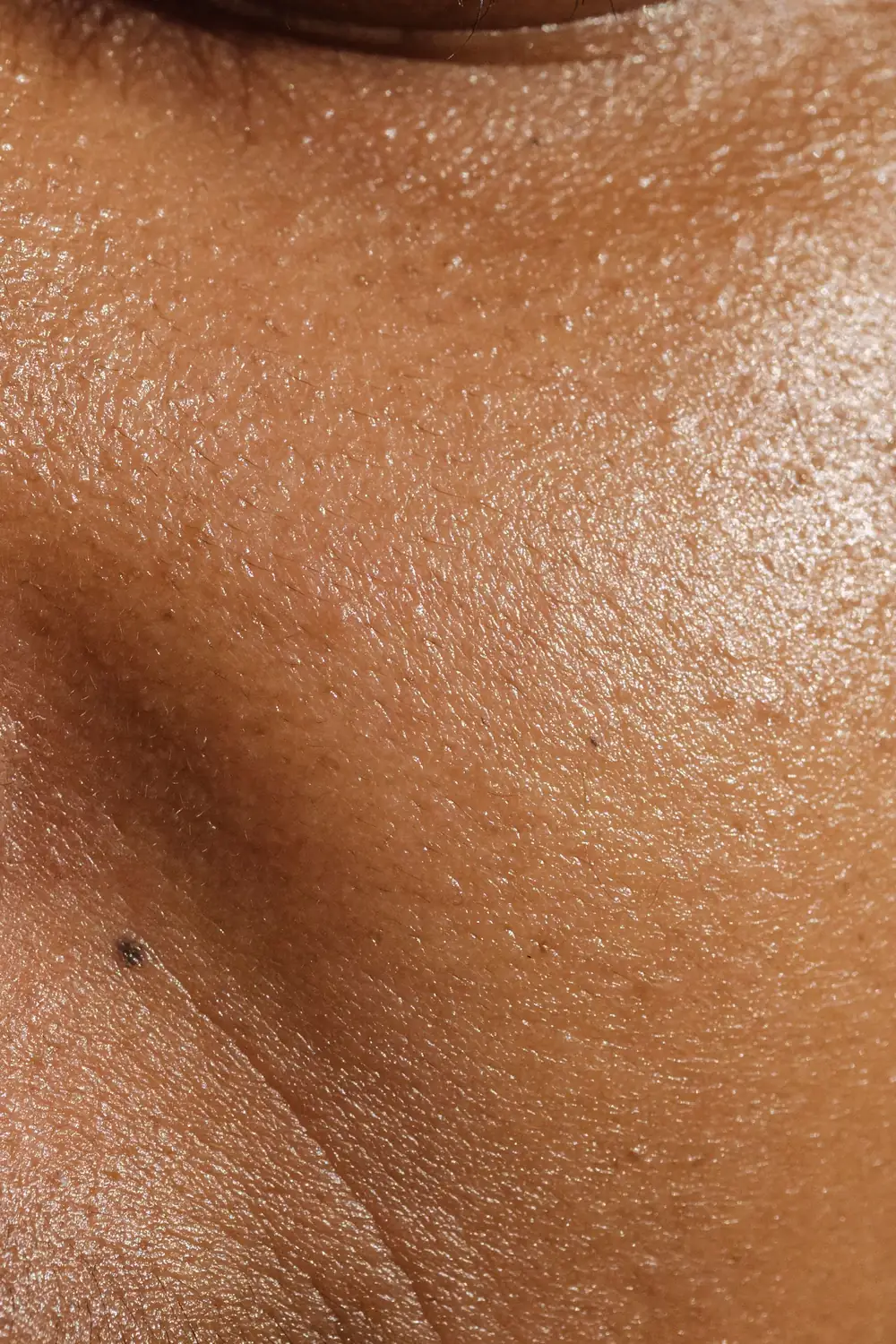
Oil seems to matter most. In a 2006 study in the British Journal of Dermatology, researchers in Seoul measured the pores of 60 adults. Pore size was linked most closely to oil output, followed by male sex, and age played a part too. In women, pores measured larger during the ovulation phase of the cycle.
The review makes the practical point most pore advice skips: because the causes differ, it suggests identifying yours before choosing a treatment. That's the idea behind the questions below. If breakouts worry you more than pores, start with our guide to the best facial for acne.
Three Questions to Find the Cause of Large Pores
These questions turn three causes named by that review and the AAD, clogging, oil, and lost firmness, into checks you can do in a mirror. They're a starting point, not a medical test. Most people have more than one cause. Start with the one that sounds most like your skin.
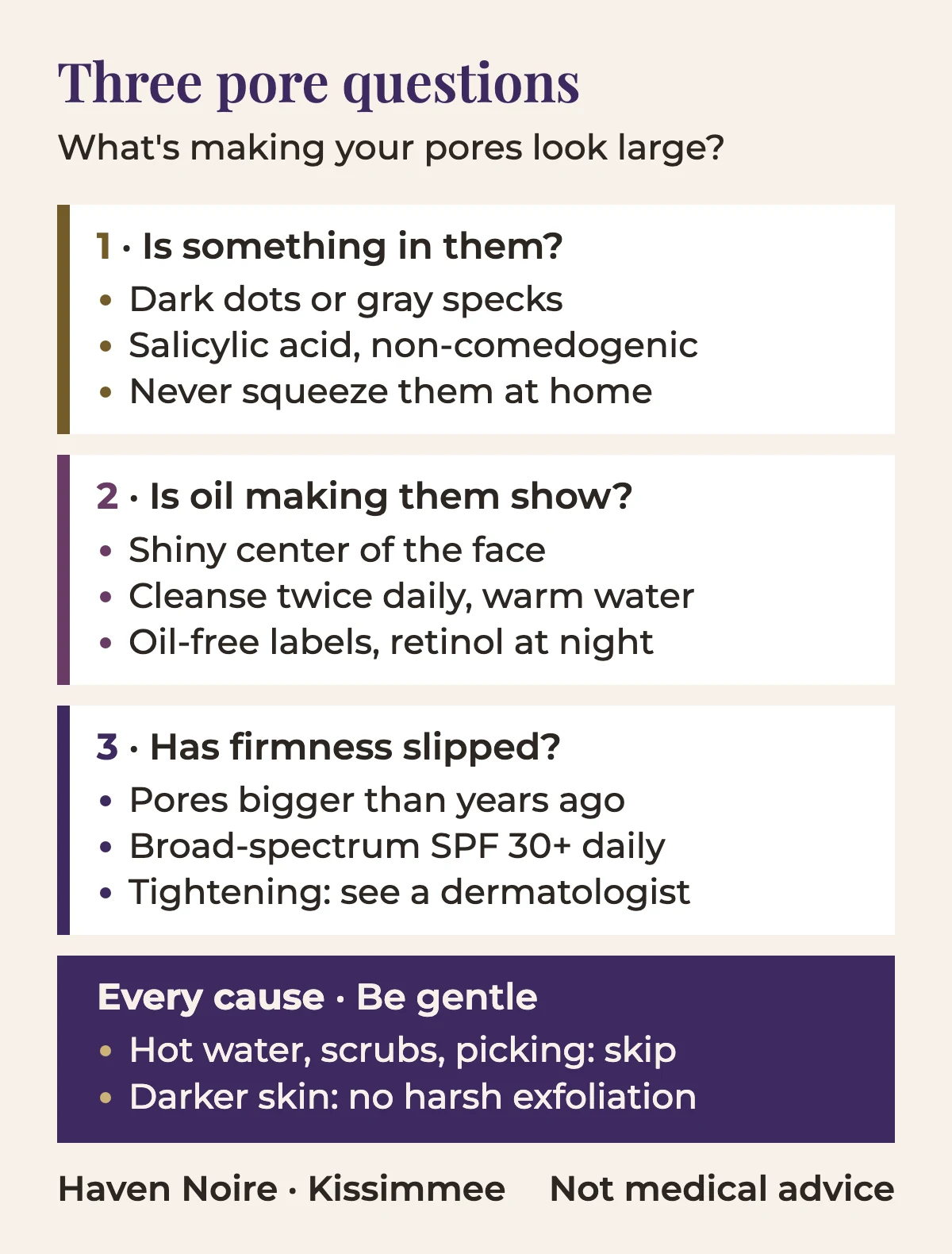
Is something sitting in your pores?
The AAD explains it simply: when pores clog, they expand, which makes them look more noticeable. Cleveland Clinic's page on clogged pores says they develop when dead skin cells, oil, or dirt get trapped inside them, and a clog that widens the pore's opening is a blackhead.
Blackhead or sebaceous filament?
Look closely before you reach for a pore strip. Blackheads are open, dark-colored bumps. Sebaceous filaments are different. Cleveland Clinic's page on filaments calls them a normal, healthy part of your skin, not acne, and says they're usually smaller, flat, and gray, light brown, or yellow.
That difference matters, because you can't empty a filament for good. Cleveland Clinic says that if you squeeze one out, the pore fills up again within 30 days. If yours turn out to be true blackheads, try an eight-week blackhead routine.
What helps with clogs: products labeled non-comedogenic, and a cleanser with salicylic acid, which the AAD says can unclog pores. Extractions belong in a treatment room, where they're done as needed during a Signature Facial. Our guide to facial extractions covers what that step is and isn't.
Is oil making your pores stand out?
If your forehead, nose, and chin shine by lunch, start here. Cleveland Clinic's pore guide notes that pores look more prominent in the center of your face, because more oil-releasing glands are located there.
The AAD's advice: cleanse twice a day, choose oil-free or non-comedogenic products, and consider retinol or retinyl palmitate at night. It says retinol may help when oily skin, mild acne, or lost firmness is making your pores look larger.
What about niacinamide? A 2006 report by Draelos and colleagues in the Journal of Cosmetic and Laser Therapy found that 2% niacinamide lowered oil output in Japanese participants, but only surface oil in white participants in the U.S. It didn't measure pores at all. Here's what the niacinamide trials on dark spots found.
Has the skin around your pores lost firmness?
If your pores look bigger than they did five or ten years ago, firmness may be part of the story. The AAD says pores look larger when skin sags, and that the more sun damaged your skin, the less firmness it has.
What helps protect firmness: daily broad-spectrum, water-resistant sunscreen with SPF 30 or higher, even when it's raining, plus retinol at night. Tightening procedures are dermatologist territory. The AAD says a board-certified dermatologist can examine your skin and tell you what can tighten it.
| Cause | Signs to look for | What the sources say | Start here |
|---|---|---|---|
| Clogged pores | Dark dots, or flat gray or yellow specks on your nose | AAD: clogged pores expand and look more noticeable | Non-comedogenic labels, a salicylic acid cleanser, no squeezing |
| Oil | Shine on your forehead, nose, and chin by midday | 2006 study: oil output was linked most closely to pore size | Cleanse twice daily with warm water, oil-free products, retinol at night |
| Lost firmness | Pores look bigger than they used to | AAD: pores look larger when skin sags or is sun damaged | Daily SPF 30 or higher, retinol, a dermatologist for tightening |
| Any cause | Redness or stinging after your routine | AAD: when skin is inflamed, pores tend to be more noticeable | Warm water, fingertips, no scrubs, no picking |
How to Minimize Pores at Home: A Routine for Florida Humidity
This routine follows the AAD's advice step by step. It's built for oily and combination skin, the kind that's shiny by midday in Kissimmee humidity.

Morning
- Wash with a gentle, non-comedogenic cleanser, warm water, and your fingertips. The AAD says hot water can irritate your skin and make pores look larger.
- Moisturize with a product labeled oil free, non-comedogenic, or won't clog pores. The AAD says to skip any product without one of those terms.
- Apply broad-spectrum, water-resistant sunscreen with SPF 30 or higher. If you're fading dark spots on brown or Black skin, the AAD recommends a tinted sunscreen with iron oxide. Our guide to sunscreen for dark skin shows how to choose one.
Night
- Cleanse again. If you break out, the AAD suggests a salicylic acid cleanser before bed and a mild cleanser in the morning, if the acid dries or irritates your skin.
- Apply retinol or retinyl palmitate before bed. If it irritates, the AAD suggests washing your face and waiting 30 minutes before you apply it. New to it? Here's how to use retinol night by night.
- Skip retinol if you're pregnant or breastfeeding. The AAD says you shouldn't use it then.
- Use a prescription retinoid or acne medicine, or have eczema or rosacea? Ask your dermatologist before you add retinol or a salicylic acid cleanser.
Exfoliation: gentle, or not at all
Exfoliate gently, if at all. The AAD's guide to exfoliating at home says oily, thicker skin may handle stronger treatments, but to avoid strong chemical or mechanical exfoliation if you have a darker skin tone or get dark spots after bug bites or breakouts. It also warns that exfoliating while you use retinol may worsen dry skin or even cause breakouts. There's no set schedule: it says the more aggressive the exfoliation, the less often you need it. For a starting point by skin type, see our exfoliation schedule guide.
If your skin is both oily and melanin-rich, that advice pulls two ways. Our advice: side with gentle every time.
Do pores look bigger in summer? What two studies found
In a study of 178 women in Guangzhou, China, forehead oil was higher in spring and summer than in autumn and winter, and it tracked average humidity. A study of 100 Korean men found more oil in summer, and facial scans showed more pores in summer than in winter.
Neither study was done in Florida or on Black skin, so we read them as a hint, not a rule. So plan for clogs and oil to need more attention in the hot, humid months, and don't answer a sticky day by scrubbing harder. If the humid months bring breakouts too, our guide to sweat pimples helps you find the trigger.
If your skin shines outdoors but feels tight in the air conditioning, read our guide to dry vs. dehydrated skin before you change your moisturizer.
Large Pore Myths That Backfire on Melanin-Rich Skin
Most pore myths promise a fast fix. The trouble is that fast fixes are usually irritating, and the AAD says inflamed skin makes pores more noticeable. On brown and Black skin, irritation can also leave a dark mark that lasts far longer than a shiny afternoon.
Myth: Steam opens pores and cold water closes them
We didn't find a dermatology source that describes pores opening with heat and closing with cold. The AAD points the other way on heat: it recommends warm water, because hot water can irritate skin and make pores look larger. Cold has a real but short effect. Cleveland Clinic says an ice cube or chilled roller tightens skin for only a few minutes, until your skin warms back up.
Myth: Scrubbing gets pores cleaner
The AAD says scrubbing your face won't make it any cleaner, and that it can irritate your skin and make pores look larger. Wash with your fingertips instead.
Myth: Strips and squeezing empty your pores
Cleveland Clinic says pore strips can pull out sebaceous filaments along with blackheads, and filaments refill anyway. The AAD's rule is blunt: never scrub, rub, pick at, or squeeze the skin on your face. Its guide to acne in darker skin tones adds that picking, popping, or squeezing acne raises your risk of a scar.
Dermatologist Jane Wu's advice in the Cleveland Clinic article is worth repeating: get rid of your magnifying mirror, because no one else is looking at your face that closely.

Myth: Rich butters and hair oils are harmless on your face
This one is personal for many of us. That same AAD guide to acne in darker skin tones says cocoa butter or shea butter on your face can clog your pores. When breakouts show up only on your forehead and temples, it says your hair oil may be the cause, a pattern common enough to have a name: pomade acne. It suggests using hair oil only in the middle of your scalp and on the ends of your hair.
Our take: love your butters, just keep them off your face, and choose non-comedogenic products above the neck.
Why gentle matters more on brown and Black skin
The AAD's guide to dark spots in darker skin tones lists a product that irritates your skin among the triggers for dark spots. Once the cause stops, a spot a few shades darker than your natural color usually fades within 6 to 12 months. Deeper discoloration can take years.
So for melanin-rich skin, the gentlest routine that works is the right one. If a mark has already formed, start with how to fade hyperpigmentation on melanin-rich skin. For the bigger picture, read our guide to facials for Black skin.
What a Facial Can and Can't Do for Large Pores
No facial can undo the pore size your genes gave you, and we won't promise a change. What a facial can do is clear what's sitting in your pores, with extractions as needed, and give you time to plan your home routine with us. Our Signature Facial includes a double cleanse, a skin analysis, exfoliation and extractions as needed, a custom mask and facial massage, then serums, moisturizer, and SPF. Bring your answers to the three questions to the skin analysis so we can talk them through.
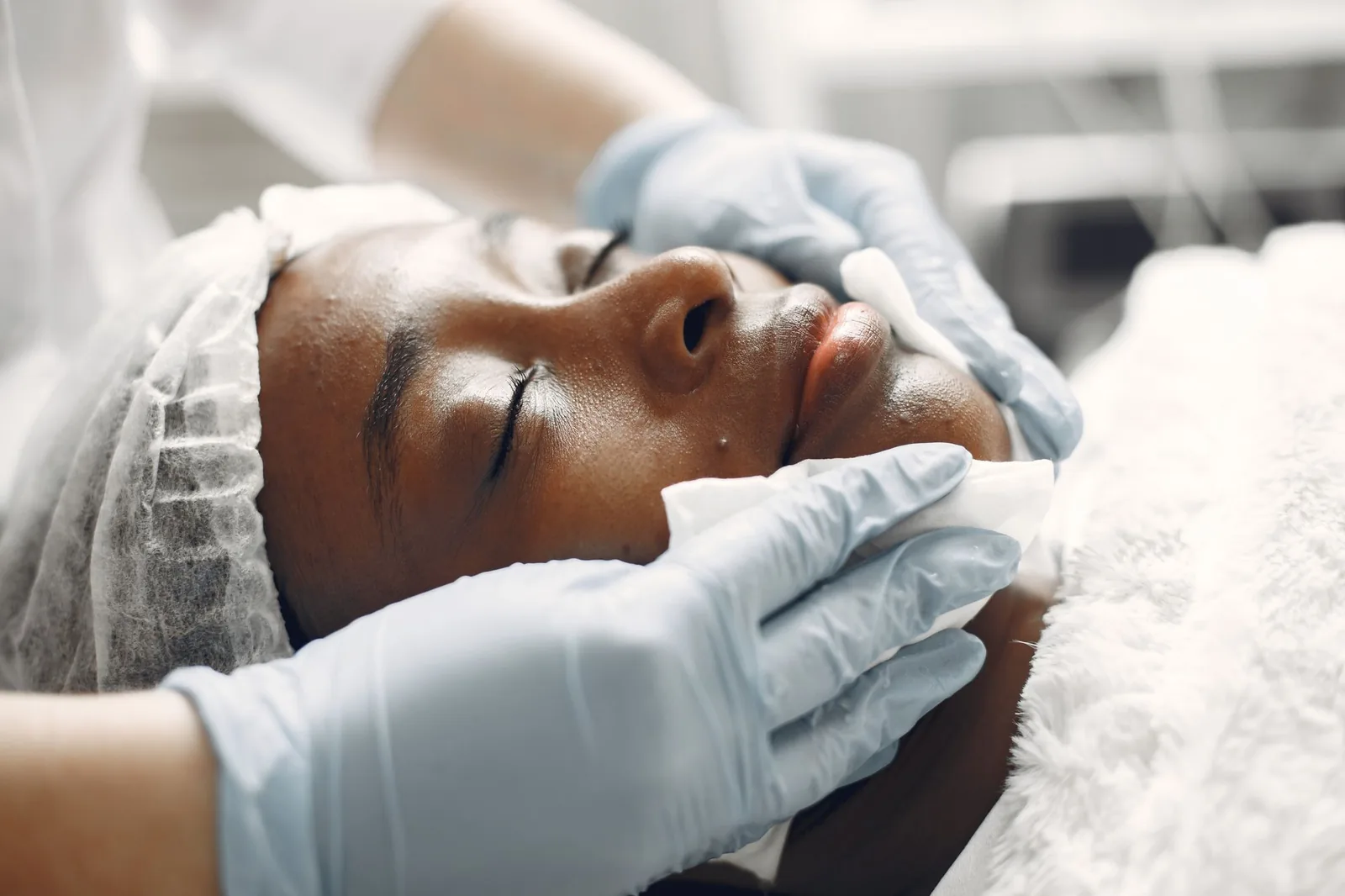
For congestion that keeps coming back, our corrective facials include a Hydrofacial, a gentle, water-based hydrodermabrasion treatment. Our menu describes it as exfoliating while infusing serums, smoothing texture, and refining pores. Acne Oxygen Rx is listed for acne, sensitive, and congested skin, and our oxygen facial guide explains what that treatment is.
What does the research say? Very little. The only trial we found is a 2008 study of hydradermabrasion by a single author, Bruce Freedman, in the Journal of Cosmetic Dermatology. Of its 20 women, one group had six treatments with an antioxidant serum, and he reported decreased pore size, fine lines, and hyperpigmentation. The group that only applied the serum by hand showed no change.
One study of 20 people can't show that any facial shrinks pores, and it didn't test our Hydrofacial. Our line stands: no facial can undo the pore size your genes gave you. Chasing the poreless look in social media photos? Read why glass skin still has pores.
| Facial | Time | Price |
|---|---|---|
| Signature Facial | 60 minutes | $95, or 3 for $210 |
| Signature Facial | 90 minutes | $110, or 3 for $285 |
| Corrective Facial, including Hydrofacial and Acne Oxygen Rx | 60 minutes | $135, or a 3-pack for $360 |
Every treatment is customized for melanin-rich and all skin types. Between visits, ask us about home care from the professional skincare lines we use.
When to See a Dermatologist About Large Pores
We're an esthetics spa, not a medical office. We don't diagnose skin conditions, and we don't offer lasers, microneedling, or prescriptions. Some things that look like large pores aren't pores at all, and some pore goals need medical tools.
| What you see | What it might be | What the source says | Who to see |
|---|---|---|---|
| Open, dark-colored dots | Blackheads | Cleveland Clinic: a clog that widens the pore's opening | An esthetician or a dermatologist |
| Flat gray, light brown, or yellow specks on your nose | Sebaceous filaments | Cleveland Clinic: normal, and not acne | No one, unless they bother you |
| Small skin-colored, yellow, or brown bumps with a dent in the center | Possibly sebaceous hyperplasia | Cleveland Clinic: harmless, but see a provider if bumps keep growing | A dermatologist or your doctor |
| Sunken spots where acne used to be | Depressed acne scars | AAD: acne scars rarely go away completely on their own | A dermatologist |
See a dermatologist or your doctor first if:
- Small bumps with a dent in the center keep growing larger. Cleveland Clinic's page on sebaceous hyperplasia lists that as a reason to see a provider. It calls the condition harmless and not cancerous, and says that rarely, a provider may recommend a biopsy to make sure the bumps aren't basal cell carcinoma.
- Your acne is painful, inflamed, infected, or filled with pus. That's when Cleveland Clinic says to contact your doctor.
- You have sunken acne scars. The AAD says a board-certified dermatologist can help diminish them. Our guide to textured skin helps you sort scars from other bumps.
- You want prescription retinoids, lasers, or skin tightening. Cleveland Clinic says dermatologists can give laser treatments to resurface your skin.
For breakouts that don't need a doctor, see how we approach congestion on our acne facials page.
Frequently Asked Questions About How to Shrink Pores
Can you permanently shrink your pores?
No. Cleveland Clinic says pore size is mostly a result of your genetics, so you can't permanently shrink your pores. You can make them look smaller by keeping them clear with non-comedogenic products, controlling oil with twice-daily cleansing, and protecting firmness with daily sunscreen. Keep the routine going, because the look of your pores follows it.
Do pores open and close with hot and cold water?
We found no dermatology source that describes pores opening and closing. The American Academy of Dermatology recommends warm water, because hot water can irritate skin and make pores look larger. Cleveland Clinic says an ice cube or chilled roller tightens skin for only a few minutes. Cold changes how pores look briefly, not their size.
Why are the pores on my nose so big?
Cleveland Clinic says pores look more prominent in the center of your face, where more oil-releasing glands are located. The gray or yellow specks on your nose may be sebaceous filaments, a normal part of skin that refills within 30 days if squeezed. It says a routine with salicylic acid and retinoids can make them smaller.
Does retinol shrink pores?
Retinol won't change your pore size. The American Academy of Dermatology says retinol or retinyl palmitate may help when oily skin, mild acne, or lost firmness is making pores look larger. Apply it at bedtime, wait 30 minutes after washing if it irritates, and skip it if you're pregnant or breastfeeding.
Do pore strips make your pores bigger?
We didn't find a dermatology source that says strips enlarge pores. Cleveland Clinic says strips can remove sebaceous filaments as well as blackheads, and that a pore you squeeze empty fills up again within 30 days. The American Academy of Dermatology says picking at or squeezing your pores can irritate your skin and make them look more noticeable.
Why do my pores look bigger in the summer?
Oil may be part of it. A study of women in southern China found more forehead oil in spring and summer, tracking humidity. A study of Korean men found more oil and more pores on facial scans in summer. Neither was done in Florida or on Black skin, so treat them as a hint, not a rule.
Can a facial shrink large pores?
No facial can permanently shrink your pores, and we won't promise a change. A facial can clear clogged pores with extractions as needed, exfoliate, and help you build a home routine. At Haven Noire in Kissimmee, a 60-minute Signature Facial is $95, and a Corrective Facial, including our Hydrofacial, is $135.
How often should I get a facial for large pores?
Our general guidance is about every four weeks for most skin, and active concerns may start with a shorter series. We'll recommend a cadence at your visit. Our guide to how often to get a facial explains why, and a Glow Membership includes one 60-minute Signature Facial a month for $74.99.
More from the Journal

About the author
Tiffany · Licensed Esthetician · Licensed PMU Artist
Tiffany is a Florida-licensed esthetician and permanent makeup artist and the founder of Haven Noire. She specializes in customized facials, corrective skincare, and waxing for melanin-rich and all skin types, and is known for a calm, education-first approach that puts first-time clients instantly at ease.
Meet Tiffany →