
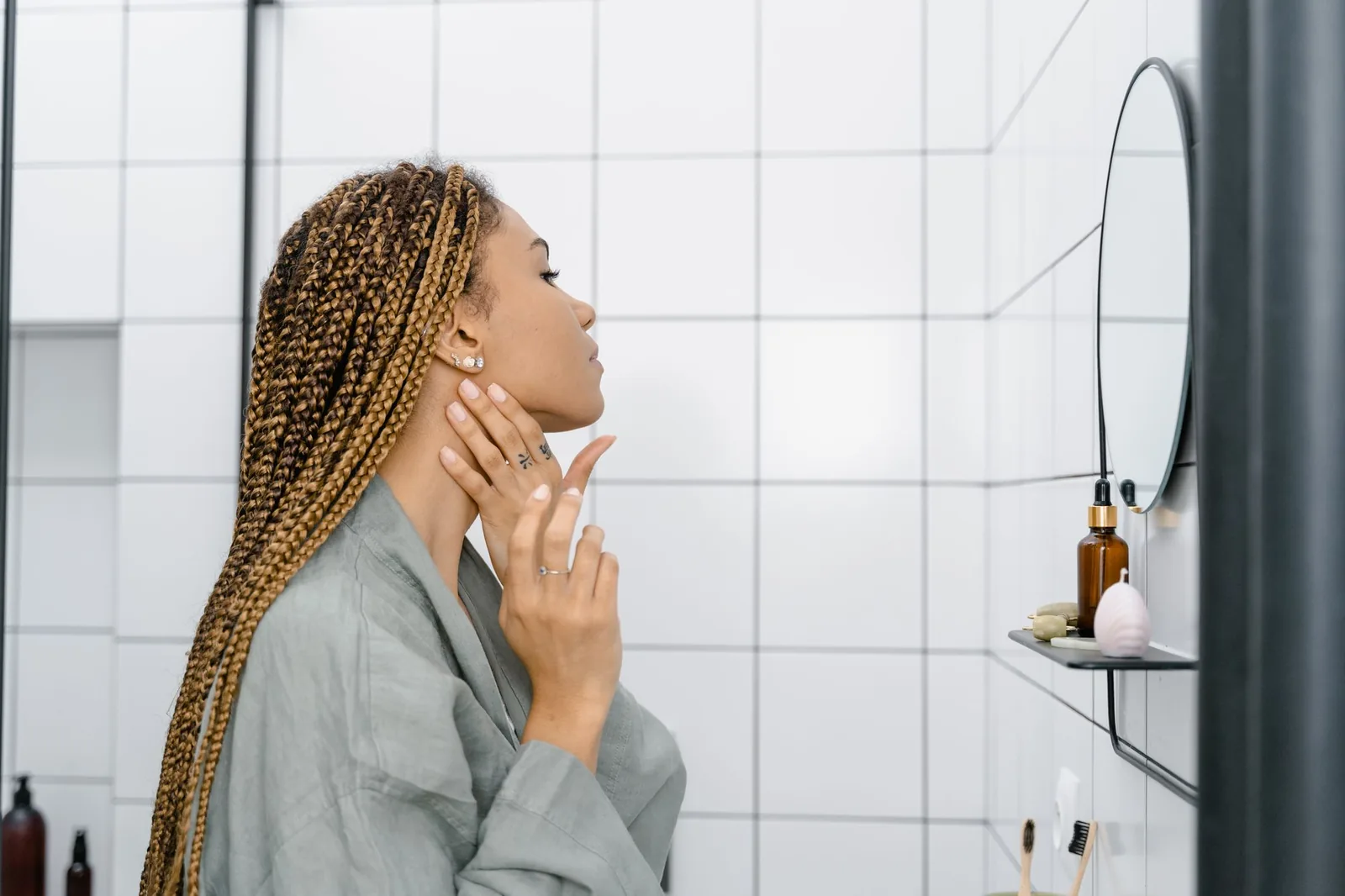
Textured skin is skin that feels rough, bumpy, or uneven when you run your fingertips across it. The usual causes are dryness and dead-skin buildup, clogged pores, sun damage, and acne scars. Gentle exfoliation and steady moisture help rough, dry skin, and daily sunscreen protects what you smooth. Scars, and bumps that itch, burn, or won't heal, belong with a dermatologist.
Here's the part most guides skip. The bumps look alike, but they aren't the same problem. A clogged pore, a milium, a patch of keratosis pilaris, and a rash around your mouth can all read as "texture" in the mirror, and only some of them respond to exfoliation. Scrub the wrong one and you can end up with more irritation. On melanin-rich skin, you can end up with a dark mark that outlasts the bump.
What Is Textured Skin?
Textured skin describes any surface change you can feel: rough patches, small bumps, or dips. It isn't a diagnosis. It's a description, and the same feeling can come from very different causes, from dry indoor air to acne scars.
Texture and tone get mixed up a lot. Tone is color: dark marks, uneven patches, dullness. Texture is shape. The American Academy of Dermatology (AAD) draws that line for acne: a flat spot of color left after a breakout usually isn't an acne scar. It's likely post-inflammatory hyperpigmentation. If your fingertips glide right over it, you're dealing with tone.
What causes textured skin on your face?
The most common causes, and what the sources say:
- Dryness. MedlinePlus says dry skin can turn scaly, itchy, and red, with fine cracks. Its listed causes include dry indoor air from heating or cooling systems, so a Central Florida summer spent in air conditioning can count.
- Clogged pores. MedlinePlus describes whiteheads as small, white, raised bumps that form when oil and skin collect in the pores. They're also called closed comedones, and they're one type of acne. Seeing dark dots instead? Here's how to get rid of blackheads.
- Sun damage. MedlinePlus calls sun exposure the greatest single factor in how skin changes over time, and it notes that pinkish rough patches called actinic keratoses are common in older people.
- Acne scars. The AAD says most people who scar develop depressions, which give skin a rough, uneven appearance.
- Look-alike bumps. Milia, keratosis pilaris, perioral dermatitis, and dermatosis papulosa nigra all raise the surface. The fingertip test below helps tell them apart.
Pores that look larger are a related but separate question, and our guide on how to shrink pores covers it. If your skin feels tight as well as rough, read dry vs. dehydrated skin next.

How to Sort Skin Texture With Your Fingertips
This test is built from how the AAD and MedlinePlus describe each common cause of skin texture: what it feels like, where it shows up, and who treats it. It helps you describe your skin and pick a next step. It isn't a diagnosis, and it doesn't replace a dermatologist.
How to do the fingertip test
- Wash with a mild cleanser, pat dry, and wait a few minutes.
- Stand by a window in daylight with a mirror nearby.
- Close your eyes and glide clean fingertips slowly across your forehead, cheeks, nose, chin, and jawline.
- Ask the first question: can you feel it at all? Then name the shape: rough, raised, or dipped.
- Open your eyes and note the color, the spot, and whether it itches, burns, or hurts.
- Write down how long it's been there, and bring your notes to your consultation or your dermatologist.
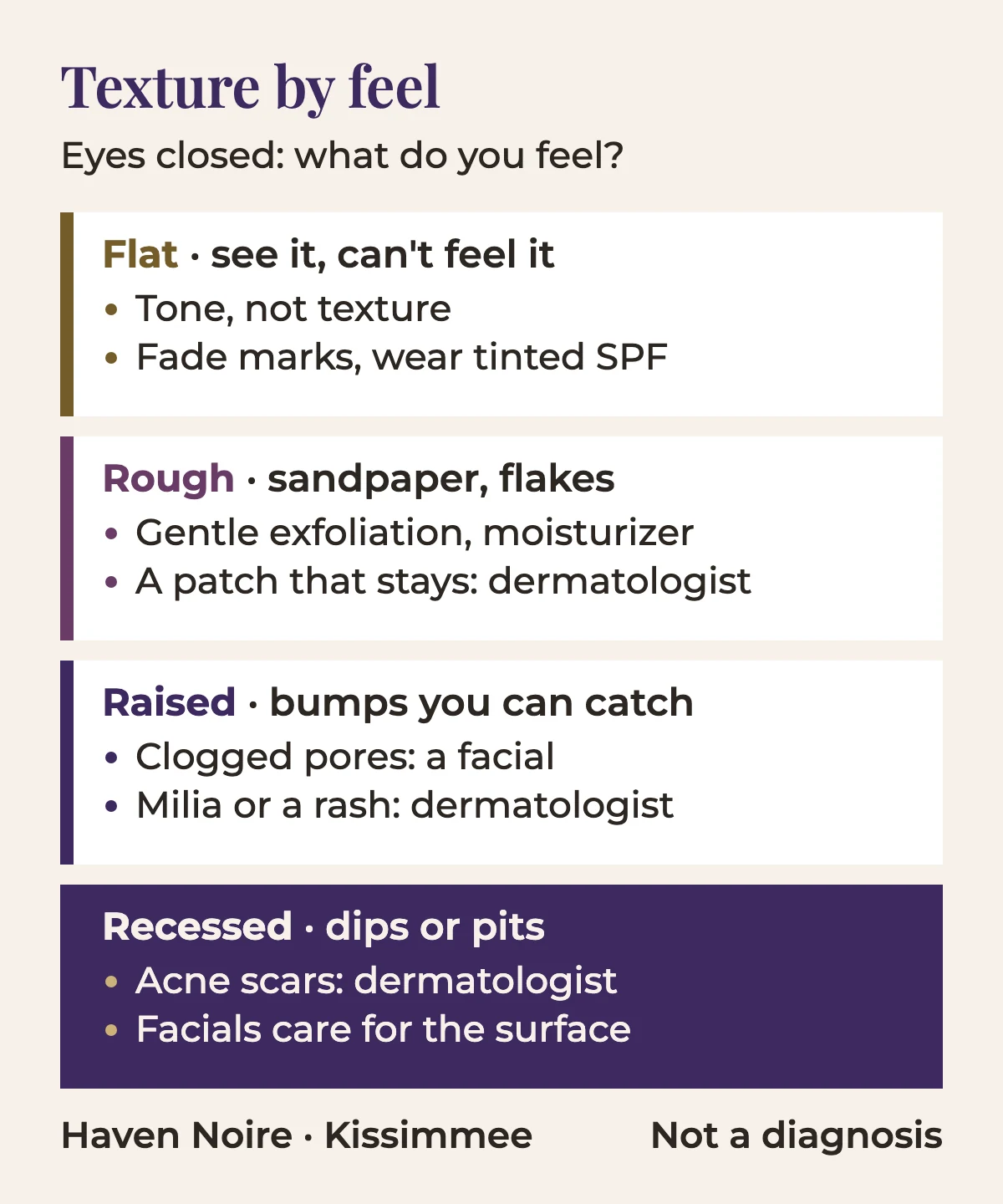
Flat Marks: You Can See Them but Can't Feel Them
If your eyes find a spot your fingertips can't, it's tone, not texture. On melanin-rich skin, that's often a dark mark from an old breakout, a bug bite, or irritation. The AAD's guide to dark spots in darker skin tones says a spot a few shades darker than your natural color usually fades within 6 to 12 months once its cause stops.
One exception: an age-spot look-alike that feels scaly may be an actinic keratosis (more on that below). Exfoliating harder won't sand a flat mark away. Start with how to fade hyperpigmentation on melanin-rich skin instead.
Rough Patches: Sandpaper, Flakes, or Dullness
All-over roughness, like fine sandpaper, often means dryness and unshed dead cells; the AAD describes dry skin as flaky, itchy, or rough. Gentle exfoliation and moisture do their best work here, and several of our corrective facials aim at this kind of roughness.
The rough patch to show a dermatologist
One rough spot is different. The AAD's actinic keratosis guide describes a precancerous growth from sun damage that can feel like a rough patch on skin that's had lots of sun, often before you can see it. In skin of color, it says, these more commonly look like age spots. A rough, scaly spot that stays put on sun-exposed skin or your lips needs a dermatologist, not a facial.
Raised Bumps You Can Catch With a Fingertip
This is the most crowded category. Several different bumps feel alike, and they need different help:
- Whiteheads (closed comedones): small, white, raised bumps from clogged pores. Here's how to get rid of closed comedones at home.
- Milia: tiny white bumps or small cysts that form when dead skin is trapped in small pockets at the surface, according to MedlinePlus. Here's how to get rid of milia without picking.
- Keratosis pilaris: tiny, rough-feeling bumps, most often on the upper arms and thighs, according to the AAD.
- Perioral dermatitis: a rash of small bumps around the mouth, nose, or eyes. The AAD says it's often skin-colored on skin of color, and it can itch or burn.
- Dermatosis papulosa nigra: small, dark, raised spots seen in skin of color.
- Raised acne scars: the AAD notes an acne scar can be raised as well as sunken.
- Inflamed acne: red or painful bumps. That calls for an acne plan, not a texture plan.
| Bump | Clue | What the source says | Who to see |
|---|---|---|---|
| Whiteheads | Small, white, raised; face, chest, or back | MedlinePlus: one type of acne, from oil and skin in the pores | An esthetician; a dermatologist if acne persists |
| Milia | Tiny and white, staying white in the middle | MedlinePlus: adults may have milia removed to improve their appearance | A dermatologist, for removal |
| Keratosis pilaris | Tiny, rough bumps, mostly on arms and thighs | AAD: avoid scrubbing, which tends to worsen it | Gentle home care; a dermatologist if it stays |
| Perioral dermatitis | Around the mouth, nose, or eyes; may itch or burn | AAD: some people need a dermatologist's help | A dermatologist |
| Dermatosis papulosa nigra | Small, dark, raised spots | 2024 review: benign; dark marks are a common side effect of treatment | A dermatologist, only if you want removal |
| Raised acne scar | Where a breakout once was | AAD: a scar can be raised or sunken; a dermatologist can help diminish it | A dermatologist |
| Inflamed acne | Red or painful | AAD: never pick, pop, scratch, or squeeze | A dermatologist or an acne facial |
Clogged pores: where an esthetician helps
Whiteheads are where a facial helps most directly. Our Signature Facial includes exfoliation and extractions as needed, and our guide to facial extractions explains what that step does and doesn't do.
Keratosis pilaris: maintenance, not a cure
The AAD says keratosis pilaris can't be cured, so its self-care plan is upkeep: exfoliate gently with a washcloth instead of scrubbing, use a chemical exfoliator exactly as directed, and moisturize. It also notes that shaving or waxing skin with keratosis pilaris can cause more bumps. If you have KP where you'd normally wax, tell us before you book anything from our waxing menu. Dark dots on your legs rather than rough bumps? Our guide to strawberry legs sorts the four look-alikes.
Dips, Pits, and Scars
Dips you can feel are usually acne scars. The AAD says acne scars can fade but rarely go away completely on their own, and that a board-certified dermatologist can help diminish them.
A facial can't lift a depressed scar. Corrective facials work on what's around it: dullness, roughness, and congestion. For the dip itself, start with a dermatologist.
The best scar plan is prevention. The AAD advises treating acne early and never picking, popping, or squeezing breakouts. If breakouts are still active, read the best facial for acne in Kissimmee first.
How to Get Rid of Textured Skin Where Exfoliation Helps
Rough skin and clogged pores are where smoothing works. The approach is the same at home and in the spa: lift dead surface cells gently, put moisture back, and protect the skin you've uncovered.
At home: the AAD's rules for exfoliating safely
- Check your products first. Retinoids, retinol, and benzoyl peroxide can make skin more sensitive, and exfoliating on top of them may worsen dryness or even cause breakouts. Pregnant, or on a prescription skin or acne medicine such as isotretinoin? Ask your doctor or dermatologist first.
- Match the method to your skin. For dry, sensitive, or acne-prone skin, the AAD suggests a washcloth and a mild chemical exfoliator.
- Go gentle: small circles for about 30 seconds, then rinse with lukewarm water, not hot.
- Moisturize right after, because exfoliating can dry your skin.
- Space it out. The more aggressive the exfoliation, the less often you need it. Our guide to how often you should exfoliate helps you set your own number.
- Skip it entirely on open cuts, wounds, or sunburn.
Those steps come from the AAD's guide to exfoliating safely at home. Notice what they don't promise: none of them clear milia, rashes, or scars. For home care between visits, ask us about the professional skincare lines we work with.
In the spa: matching a corrective facial to your texture
Our corrective facials are 60 minutes, $135, or $360 for a 3-pack. Here's how each option lines up with the four types:
| Treatment | What our menu says | Best fit |
|---|---|---|
| Microdermabrasion + Nano Infusion | Polishes away dull, dead skin, then applies hydrating serums; listed for textured skin | Rough |
| Dermaplane + Nano Infusion | Removes dull skin and peach fuzz, creating a polished canvas for serums | Rough |
| Hydrofacial | Gentle, water-based hydrodermabrasion that exfoliates while infusing serums; listed for congested skin | Rough, plus clogged pores |
| Radiance Brightening | Antioxidants and vitamin blends that refine texture and target discoloration | Rough, plus flat marks |
| Acne Oxygen Rx | Listed for acne, sensitive, and congested skin | Clogged pores; ask us about active acne |
Brown or Black skin with active acne? The AAD advises seeing a dermatologist before microdermabrasion or a chemical peel for acne; more on that below.
Choosing between the two mechanical options? Read dermaplaning vs. microdermabrasion, or see our dermaplaning page. Wondering how our Hydrofacial relates to the branded treatment? See how hydrodermabrasion compares with a HydraFacial.
Our rule of thumb: one exfoliating step per visit beats stacking several.
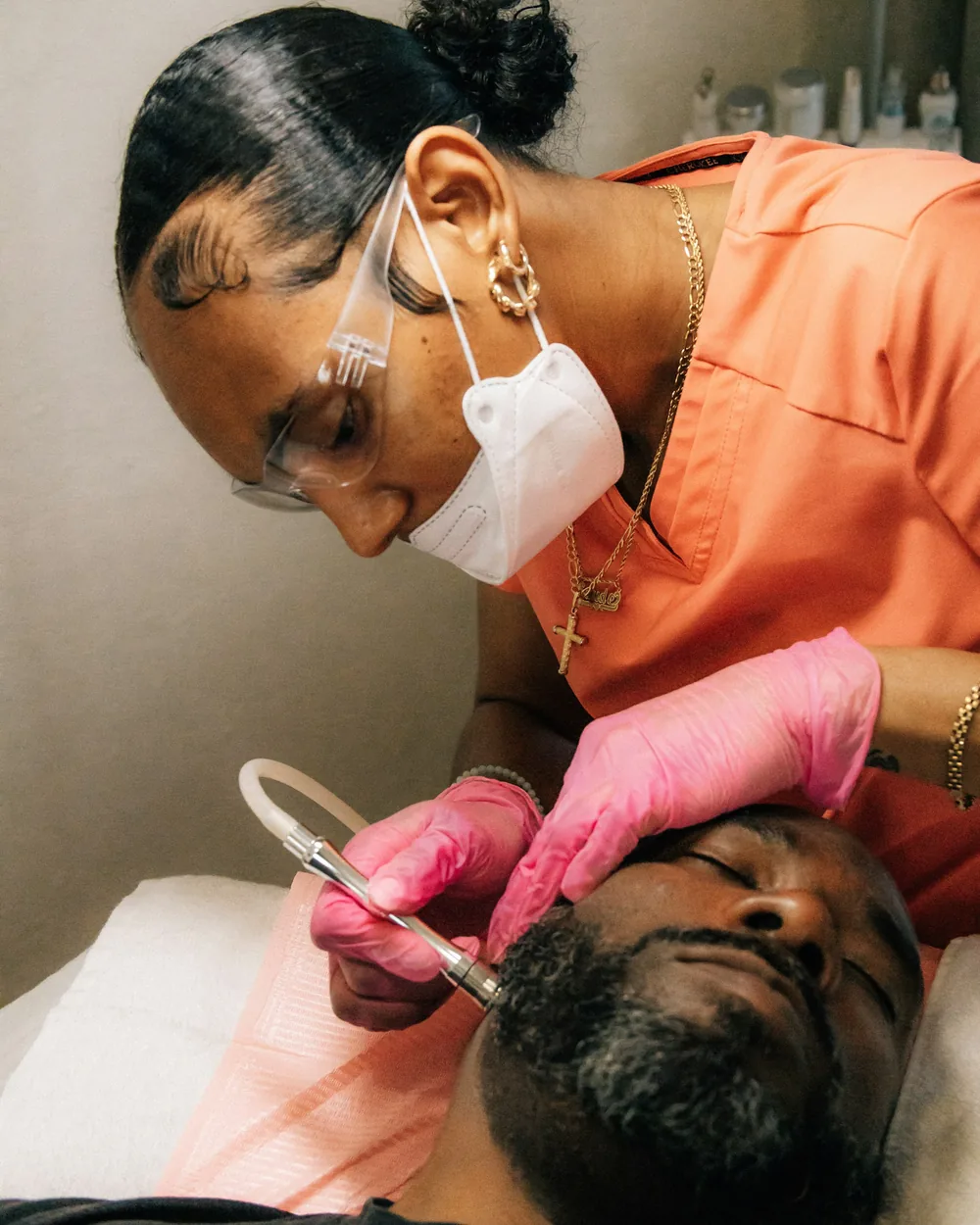
If your skin is mostly dry and rough rather than congested, our Signature Facial is $95 for 60 minutes and includes a double cleanse, exfoliation and extractions as needed, then serums, moisturizer, and SPF.
Chemical peels are another resurfacing option on our menu. Every peel requires a skin consultation first, and peels aren't offered on a first visit.
How long smoother skin takes
Visible change usually comes from a short series rather than a single visit. Many clients start every two to three weeks, then taper to maintenance, and we'll suggest a cadence after your skin analysis. Our guide to how often to get a facial explains the roughly four-week rhythm most skin settles into.
Planning a facial every month? The Corrective Membership is $109.99 a month for any corrective facial, Hydrofacial included, with a three-month minimum. Members also get 10% off extra services and in-spa products.
Textured Skin on Melanin-Rich Skin: Why Gentle Wins
If your skin is brown or Black, how you smooth texture matters as much as what you use. The AAD's exfoliation guide says to avoid strong chemical or mechanical exfoliation if you have a darker skin tone, or if you notice dark spots after burns, bug bites, or acne. For some people, especially those with darker skin tones, more aggressive exfoliation can lead to increased pigmentation.
That's the trade to avoid: a bump that would have settled, replaced by a dark mark that can take 6 to 12 months or longer to fade.
Acne adds one more rule. In its tips for clearing acne in darker skin tones, the AAD advises seeing a dermatologist before using a chemical peel, microdermabrasion, or laser therapy to treat acne, because even at-home versions can cause permanent dark marks and light spots on darkly pigmented skin. So if active acne is behind your texture, see a dermatologist before any peel or microdermabrasion. Polishing is a tool for rough skin, not an acne treatment.
The same page flags pomade acne: if breakouts appear only on your forehead and temples, hair oil may be the cause, so check your hair products too.
Dermatosis papulosa nigra: a bump no facial removes
Small, dark, raised spots across the cheeks are easy to mistake for texture. A 2024 systematic review in the International Journal of Dermatology describes dermatosis papulosa nigra as a benign variant of seborrheic keratosis that typically appears on the face, trunk, or back in people with skin of color. The treatments it reviews, from excision and freezing to lasers and topicals, are a dermatologist's tools, and it names post-inflammatory hyperpigmentation as a common side effect. If the spots bother you, see a dermatologist who regularly treats skin of color.
Protect whatever you smooth
The AAD recommends tinted sunscreen with iron oxide to help prevent dark spots, and our guide to sunscreen for dark skin shows how to choose one. For the bigger picture on treatments, read facials for Black skin.

When to See a Dermatologist About Skin Texture
We're estheticians, not doctors. Tiffany, our founder, is a Florida-licensed esthetician, and we can't diagnose a bump or treat a skin condition. Book a board-certified dermatologist instead of a facial when:
- A rough or scaly patch stays put on sun-exposed skin or your lips. The AAD says any horn-like growth should be examined ASAP.
- Small bumps around your mouth, nose, or eyes itch or burn. If you use a prescription steroid cream there, ask the doctor who prescribed it before you stop.
- Your "acne" won't clear, or the skin around it stings or burns. The AAD's guide to conditions that look like acne lists rosacea, keratosis pilaris, and perioral dermatitis among the look-alikes.
- Breakouts come with other signs of a hormone problem, like noticeable hair growth on your face or irregular periods. The AAD says women who suspect PCOS should see a dermatologist or primary care doctor immediately.
- You have a deep, painful pimple. The AAD says a dermatologist can treat it.
- You can feel dips, pits, or raised scars from old acne.
- You want milia or dark raised spots removed.
- Dry patches turn very inflamed and itchy, or keratosis pilaris stays despite home care.
Not sure what kind of texture you have? Bring your notes to your skin analysis, and ask us whether a dermatologist should see your skin first.
Frequently Asked Questions About Textured Skin
What causes textured skin on the face?
The most common causes are dryness, dead-skin buildup, clogged pores, sun damage, and acne scars. Look-alike bumps add to the list, including milia, keratosis pilaris, perioral dermatitis, and dermatosis papulosa nigra. Run your fingertips across your skin: rough, raised, and dipped texture each point to different causes and different fixes.
How do you get rid of textured skin fast?
For rough, dull skin, the quickest safe steps are gentle exfoliation, moisturizer right after, and daily sunscreen. A professional exfoliating facial can help too. Scars, milia, and rashes won't scrub away, and scrubbing harder can backfire, especially on darker skin tones. Those need a dermatologist.
Can exfoliating make skin texture worse?
Yes. The American Academy of Dermatology warns that over-exfoliating can leave skin red and irritated, and that more aggressive exfoliation can lead to dark spots, especially in darker skin tones. Exfoliating on top of retinoids or benzoyl peroxide may worsen dryness or trigger breakouts. Gentle and spaced out beats more.
Why do I have tiny bumps on my forehead that aren't pimples?
Often they're closed comedones, which MedlinePlus calls whiteheads: small raised bumps from oil and skin collecting in pores, and one type of acne. Tiny bumps that stay white in the middle may be milia. If breakouts appear only on your forehead and temples, the AAD says hair oil may be the cause.
Can a facial get rid of acne scars?
A facial can't lift a depressed acne scar. The American Academy of Dermatology says acne scars can fade but rarely go away completely on their own, and that a board-certified dermatologist can help diminish them. A facial can care for the skin around a scar. The dip itself needs a dermatologist's plan.
Is bumpy skin the same as large pores?
Not quite. Pore size is mostly something you see, while texture is something you can feel: rough patches, bumps, or dips. Clogged pores can show up as both, which is why they count as raised bumps in our fingertip test. Our separate guide on shrinking pores covers the visual side.
How much does a corrective facial cost in Kissimmee?
At Haven Noire, a Corrective Facial is $135 for 60 minutes, or $360 for a 3-pack. A 60-minute Signature Facial is $95, or 3 for $210. The Corrective Membership is $109.99 a month. For the full picture, see what a facial costs in Kissimmee.
More from the Journal

About the author
Tiffany · Licensed Esthetician · Licensed PMU Artist
Tiffany is a Florida-licensed esthetician and permanent makeup artist and the founder of Haven Noire. She specializes in customized facials, corrective skincare, and waxing for melanin-rich and all skin types, and is known for a calm, education-first approach that puts first-time clients instantly at ease.
Meet Tiffany →